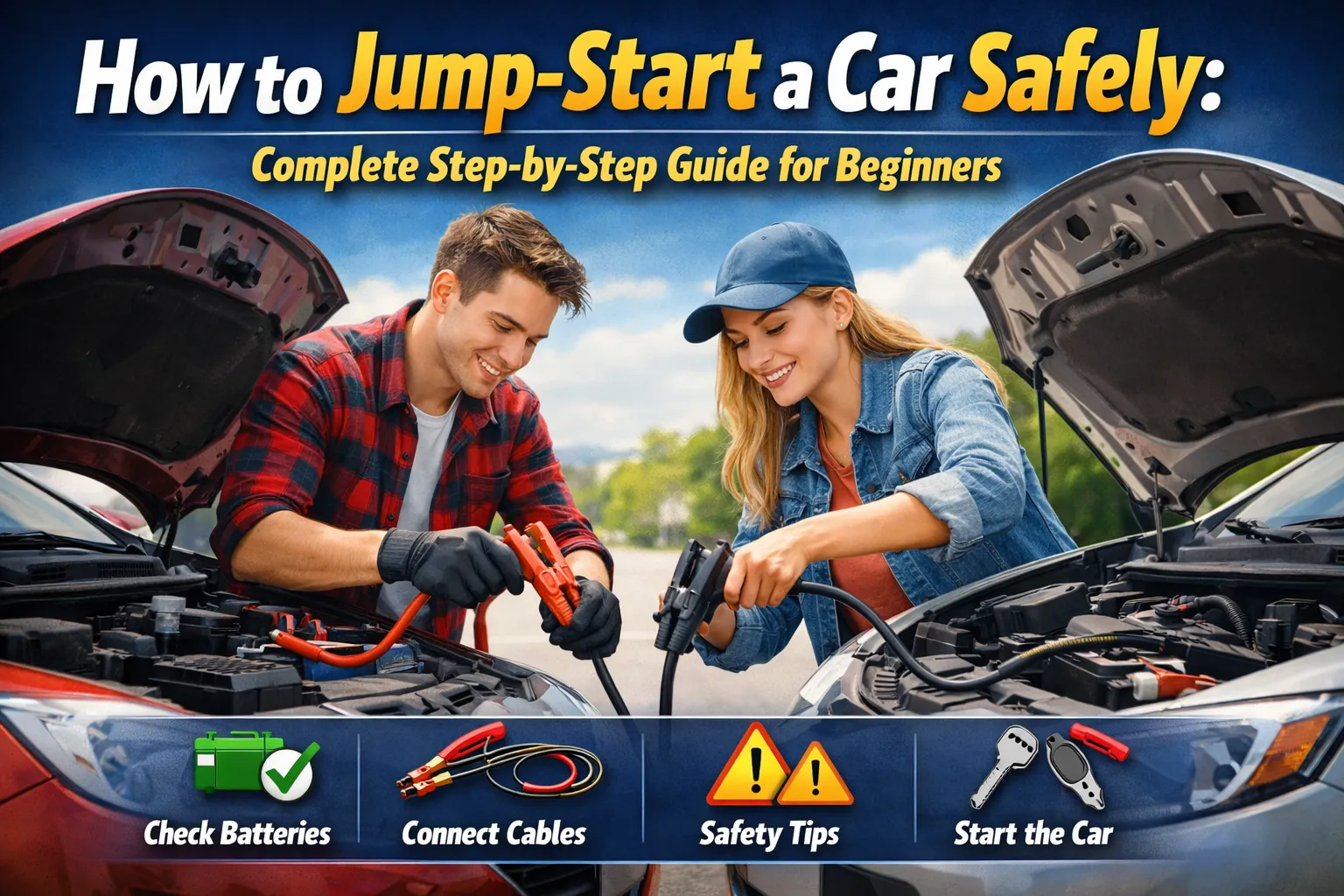
There are few things more frustrating than sticking your key in the ignition, pushing the start button or flipping a switch…and nothing but a squeak or weak click. A dead battery may leave you stranded at home, a parking lot or even on the side of the road. And that’s why it is important for every driver to know how to jump-start a car safely.
Thoughtless people may have never learned how to properly jump a vehicle and in the worst case can cause electronics damage, spark combustion or even blow up a battery. Most modern cars have highly sensitive electrical systems, so to do it the wrong way could lead to expensive repairs.
The good news is, jump-starting a vehicle is easy and completely safe as long as it’s done properly. You can have your vehicle running again after just a few minutes, with the correct tools and an easy step by step.
This comprehensive guide will teach you how to jump-start a car safely, which tools you need and mistakes to avoid and the best products to store in your trunk for emergencies.
Quick Answer
To jump-start a car safely:
- Park both cars close but not touching.
- Connect red cable to dead battery (+).
- Connect other red end to good battery (+).
- Connect black cable to good battery (–).
- Connect other black end to metal ground on dead car.
- Start the working car, then start the dead car.
- Remove cables in reverse order.
Why It Matters (Benefits)
- Prevents being stranded
- Saves towing costs
- Avoids battery and electrical damage
- Improves emergency preparedness
- Helps others in roadside situations
What You’ll Need (Tools + Products)
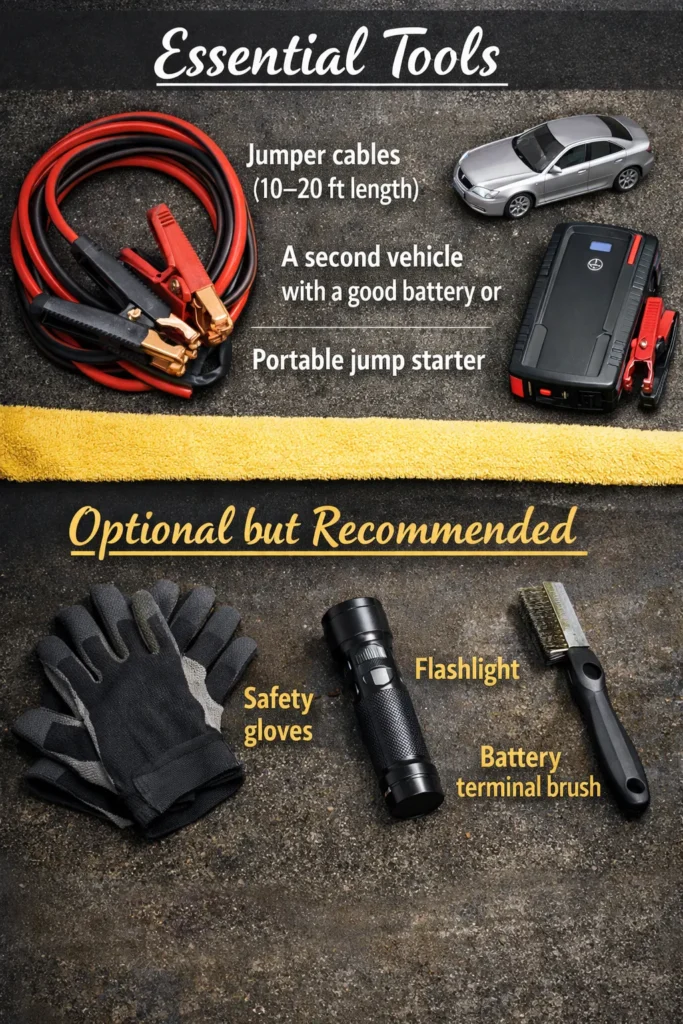
Essential Tools
- Jumper cables (10–20 ft length)
- A second vehicle with a good battery or
- Portable jump starter
Optional but Recommended
- Safety gloves
- Flashlight
- Battery terminal brush
Step-by-Step Guide: How to Jump-Start a Car Safely
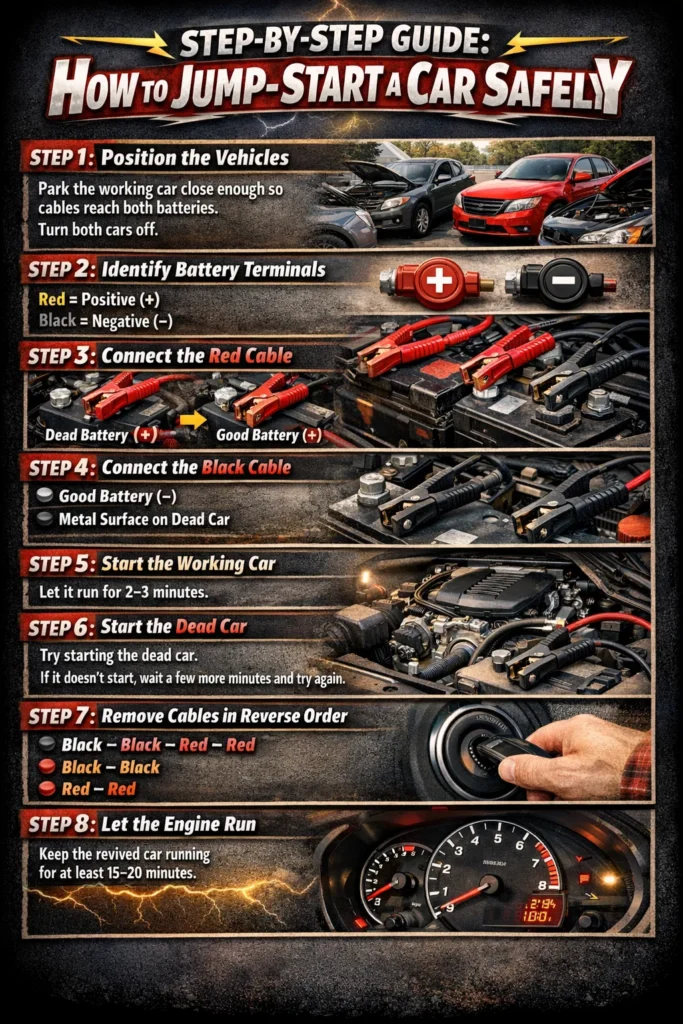
Step 1: Position the Vehicles
Park the working car close enough so cables reach both batteries.
Turn both cars off.
Step 2: Identify Battery Terminals
- Red = Positive (+)
- Black = Negative (–)
Step 3: Connect the Red Cable
- Connect red clamp to dead battery (+).
- Connect other red clamp to good battery (+).
Step 4: Connect the Black Cable
- Connect black clamp to good battery (–).
- Connect other black clamp to an unpainted metal surface on the dead car.
Step 5: Start the Working Car
Let it run for 2–3 minutes.
Step 6: Start the Dead Car
Try starting the dead car.
If it doesn’t start, wait a few more minutes and try again.
Step 7: Remove Cables in Reverse Order
- Black clamp from metal surface
- Black clamp from good battery
- Red clamp from good battery
- Red clamp from dead battery
Step 8: Let the Engine Run
Keep the revived car running for at least 15–20 minutes.
Cost Breakdown / Pricing Table
| Item | Price Range | Notes |
|---|---|---|
| Jumper cables | $15 – $40 | Budget emergency tool |
| Portable jump starter | $60 – $150 | No second car needed |
| New battery | $80 – $250 | If battery is dead permanently |
| Roadside service | $50 – $120 | One-time assistance |
Before and After
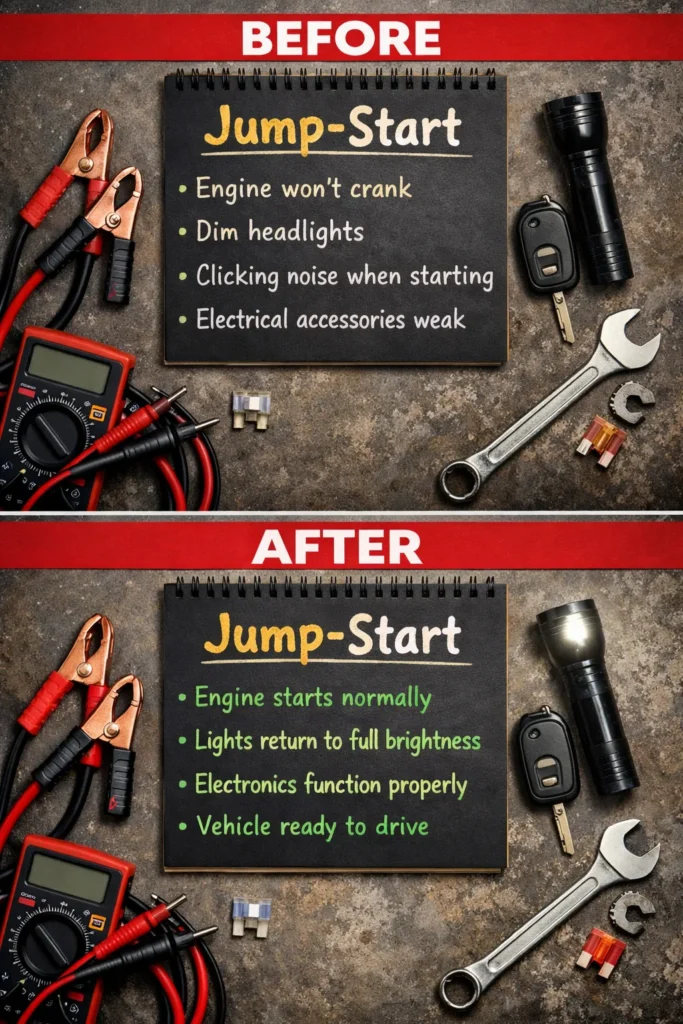
Before Jump-Start
- Engine won’t crank
- Dim headlights
- Clicking noise when starting
- Electrical accessories weak
After Jump-Start
- Engine starts normally
- Lights return to full brightness
- Electronics function properly
- Vehicle ready to drive
Product Recommendations
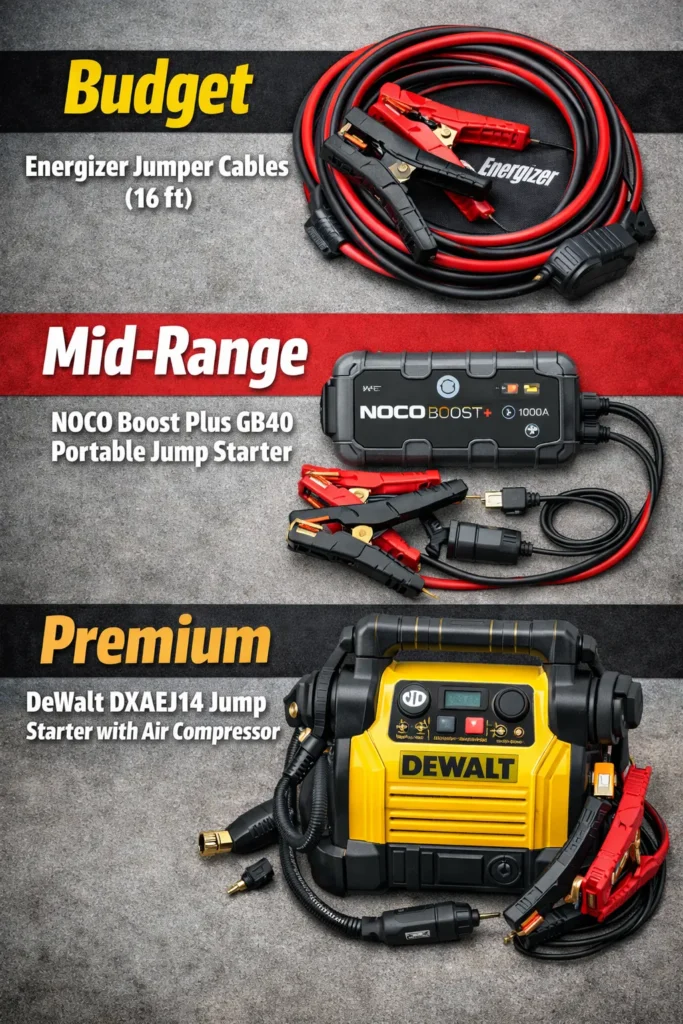
Budget
- Energizer Jumper Cables (16 ft)
Mid-Range


- NOCO Boost Plus GB40 Portable Jump Starter
Premium
- DeWalt DXAEJ14 Jump Starter with Air Compressor
Comparison Section
| Feature | Jumper Cables | Portable Jump Starter |
|---|---|---|
| Requires second car | Yes | No |
| Cost | Low | Medium-High |
| Ease of use | Moderate | Very easy |
| Portability | High | High |
| Safety features | Basic | Advanced protections |
Troubleshooting Table
| Problem | Possible Cause | Fix |
|---|---|---|
| Car won’t start | Weak donor battery | Use another car |
| No crank at all | Bad starter | Call mechanic |
| Starts then dies | Alternator issue | Get battery/charging system checked |
| Sparks during setup | Wrong cable order | Disconnect and reconnect properly |
Time Required & Difficulty Level
- Time: 5–15 minutes
- Difficulty: Easy (Beginner-friendly)
Pro Tips (Do / Don’t)
Do
- Check battery for cracks
- Follow correct cable order
- Keep cables untangled
Don’t
- Let clamps touch each other
- Connect black clamp to dead battery negative
- Jump-start a leaking or frozen battery
Best Picks (Top 3 Summary)
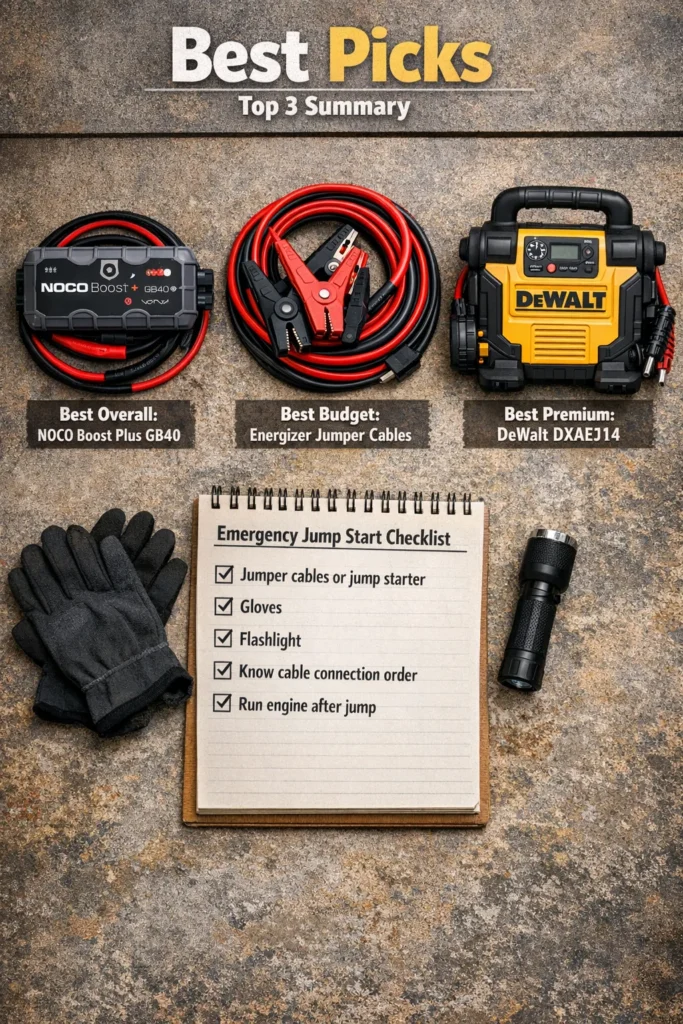
- Best Overall: NOCO Boost Plus GB40
- Best Budget: Energizer Jumper Cables
- Best Premium: DeWalt DXAEJ14
Printable Checklist
- Jumper cables or jump starter
- Gloves
- Flashlight
- Know cable connection order
- Run engine after jump
Use Cases (When to Choose What)
| Situation | Best Option |
|---|---|
| At home with another car | Jumper cables |
| Alone in parking lot | Portable jump starter |
| Cold winter morning | High-capacity jump starter |
| Road trip emergency | Keep both tools |
Common Mistakes to Avoid
- Connecting cables in wrong order
- Letting clamps touch
- Jump-starting a damaged battery
- Turning on electronics during jump
- Removing cables incorrectly
Safety Notes / Warnings
- Never smoke near batteries.
- Avoid jump-starting a cracked or leaking battery.
- Always connect the negative clamp to metal ground.
- Wear gloves if possible.
- Keep sparks away from battery fumes.
FAQs (10)
1. How long should I run the car after a jump-start?
At least 15–20 minutes.
2. Can I jump-start a completely dead battery?
Yes, if the battery isn’t damaged.
3. What happens if I connect cables wrong?
It can damage electronics or cause sparks.
4. Can I jump-start in the rain?
Yes, but avoid standing water.
5. Do electric cars need jump-starts?
Some hybrid or EV systems may require special procedures.
6. How often can I jump-start a battery?
Occasionally is fine, but repeated jumps mean replacement is needed.
7. Can a small car jump a large SUV?
Sometimes, but it may take longer.
8. Why does my battery keep dying?
Possible alternator or old battery.
9. Is a portable jump starter safe?
Yes, most have built-in protections.
10. Should I replace my battery after a jump?
If it’s older than 3–5 years, consider replacement.
Final Thought
One of the most important skills any driver can have is knowing how to jump start a car safely. It can save you headaches, time and money in a pinch. It should go without saying, but with just a set of jumper cables or a portable jump starter you can deal with most dead-battery emergencies — no need to summon professional help.
Proper connection order should always be adhered to with safety being a priority, and important tools are stored in your trunk. Check the battery to avoid repeated dying for the continued prevention of stalling.


Leave a Reply