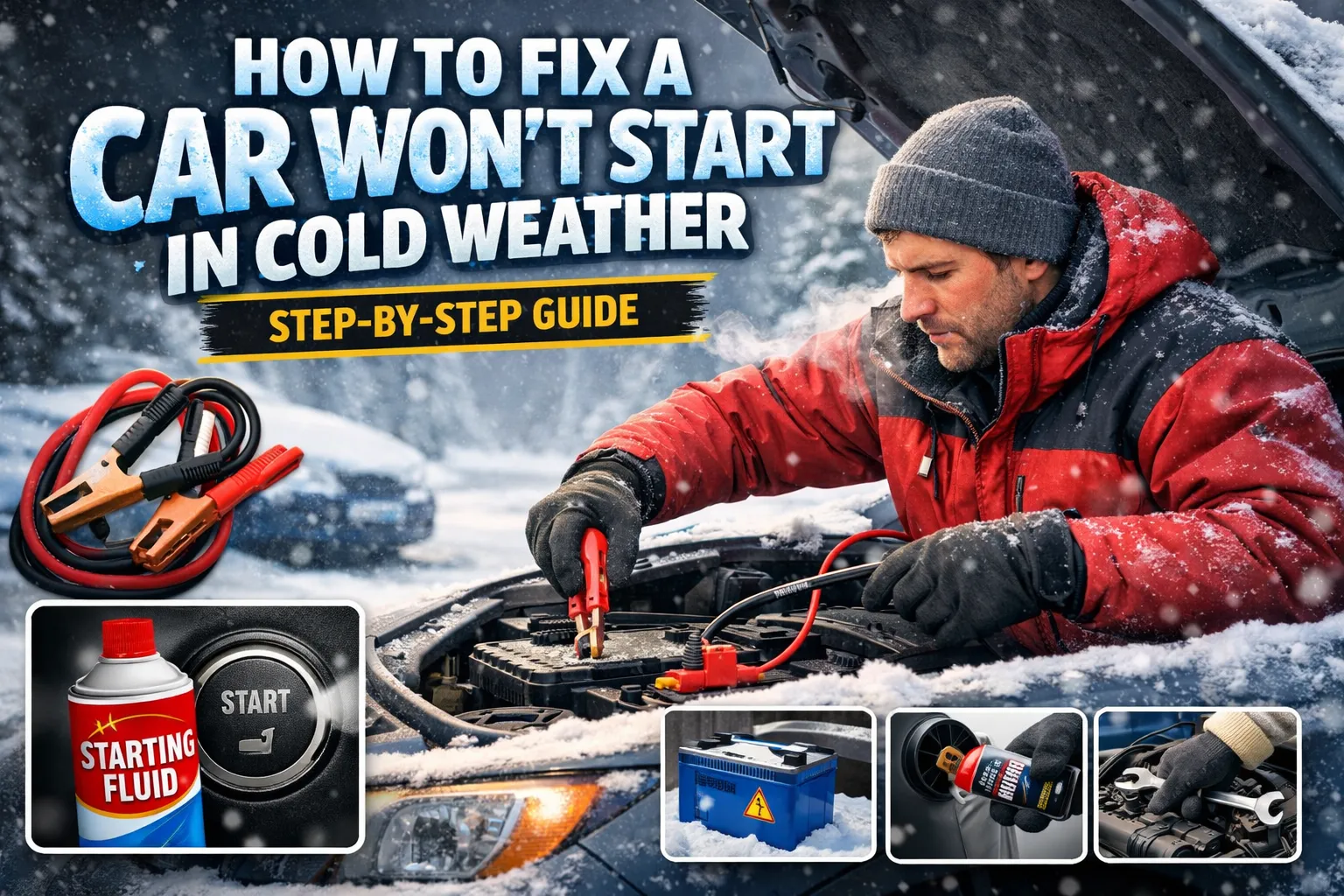
Like millions of other drivers here, when the temperatures dip near or below zero, I find myself in that same familiar frustrating dream again: my car just won’t start in cold weather. You insert the key and turn, but you don’t hear anything—no noise of the engine springing to life, no hum of car systems ready to go. Batteries, engine oil, fuel systems and electrical components are all adversely impacted by cold weather which leads to your car being more difficult to start car won’t start in cold weather.
Winter weather can suck the life out of a battery overnight, cause engine oil to thicken and suggest drop-offs in fuel economy. In fact, even a healthy car can be challenged when the temperature dips below freezing. Without the right preparation, you could end up mired in your driveway, unprepared for work or stranded at a parking lot.
This full breakdown covers the best way to fix a car that won’t start in cold weather, as well as what you should do to keep this problem from being repeated. You’ll receive step-by-step advice, solutions, cost estimates, products and materials lists and time-saving tips that will help you maintain your car’s quick start all winter season.
Quick Answer
If your car won’t start in cold weather, the most common cause is a weak or dead battery. Cold temperatures reduce battery power and thicken engine oil.
Quick fix:
- Try jump-starting the car.
- Check battery terminals.
- Warm the battery or engine if possible.
- Replace the battery if it’s old.
Why It Matters (Benefits)
- Prevents being stranded in freezing weather.
- Extends battery and engine life.
- Saves money on emergency repairs.
- Improves winter driving reliability.
- Reduces stress during cold mornings.
What You’ll Need (Tools + Products)
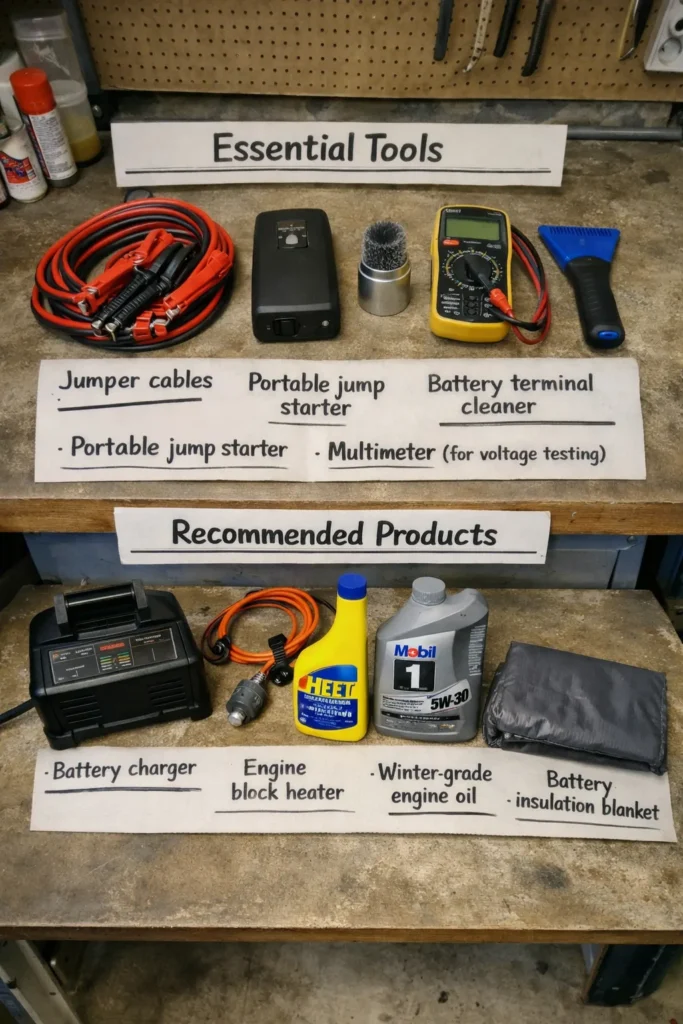
Essential Tools
- Jumper cables
- Portable jump starter
- Battery terminal cleaner
- Multimeter (for voltage testing)
- Ice scraper
Recommended Products
- Battery charger
- Engine block heater
- Fuel system antifreeze
- Winter-grade engine oil
- Battery insulation blanket
Step-by-Step Guide (How to Fix a Car That Won’t Start in Cold Weather)
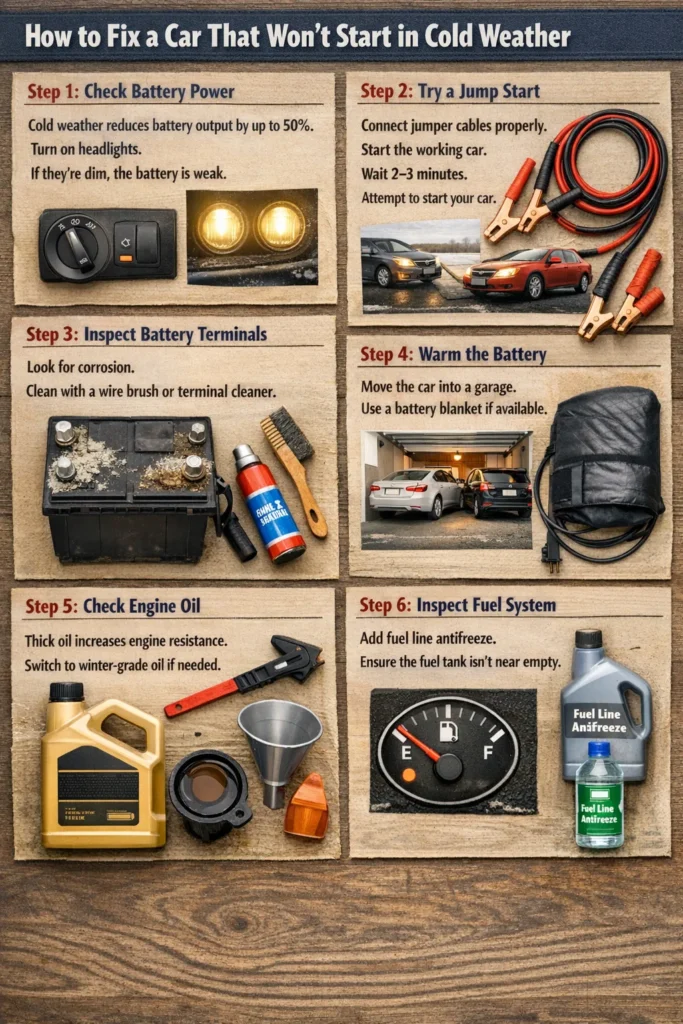
Step 1: Check Battery Power
Cold weather reduces battery output by up to 50%.
- Turn on headlights.
- If they’re dim, the battery is weak.
Step 2: Try a Jump Start
- Connect jumper cables properly.
- Start the working car.
- Wait 2–3 minutes.
- Attempt to start your car.
Step 3: Inspect Battery Terminals
- Look for corrosion.
- Clean with a wire brush or terminal cleaner.
Step 4: Warm the Battery
- Move the car into a garage.
- Use a battery blanket if available.
Step 5: Check Engine Oil
Thick oil increases engine resistance.
- Switch to winter-grade oil if needed.
Step 6: Inspect Fuel System
- Add fuel line antifreeze.
- Ensure the fuel tank isn’t near empty.
Cost Breakdown / Pricing Table
| Service/Product | Average Cost | Notes |
|---|---|---|
| Jump start service | $20–$60 | Roadside assistance |
| New car battery | $80–$250 | Depends on vehicle |
| Battery charger | $30–$100 | One-time purchase |
| Engine block heater | $50–$200 | Plus installation |
| Fuel antifreeze | $5–$15 | Per bottle |
Explanation:
Replacing an old battery is often the most cost-effective fix. Preventive tools like a jump starter or block heater reduce long-term winter issues.
Before and After (Winter Starting Situation)
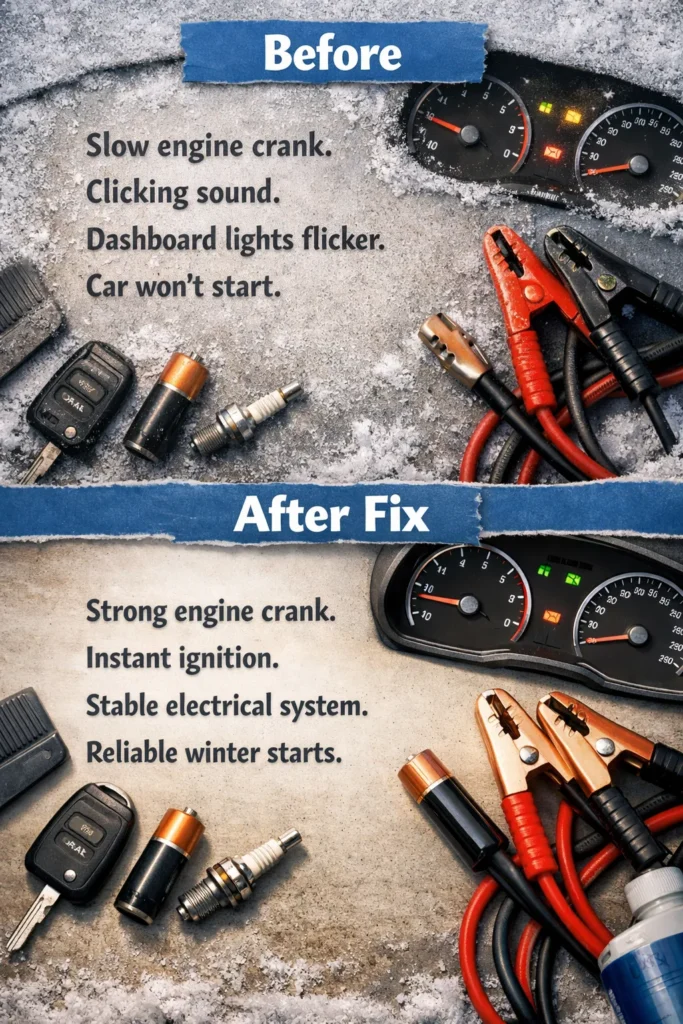
Before
- Slow engine crank.
- Clicking sound.
- Dashboard lights flicker.
- Car won’t start.
After Fix
- Strong engine crank.
- Instant ignition.
- Stable electrical system.
- Reliable winter starts.
Product Recommendations
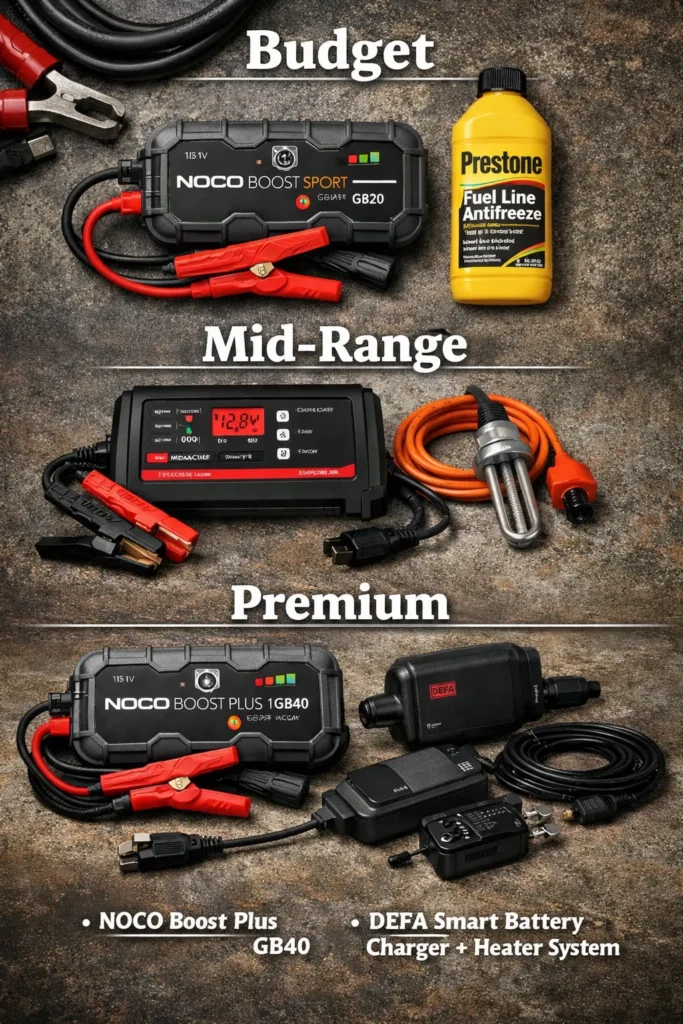
Budget
- NOCO Boost Sport GB20 portable jump starter
- Prestone Fuel Line Antifreeze


Mid-Range
- Schumacher SC1281 Battery Charger
- Zerostart Engine Block Heater
Premium
- NOCO Boost Plus GB40
- DEFA Smart Battery Charger + Heater System
Comparison Section (Option A vs Option B)
| Feature | Jump Starter | Battery Charger |
|---|---|---|
| Portability | High | Low |
| Speed | Instant start | Slow charge |
| Price | Medium | Low–Medium |
| Best Use | Emergency start | Preventive charging |
Conclusion:
Use a jump starter for emergencies and a battery charger for maintenance.
Troubleshooting Table
| Problem | Likely Cause | Fix |
|---|---|---|
| Clicking noise | Dead battery | Jump start |
| Slow crank | Thick oil or weak battery | Warm engine or replace battery |
| No sound at all | Electrical failure | Check connections |
| Starts then dies | Fuel line freeze | Add antifreeze |
Time Required & Difficulty Level
- Jump start: 10–15 minutes (Easy)
- Battery replacement: 20–40 minutes (Easy–Moderate)
- Block heater install: 1–2 hours (Moderate)
Pro Tips (Do / Don’t)
Do
- Keep battery above 50% charge.
- Park in a garage when possible.
- Use winter-grade oil.
Don’t
- Keep the fuel tank near empty.
- Ignore slow cranking.
- Use old or corroded jumper cables.
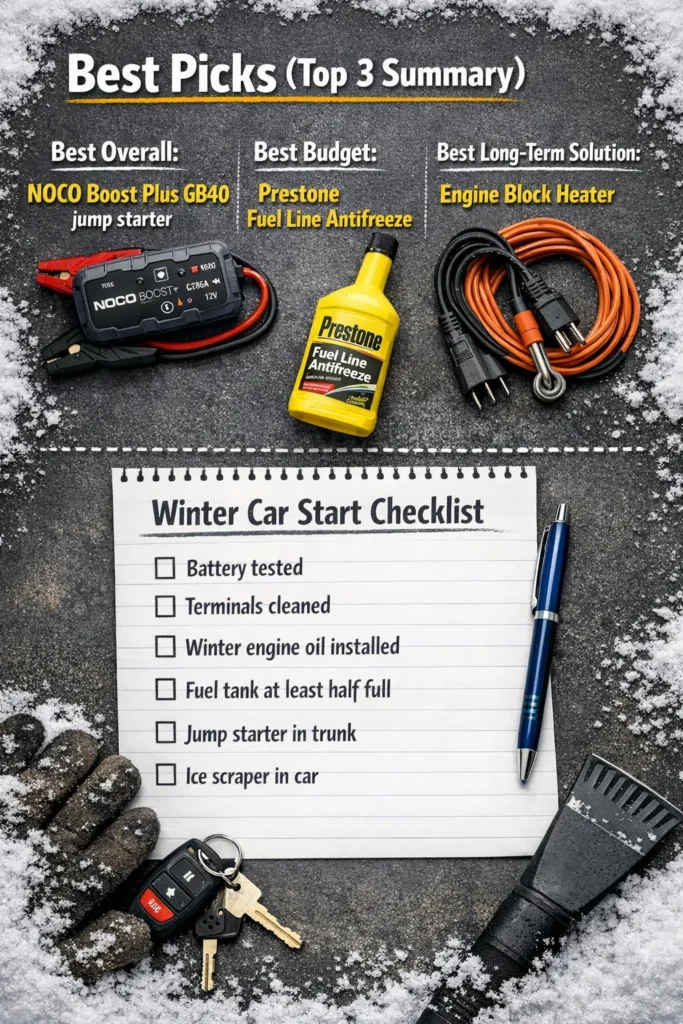
Best Picks (Top 3 Summary)
- Best Overall: NOCO Boost Plus GB40 jump starter
- Best Budget: Prestone Fuel Line Antifreeze
- Best Long-Term Solution: Engine block heater
Checklist (Printable Style)
Winter Car Start Checklist
- Battery tested
- Terminals cleaned
- Winter engine oil installed
- Fuel tank at least half full
- Jump starter in trunk
- Ice scraper in car
Use Cases (When to Choose What)
| Situation | Best Solution |
|---|---|
| Dead battery in parking lot | Jump starter |
| Frequent cold-start problems | New battery |
| Extreme winter climate | Block heater |
| Long parking periods | Battery charger |
Common Mistakes to Avoid
- Ignoring old batteries.
- Using the wrong oil viscosity.
- Leaving electronics on overnight.
- Not cleaning battery terminals.
Safety Notes / Warnings
- Always connect jumper cables in the correct order.
- Keep sparks away from the battery.
- Wear gloves in freezing conditions.
- Never jump-start a frozen battery.
FAQs
1. Why does my car struggle to start in cold weather?
Cold temperatures reduce battery power and thicken engine oil.
2. At what temperature do cars have trouble starting?
Typically below 32°F (0°C), especially under 10°F (-12°C).
3. Can cold weather permanently damage a battery?
Yes, extreme cold can shorten battery lifespan .
4. How do I know if my battery is dead or just cold?
Test voltage; below 12.4V indicates a weak battery .
5. Should I warm up my car before driving?
Yes, let it idle for 30–60 seconds.
6. Does fuel freeze in winter?
Gasoline rarely freezes, but water in fuel lines can.
7. How long should a car battery last?
3–5 years on average.
8. Is a jump starter worth it?
Yes, especially in cold climates.
9. Can I pour hot water on the battery?
No, it can cause damage or cracking.
10. What’s the best oil for cold weather?
Low-viscosity oil like 0W-20 or 5W-30.
Final Thought
A car that has trouble starting in cold weather is caused by the vehicle’s battery, engine oil, or fuel system. Whereas the good news of a new year is upon on us, most winter starting woes are easily solved with the right tools and preparation. A quick jump start, a new battery or nice-to-have accessory like a block heater can really help.
If you follow the tips and steps in this guide, you should be able to prevent cold-weather breakdowns and get your vehicle through winter running smoothly. Some advanced planning can save you from a lot of frustration later.


Leave a Reply