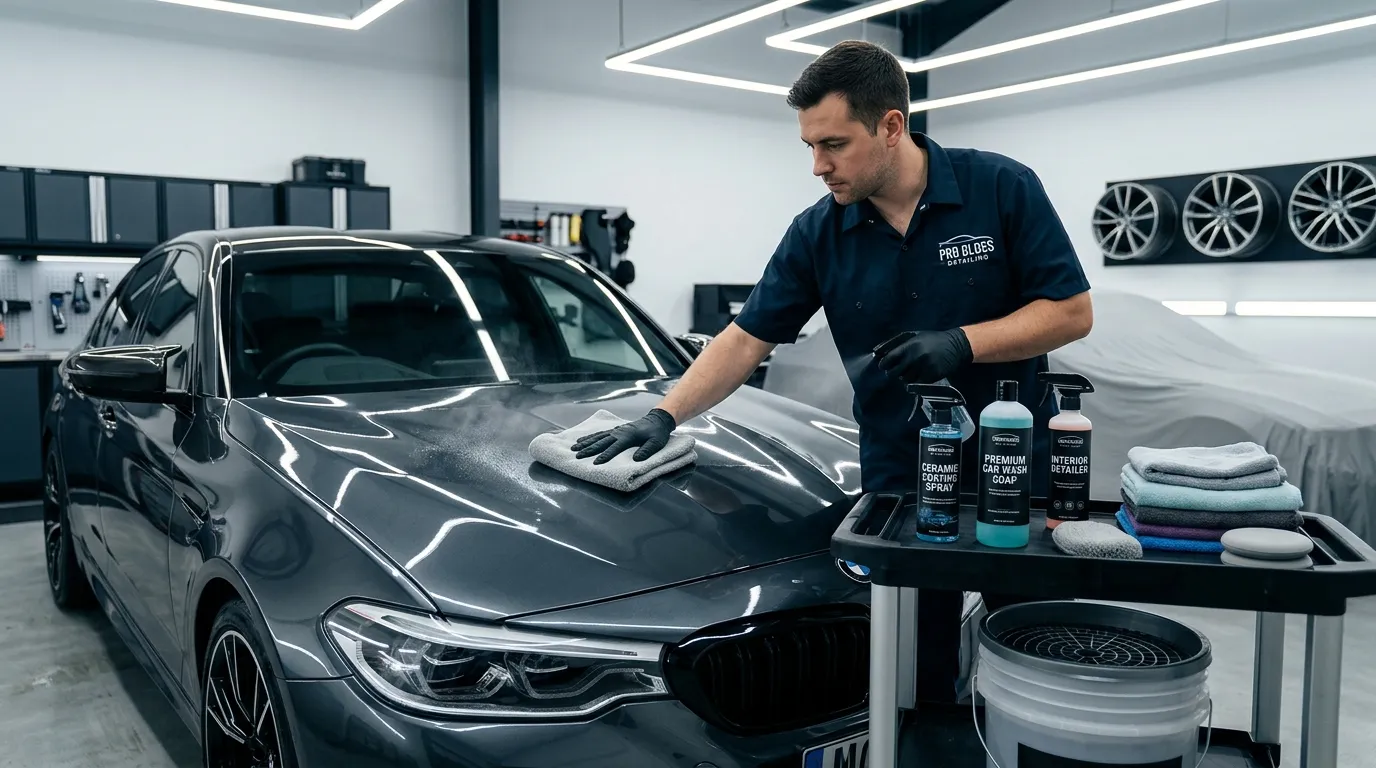
You just drove off the lot. The smell of new upholstery, the great shine, zero scratches. It is perfect. But here is the bitter truth: every day that passes without protection, a small part of your new car’s soul is drained. The dashboard fades from the UV rays, bird poop etches into the clear coat, and dirt grinds into the carpet.
The issue is not that you love How to Take Care of New Car it is simply a matter of having no system. Not the 1 and done dish soap (disaster) or those cotton rags you use on your body (micro-scratches) that every owner uses only to wonder why their 1-year-old car looks like a 5-year-old car.
The promise? In this 3000-word guide to investing in new car assets, by the end you will know exactly what to purchase (and not), and a step-by-step five part solution that takes two HOURS A MONTH. You’ll maintain that “new car” feeling for as long as you can keep your friends impressed, and save yourself thousands in depreciation along the way.
Quick Answer
How to take care of a new car in 5 bullet points:
- Immediate Paint Protection: Apply a ceramic spray coating or wax within the first 72 hours.
- The Two-Bucket Wash: Never use a sponge at a car wash. Use grit guards and microfiber mitts.
- Interior UV Block: Use a 303 Protectant or similar on dash/vinyl immediately.
- Break-in Period: Drive gently for first 600 miles. No cruise control.
- Weather Mats: Throw away the carpet mats and buy rubber all-weather mats today.
Why It Matters (The Benefits of Proper New Car Care)
You might think, “It is just a car.” But statistically, a vehicle loses 60% of its value in the first 5 years. The difference between a “Good” trade-in and an “Excellent” trade-in is often $2,000 to $5,000. That money comes from paint condition, interior cleanliness, and mechanical history.
Key Benefits:
- Financial ROI: A protected clear coat prevents oxidation. A clean engine bay helps cooling. Every $1 spent on protection saves $10 in repairs.
- Emotional Satisfaction: Driving a clean, shiny car reduces stress and increases pride of ownership.
- Health: New cars off-gas VOCs (volatile organic compounds). Proper cleaning (vacuuming with HEPA filters) removes dust and allergens.
- Safety: Maintaining tire pressure and fluid levels (part of new car care) prevents blowouts and engine failure.
What You’ll Need (Tools & Products)
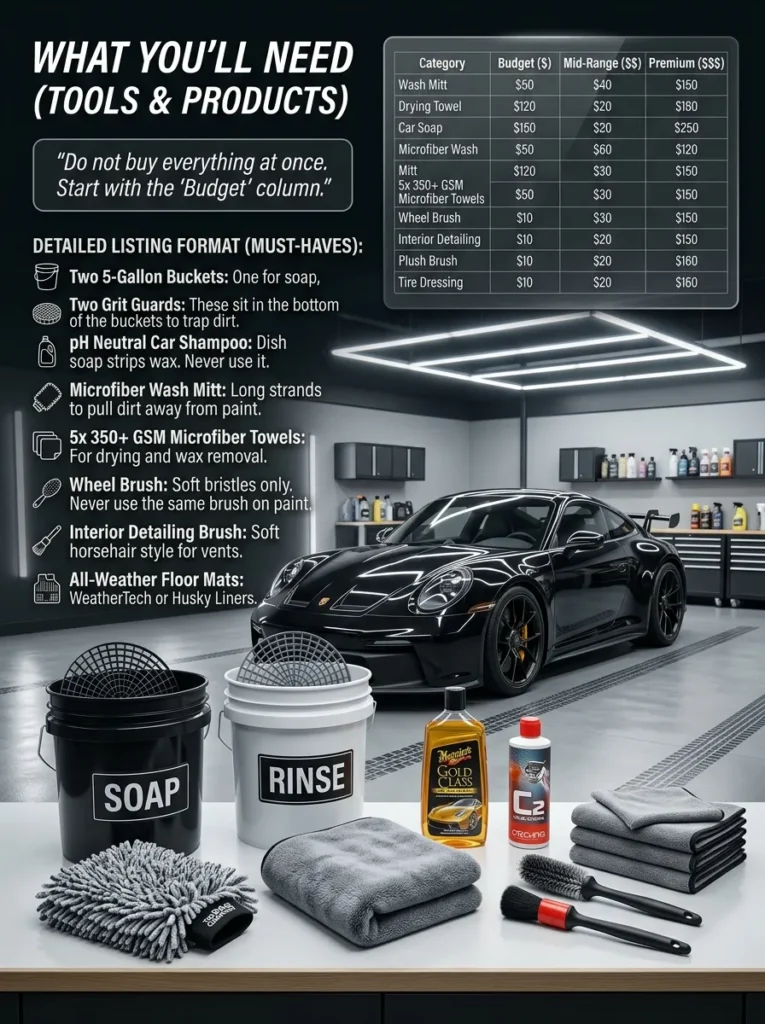
Do not buy everything at once. Start with the “Budget” column.
| Category | Budget ($) | Mid-Range ($$) | Premium ($$$) |
|---|---|---|---|
| Wash Mitt | Chenille sponge ($5) | Microfiber Mitt ($12) | The Rag Company Cyclone ($25) |
| Drying Towel | Standard microfiber ($8) | Plush 20″x30″ ($15) | Gauntlet Drying Towel ($30) |
| Car Soap | Armor All Wash & Wax ($6) | Meguiar’s Gold Class ($12) | Adam’s Car Shampoo ($20) |
| Wax/Sealant | Turtle Wax Spray Wax ($9) | Meguiar’s Hybrid Ceramic Wax ($17) | Gtechniq Liquid Crystal C2 ($35) |
| Interior Cleaner | Simple Green (diluted) ($5) | P&S Xpress Interior ($20) | Koch Chemie Pol Star ($35) |
| Glass Cleaner | Invisible Glass ($6) | Stoner’s Reach & Clean ($12) | Gtechniq G6 Perfect Glass ($22) |
| Tire Dressing | No-name gel ($4) | Chemical Guys VRP ($12) | CarPro PERL ($25) |
Detailed Listing Format (Must-Haves):
- Two 5-Gallon Buckets: One for soap, one for rinsing.
- Two Grit Guards: These sit in the bottom of the buckets to trap dirt.
- pH Neutral Car Shampoo: Dish soap strips wax. Never use it.
- Microfiber Wash Mitt: Long strands to pull dirt away from paint.
- 5x 350+ GSM Microfiber Towels: For drying and wax removal.
- Wheel Brush: Soft bristles only. Never use the same brush on paint.
- Interior Detailing Brush: Soft horsehair style for vents.
- All-Weather Floor Mats: WeatherTech or Husky Liners.
Step-by-Step Guide (How-To) – 5 Steps to Perfection
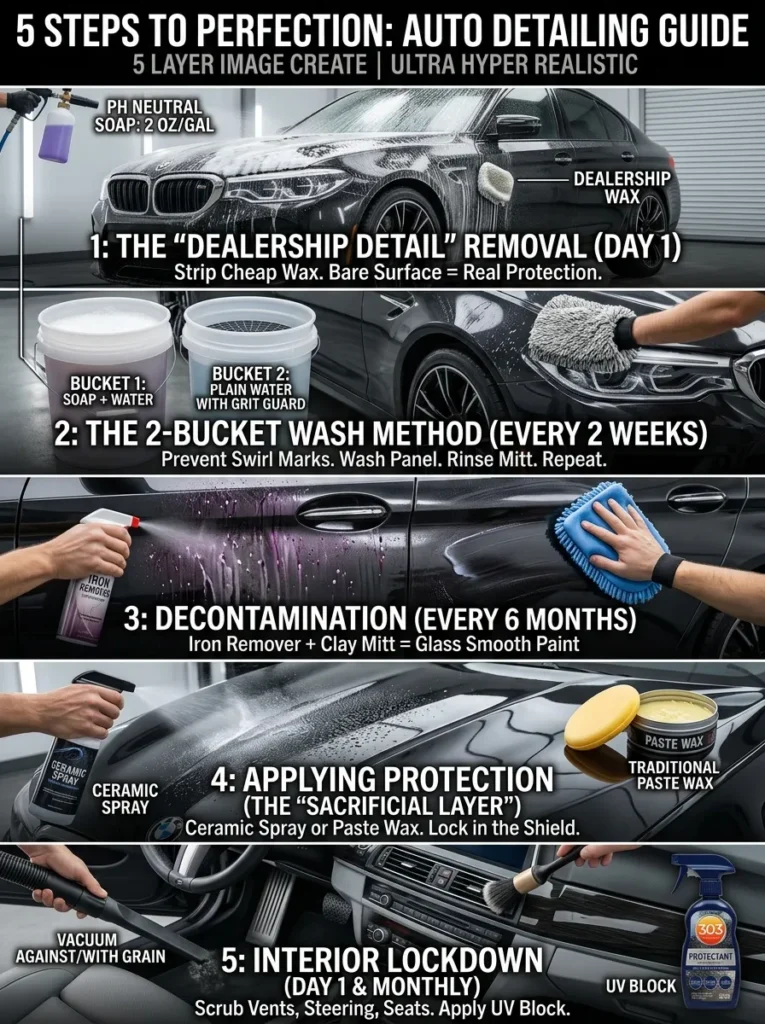
Step 1: The “Dealership Detail” Removal (Day 1)
Most dealers apply a cheap silicone wax to make the car shine. This actually traps contaminants.
- Action: Wash the car with a strong mix of pH neutral soap (2 oz per gallon) to strip the dealer wax.
- Why: You want a bare surface for your real protection.
Step 2: The 2-Bucket Wash Method (Every 2 Weeks)
- Fill: Bucket 1 = Soap + water. Bucket 2 = Plain water.
- Rinse: Spray car with hose to remove loose dirt.
- Wash: Dip mitt in soap, wash one panel (e.g., roof). Do not scrub hard.
- Rinse Mitt: Dip mitt into Bucket 2 (plain water) and rub against grit guard.
- Repeat: Go back to Bucket 1. This prevents swirl marks.
Step 3: Decontamination (Every 6 Months)
Your new paint feels smooth now, but after 3 months, it will feel rough (bonded contaminants).
- Spray: Iron remover spray on the paint (it turns purple as it eats metal particles).
- Clay Bar: Use a synthetic clay mitt with lubricant. Glide over paint. You will feel the “rough” spots disappear.
Step 4: Applying Protection (The “Sacrificial Layer”)
New car clear coat is soft. You need a shield.
- Ceramic Spray (Easiest): Spray onto a wet car after washing. Rinse off with high pressure. Dry. (Takes 15 minutes).
- Paste Wax (Traditional): Apply thin layer to whole car. Let haze (5 min). Buff off with clean towel. (Takes 1 hour).
Step 5: Interior Lockdown (Day 1 & Monthly)
- Vacuum: Go against the grain of the carpet to lift fibers, then with the grain to collect dust.
- Clean: Spray interior cleaner onto a brush (never directly on the screen). Scrub vents, steering wheel, seats.
- Protect: Wipe 303 Protectant on all vinyl and plastic. This blocks UV rays.
Cost Breakdown
Here is the real cost to how to take care of new car for one year.
| Item | Frequency | DIY Cost | Professional Cost |
|---|---|---|---|
| Basic Wash (Soap, water, towels) | Weekly | $1.50 | $20 (Touchless wash) |
| Full Detail (Wax + Interior) | Monthly | $8.00 | $150 |
| Deep Decontamination (Clay + Iron) | Bi-Annually | $25.00 | $200 |
| Interior Deep Clean | Quarterly | $10.00 | $120 |
| Annual Total | – | ~$350 | ~$3,000 |
Why DIY wins: For the cost of 2 professional details, you buy all the tools to do it yourself for 5 years.
Before and After
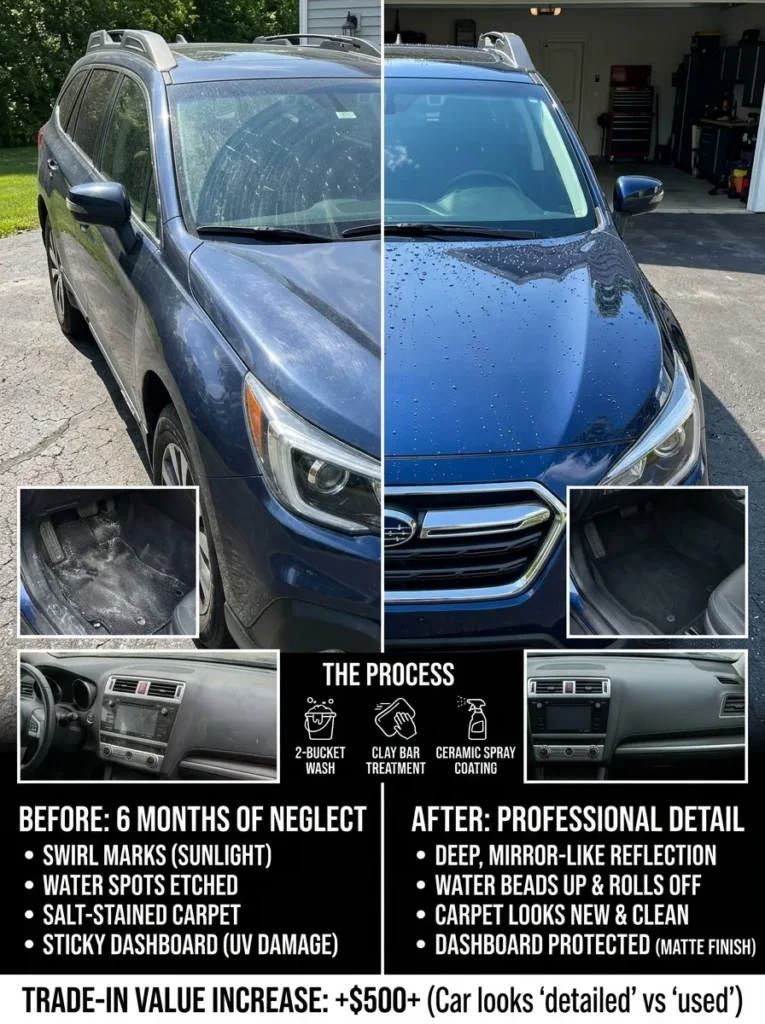
Scenario: 6 Months of Neglect
- Before: Swirl marks visible in sunlight. Water spots etched into windows. Carpet has salt stains (winter). Dashboard feels sticky (UV damage starting).
- Process: 2-bucket wash (Step 2) + Clay bar (Step 3) + Ceramic spray (Step 4).
- After: Deep, mirror-like reflection. Water beads up and rolls off. Carpet looks new. Dashboard matte finish.
- Value Increase: Car that looks “detailed” vs “used” adds $500+ to trade-in value.
Product Recommendations
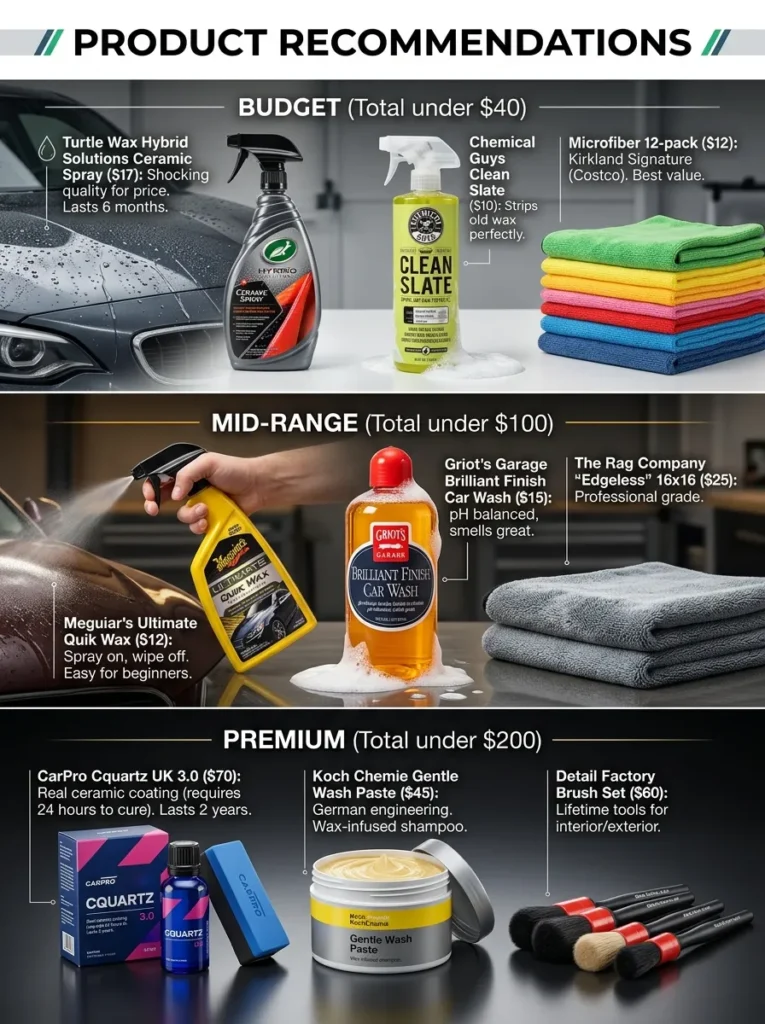
Budget (Total under $40)
- Turtle Wax Hybrid Solutions Ceramic Spray ($17): Shocking quality for price. Lasts 6 months.
- Chemical Guys Clean Slate ($10): Strips old wax perfectly.
- Microfiber 12-pack ($12): Kirkland Signature (Costco). Best value.
Mid-Range (Total under $100)
- Meguiar’s Ultimate Quik Wax ($12): Spray on, wipe off. Easy for beginners.
- Griot’s Garage Brilliant Finish Car Wash ($15): pH balanced, smells great.
- The Rag Company “Edgeless” 16×16 ($25): Professional grade.
Premium (Total under $200)
- CarPro Cquartz UK 3.0 ($70): Real ceramic coating (requires 24 hours to cure). Lasts 2 years.
- Koch Chemie Gentle Wash Paste ($45): German engineering. Wax-infused shampoo.
- Detail Factory Brush Set ($60): Lifetime tools for interior/exterior.
Comparison Section (Option A vs Option B)
Ceramic Spray Wax vs. Traditional Paste Wax
| Feature | Ceramic Spray (Option A) | Paste Wax (Option B) |
|---|---|---|
| Application Time | 15 minutes | 60 minutes |
| Durability | 6-12 months | 2-3 months |
| Water Beading | Excellent (Chemical reaction) | Good (Physical layer) |
| Heat Resistance | High (800°F+) | Low (200°F) |
| Best For | Busy owners, daily drivers | Enthusiasts, show cars |
| Winner | Option A (For 95% of new car owners) | Option B (If you enjoy the process) |
Verdict: Buy the ceramic spray. It is 2025 technology.
Troubleshooting (Problem → Fix Table)
| Problem | Cause | Fix |
|---|---|---|
| Water spots after washing | Hard water dried in sun | Dry immediately with a towel + use a drying aid (spray wax) |
| Micro-scratches (Swirls) | Using a single bucket or dirty towel | Polish with Meguiar’s Ultimate Compound. Switch to 2-bucket method |
| Foggy windows inside | Off-gassing from plastics + hand oils | Clean with Invisible Glass + a dry microfiber. Never use Windex (ammonia hurts tint) |
| Musty smell | Moisture in AC system | Turn on heat for 10 minutes. Replace cabin air filter |
| Bird dropping etched paint | Acidic poop left for >2 hours | Use quick detailer spray immediately. If etched, polish with scratch remover |
Time Required & Difficulty Level
| Task | Time | Difficulty (1-5) |
|---|---|---|
| Weekly Wash (Exterior only) | 45 minutes | ⭐ (Easy) |
| Interior Vacuum + Wipe | 30 minutes | ⭐ (Easy) |
| Full Wash + Wax + Interior | 2 hours | ⭐⭐ (Moderate) |
| Clay Bar + Decontamination | 1.5 hours | ⭐⭐⭐ (Hard for beginners) |
| Ceramic Coating (True coating) | 4 hours | ⭐⭐⭐⭐ (Expert only) |
Pro Tips
DO
- Do use the “2 towel method” for drying: One towel to soak up water, second to dry completely.
- Do clean your microfiber towels separately with microfiber detergent (or unscented liquid soap). Never use fabric softener.
- Do keep a small bottle of quick detailer + a microfiber in your trunk for bird droppings.
DON’T
- Don’t go through automatic car washes with brushes. They are filled with dirt from previous cars.
- Don’t use Armor All original protectant. It contains silicone that dries out and cracks dashboards.
- Don’t wash your car in direct sunlight. The water evaporates too fast, leaving mineral deposits.
- Don’t forget the door jambs. Open all doors and wipe down the painted edges.
Best Picks
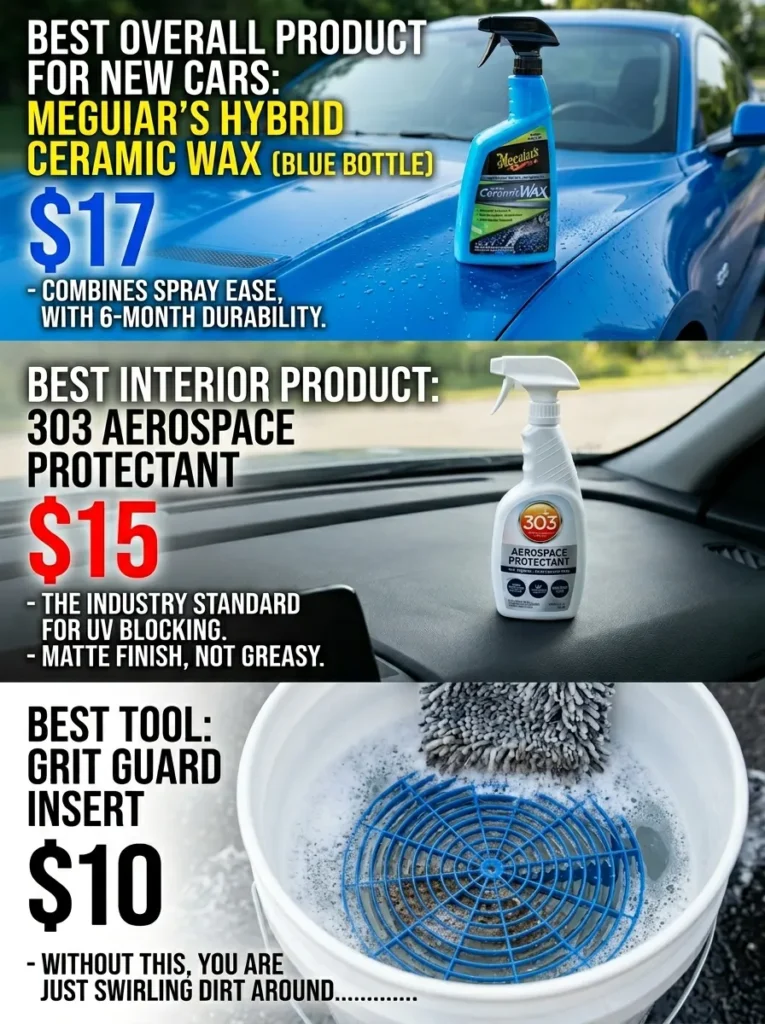
- Best Overall Product for New Cars: Meguiar’s Hybrid Ceramic Wax (Blue bottle) – $17. It combines spray ease with 6-month durability.
- Best Interior Product: 303 Aerospace Protectant – $15. The industry standard for UV blocking. Matte finish, not greasy.
- Best Tool: Grit Guard Insert – $10. Without this, you are just swirling dirt around.
Use Cases
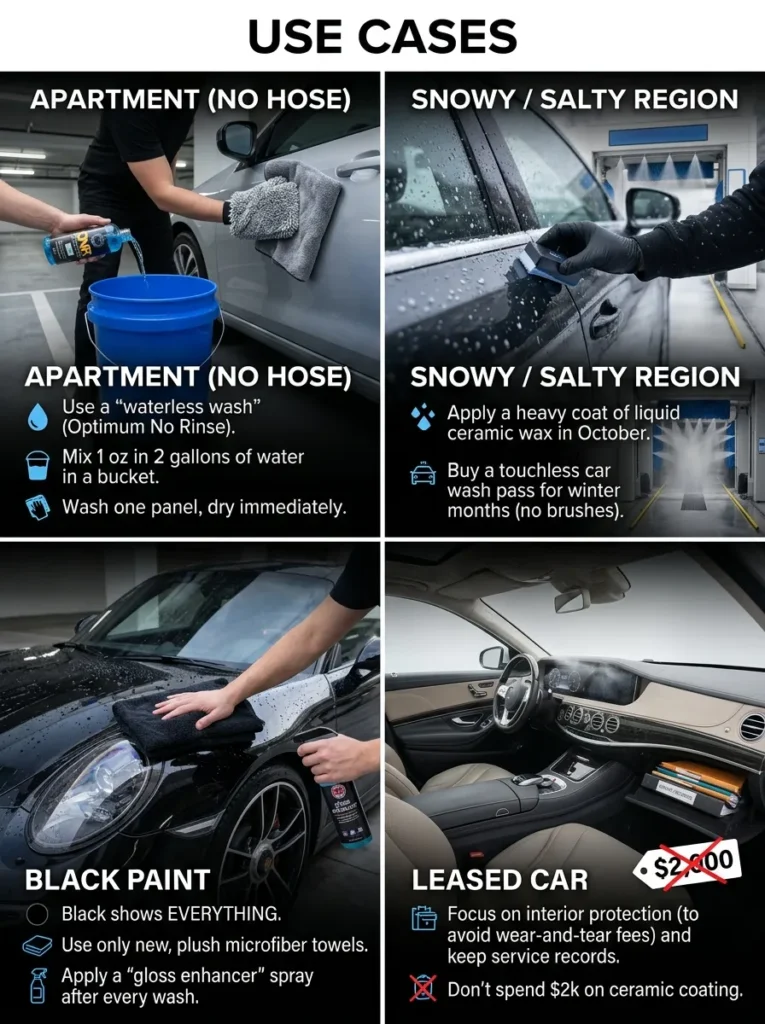
- You live in an apartment (no hose): Use a “waterless wash” (Optimum No Rinse). Mix 1 oz in 2 gallons of water in a bucket. Wash one panel, dry immediately.
- You live in snowy/salty region: Apply a heavy coat of liquid ceramic wax in October. Buy a touchless car wash pass for winter months (no brushes).
- You have black paint: Black shows EVERYTHING. Use only new, plush microfiber towels. Apply a “gloss enhancer” spray after every wash.
- You have a leased car: Focus on interior protection (to avoid wear-and-tear fees) and keep service records. Don’t spend $2k on ceramic coating.
Common Mistakes to Avoid
- Using Dish Soap: Dawn strips wax and dries out rubber seals.
- Wiping Dust with a Dry Rag: You are sanding your paint. Always use lubricant (quick detailer).
- Ignoring the Interior: UV rays go through glass. A cracked dash costs $1,500 to replace.
- Over-tightening Oil Filter: New car owners think “tight is safe.” No. Hand tight + 1/4 turn only.
- Following the “Break-in” Myth: Modern engines don’t need “babying,” but avoid constant RPM (cruise control) for first 600 miles.


FAQ
1. How often should I change my oil?
Maintenance questions can be some of the most Googled. The rule of thumb used to be every 3,000 miles but thanks to synthetic oil and other things most new vehicles can go between 7,500 and 10,000 miles without an oil change. However, confirm the specific interval in your owner’s manual.
2. What is the correct tire pressure for my car?
Proper inflation improves fuel efficiency and safety. You can find the recommended PSI (pounds per square inch) on a sticker inside the driver-side door pillar or in your manual—not the “max PSI” listed on the tire sidewall itself.
3. Why is my “Check Engine” light on?
This light indicates your car’s computer has detected an issue, ranging from a loose gas cap to serious engine misfires. It is recommended to have a professional diagnostic run as soon as possible to avoid costly damage.
4. How long do car batteries usually last?
Most car batteries last between 3 to 5 years. Extreme temperatures and frequent short trips can shorten this lifespan.
5. Do I really need to rotate my tires?
Yes. Rotating tires every 5,000 to 7,500 miles helps them wear evenly, extending their life and improving handling. This is often done at the same time as your oil change.
6. When should I replace my brake pads?
Brake pads typically last between 25,000 and 70,000 miles. Common signs they need replacing include squealing, grinding noises, or vibrations when braking.
7. How often should I replace the air filters?
There are two: the engine air filter (keeps dirt out of the engine) and the cabin air filter (cleans the air you breathe). Most experts recommend checking them every 12,000 to 15,000 miles.
8. What fluids should I check regularly?
Beyond engine oil, you should monitor coolant, brake fluid, transmission fluid, power steering fluid, and windshield washer fluid. Low levels can indicate leaks or significant underlying issues.
9. How can I improve my gas mileage?
Google users frequently search for ways to save fuel. Top tips include maintaining proper tire pressure, driving smoothly (avoiding rapid acceleration), and removing unnecessary weight from the vehicle.
10. How often should I wash and wax my new car?
Regular washing (at least every two weeks) prevents dirt and road salt from damaging the paint. Waxing every 3 to 6 months provides an extra layer of protection against UV rays and contaminants.
11. Can I go to an independent mechanic if my car is under warranty?
Yes. You do not have to return to the dealership for routine maintenance to keep your warranty valid, though you should keep detailed service records to prove the work was done.
12. What should I do if my car overheats?
Turn off the AC and turn on the heater to pull heat away from the engine. Pull over safely and do not open the radiator cap while the engine is hot, as it can cause severe burns.
Final Thought
The thing with learning how to care for a new car is not an obsession, it’s economics. This is the third largest purchase of your life (after house and education). The 10,000% return on investment when you sell it in five years for $35,000+ after spending two hours a month and $350 a year to protect the asset.
Do not aim for “perfect.” Aim for “consistent.” As an example (if we put economy aside), a two-weekly washed 2 bucket method car will always look better than one that only gets a $500 detail actually once a year. Today you had better go do it: buy yourself a grit guard, something like $10 and a bottle of ceramic spray, say $17. That is 90% of the solution. The rest is just showing up.

Leave a Reply