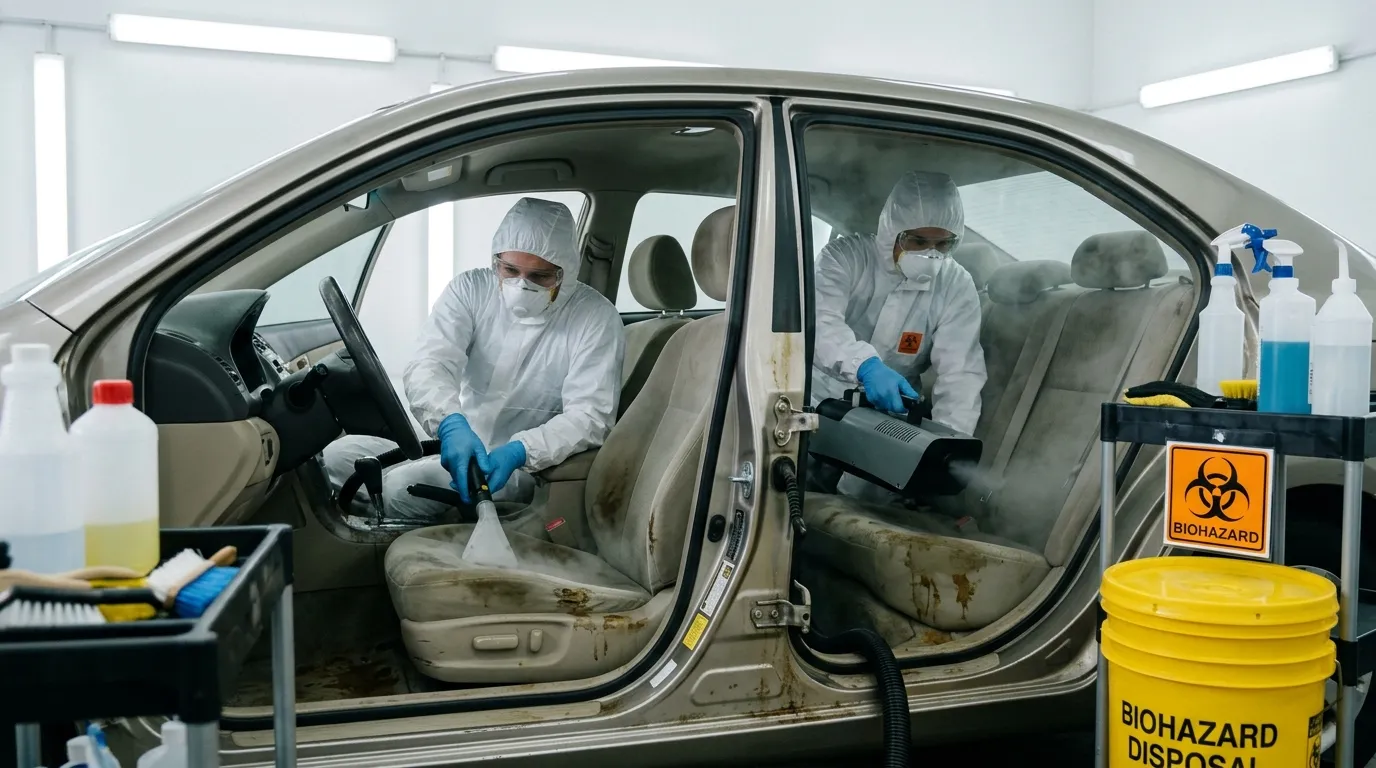
You get into the car and a smell assaults your senses like a wall. Something died in there. Or even worse — the inside is covered in blood, vomit, or other bodily fluids. Your stomach turns. The first thing that comes to your mind is, “How much money do I need to spend?”
The stark truth is this isn’t your average detail when it comes to Biohazard car cleaning. Regular car wash joints will turn down the job. This is entirely different from professional biohazard remediation companies who are dealing with bloodborne pathogens (HIV, Hepatitis B), bacteria, and body fluids—real risks—that will cost quite the pretty penny. Costs range from $250 on up for cleaning a vomit spot, or upwards of $5000 + for crime scene or unattended death cleanup.
But what many people do not know — and those who do know it often worry if I say so publicly — is that your car insurance often pays for the whole thing. And certain circumstances are perfectly safe for DIY. This article covers precisely what goes into calculating biohazard car cleaning costWhat you can do to save money and help yourself — and, more importantly, when it becomes dangerous and always needs professional help.
Quick Answer
How much does biohazard car cleaning cost?
- Vomit or minor bodily fluids: $250 – $600
- Blood cleanup (trauma/accident): $800 – $2000
- Unattended death (decomposition): $2000 – $5000+
- Mold remediation (biohazard category): $500 – $1500
- DIY biohazard cleaning (small incidents): $50 – $150 (supplies only)
Does insurance cover biohazard cleaning? Yes. Comprehensive auto insurance or health insurance often covers the full cost if you have the right policy. Always check first.
Can I DIY biohazard cleaning? Only for small, contained incidents (your own family’s vomit, minor blood from a nosebleed). NEVER DIY for stranger’s blood, decomposition, or needle contamination.
Why It Matters
Why should you care about professional biohazard cleaning instead of just scrubbing with bleach?
- Health and Safety (Non-Negotiable): Bloodborne pathogens (HIV, Hepatitis B and C, MRSA) survive in dried blood for days. Bodily fluids contain E. coli, Salmonella, and norovirus. Professional cleaners use hospital-grade disinfectants and PPE (personal protective equipment).
- Legal Liability: If you sell a car with undisclosed biohazard contamination, you can be sued. If a detailer or family member gets sick from improper cleaning, you are liable.
- Insurance Usually Pays: Most people do not know that comprehensive auto insurance covers biohazard cleaning. A $2500 professional bill becomes a $0 claim. Why would you DIY when insurance pays?
- Odor Elimination: Biohazard odors (decomposition, blood, vomit) penetrate foam, fabric, and insulation. Professional ozone treatment and enzyme cleaners remove the smell permanently. DIY bleach just masks it temporarily.
- Proper Disposal: Biohazard waste (blood-soaked materials, needles) requires special disposal by law. Professionals use red biohazard bags and incineration services.
What You’ll Need
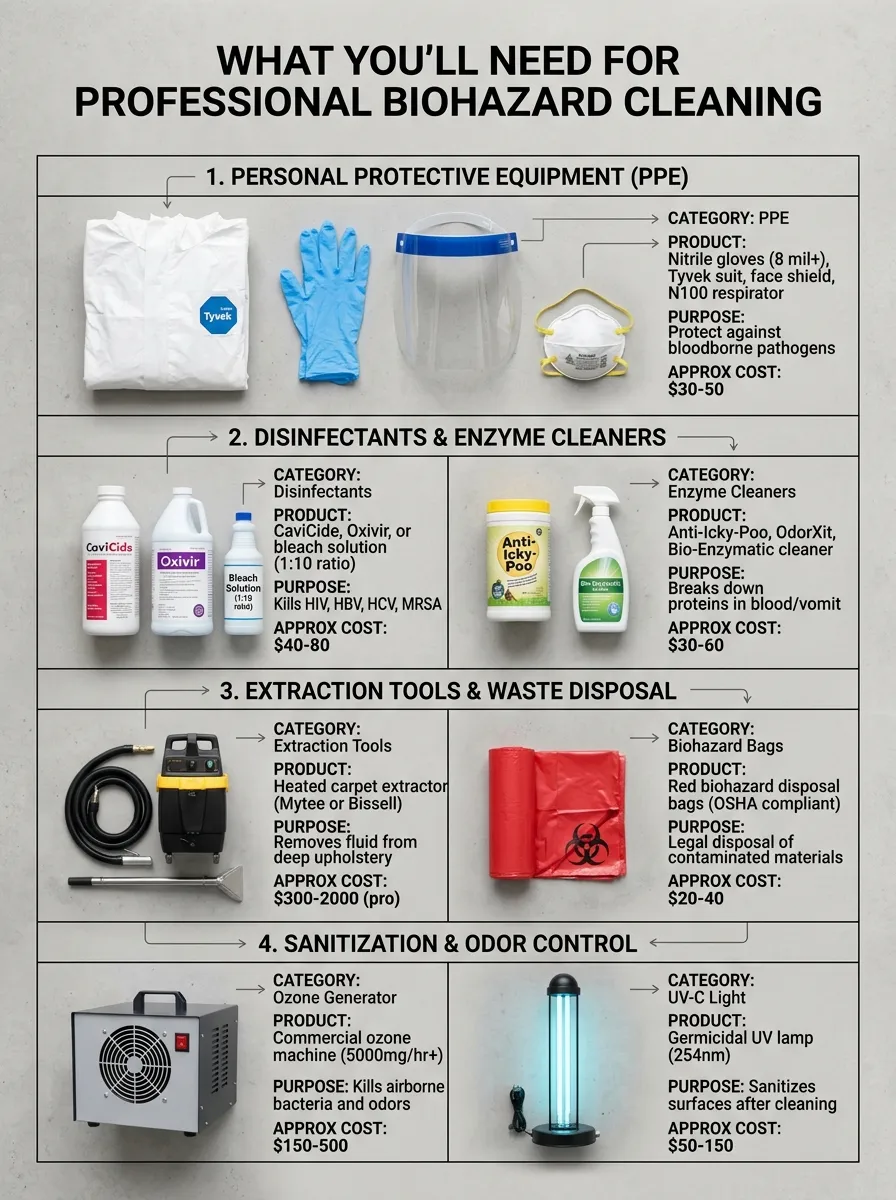
For Professional Biohazard Cleaning
| Category | Product | Purpose | Approx Cost |
|---|---|---|---|
| PPE (Personal Protective Equipment) | Nitrile gloves (8 mil+), Tyvek suit, face shield, N100 respirator | Protect against bloodborne pathogens | $30-50 |
| Disinfectants | CaviCide, Oxivir, or bleach solution (1:10 ratio) | Kills HIV, HBV, HCV, MRSA | $40-80 |
| Enzyme Cleaners | Anti-Icky-Poo, OdorXit, Bio-Enzymatic cleaner | Breaks down proteins in blood/vomit | $30-60 |
| Extraction Tools | Heated carpet extractor (Mytee or Bissell) | Removes fluid from deep upholstery | $300-2000 (pro) |
| Ozone Generator | Commercial ozone machine (5000mg/hr+) | Kills airborne bacteria and odors | $150-500 |
| UV-C Light | Germicidal UV lamp (254nm) | Sanitizes surfaces after cleaning | $50-150 |
| Biohazard Bags | Red biohazard disposal bags (OSHA compliant) | Legal disposal of contaminated materials | $20-40 |
For DIY Biohazard Cleaning
- Heavy-duty nitrile gloves (8 mil minimum): $15 for 50 pairs. Do not use latex (needle puncture risk).
- Safety goggles (sealed, not just glasses): $12. Splash protection is critical.
- Plastic apron or trash bag poncho: $5. Protects your clothing.
- Bleach (sodium hypochlorite): $6. Mix 1 part bleach to 9 parts water. Must be fresh (less than 6 months old).
- Paper towels (industrial blue shop rolls): $10. Absorbs more than household brands.
- Trash bags (heavy-duty black, 3 mil+): $8. Double-bag all contaminated materials.
- Enzymatic cleaner (Nature’s Miracle or Rocco & Roxie): $20. Breaks down proteins.
- Carpet extractor rental (Rug Doctor from Home Depot): $40/day. With upholstery attachment.
Step-by-Step Guide
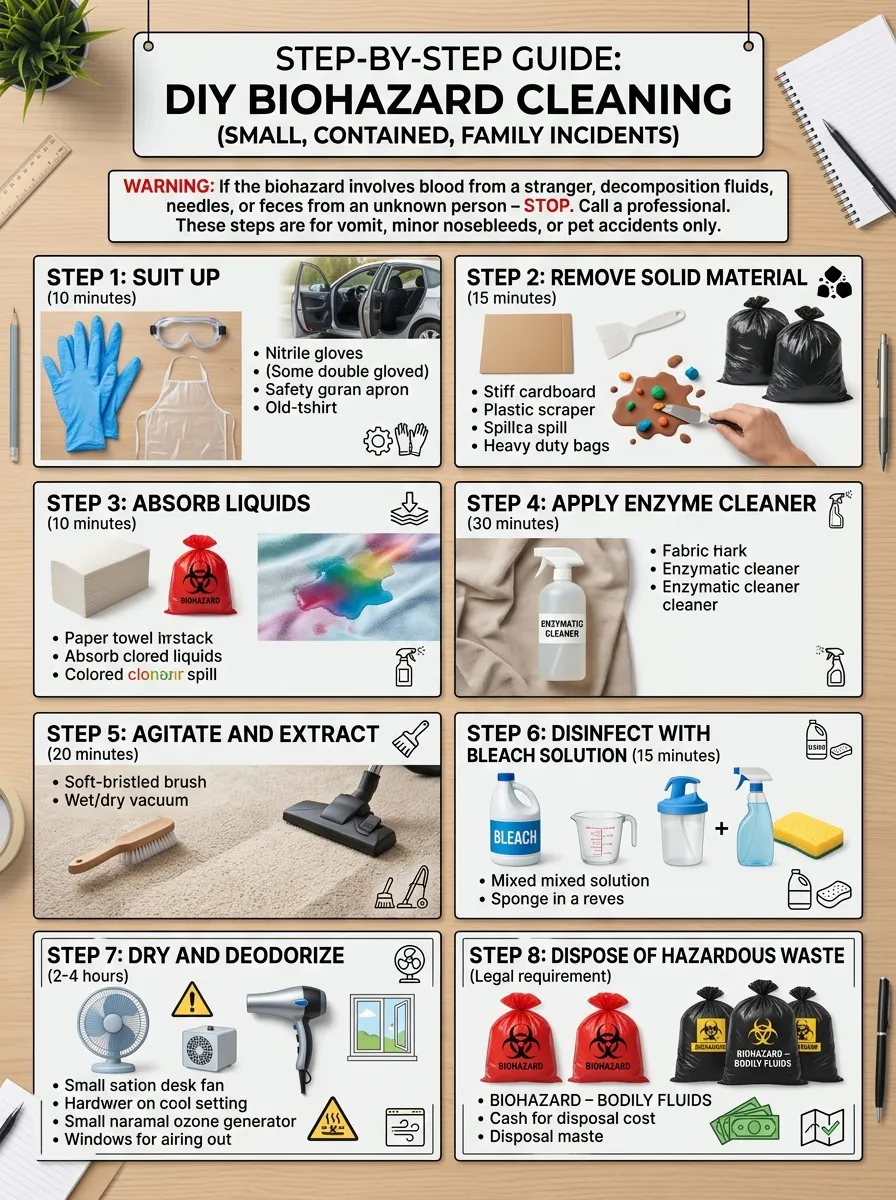
For DIY Biohazard Cleaning
WARNING: If the biohazard involves blood from a stranger, decomposition fluids, needles, or feces from an unknown person – STOP. Call a professional. These steps are for vomit, minor nosebleeds, or pet accidents only.
Step 1: Suit Up (10 minutes)
- Put on nitrile gloves (double-glove for extra safety).
- Wear safety goggles (not reading glasses).
- Wear a plastic apron or old clothes you will throw away.
- Open all car doors. Work outdoors with ventilation.
Step 2: Remove Solid Material (15 minutes)
- Use a stiff piece of cardboard or plastic scraper to lift solid material (vomit chunks, etc.).
- Do not use your hands even with gloves.
- Place solids directly into a heavy-duty trash bag. Double-bag immediately.
Step 3: Absorb Liquids (10 minutes)
- Cover the area with paper towels. Press down firmly.
- Let towels absorb for 2-3 minutes. Discard into biohazard bag.
- Repeat until no visible liquid remains.
Step 4: Apply Enzyme Cleaner (30 minutes)
- Spray enzymatic cleaner generously over the entire affected area.
- Let it sit for 15-20 minutes. Enzymes need time to break down proteins.
- Do not wipe during this time. Let it work.
Step 5: Agitate and Extract (20 minutes)
- Use a soft brush to gently work the cleaner into fabric or carpet.
- Extract using a wet/dry vacuum or carpet cleaner.
- Repeat Step 4 and 5 if odor persists.
Step 6: Disinfect with Bleach Solution (15 minutes)
- Mix 1:10 bleach to water solution (freshly mixed – loses potency after 24 hours).
- Spray or sponge onto the area. Do not oversaturate electronics.
- Let sit for 5 minutes (dwell time required to kill pathogens).
- Wipe with clean damp cloth. Then dry completely.
Step 7: Dry and Deodorize (2-4 hours)
- Use fans or a hair dryer (cool setting) to dry the area completely.
- If smell remains, rent an ozone generator. Run for 2 hours with windows closed. Then air out for 1 hour.
- Ozone warning: Remove all living things (people, pets, plants). Ozone is toxic while running.
Step 8: Dispose of Hazardous Waste (Legal requirement)
- Place all used gloves, paper towels, and contaminated materials into a red biohazard bag (or double-bagged heavy-duty black bags).
- Label bags clearly: “BIOHAZARD – BODILY FLUIDS”
- Check local regulations. Some areas allow household trash for family biohazards. Others require medical waste disposal ($50-100).
Cost Breakdown
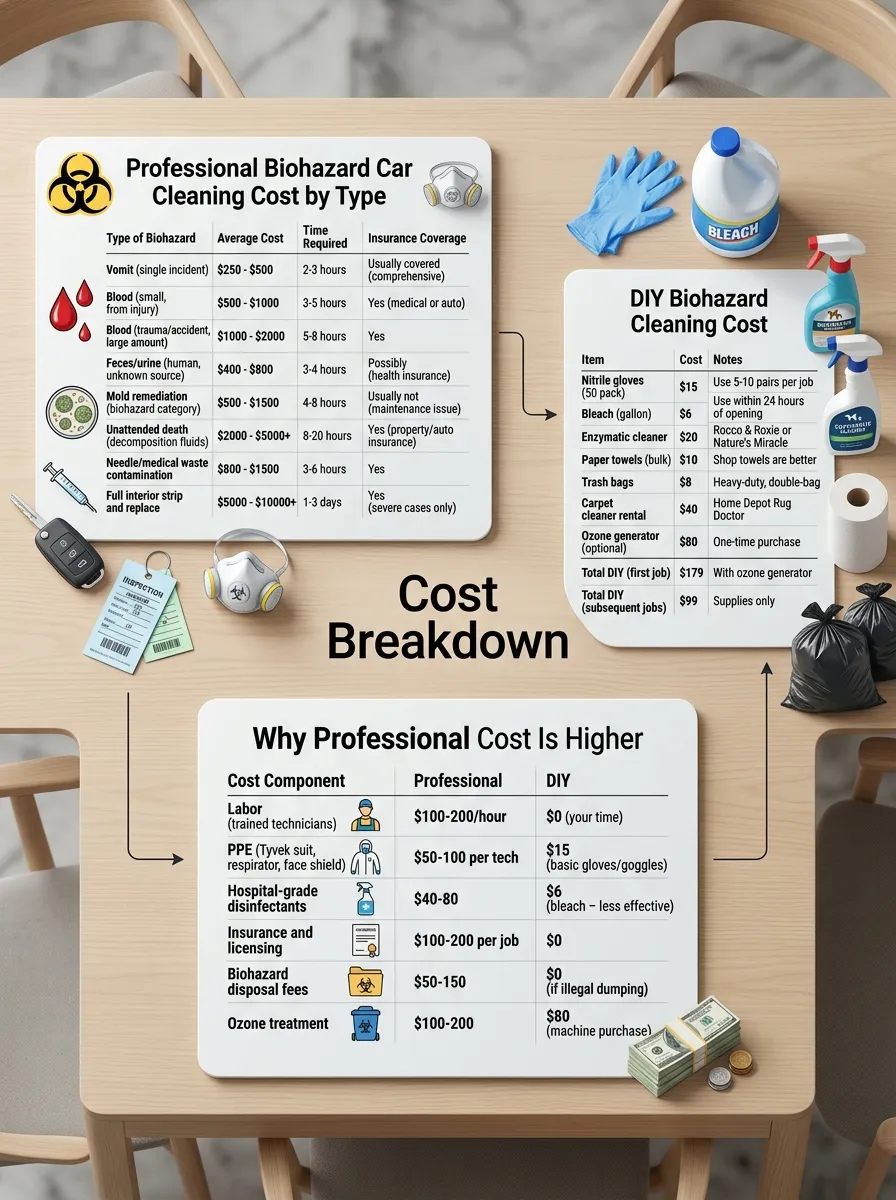
Professional Biohazard Car Cleaning Cost by Type
| Type of Biohazard | Average Cost | Time Required | Insurance Coverage |
|---|---|---|---|
| Vomit (single incident) | $250 – $500 | 2-3 hours | Usually covered (comprehensive) |
| Blood (small, from injury) | $500 – $1000 | 3-5 hours | Yes (medical or auto) |
| Blood (trauma/accident, large amount) | $1000 – $2000 | 5-8 hours | Yes |
| Feces/urine (human, unknown source) | $400 – $800 | 3-4 hours | Possibly (health insurance) |
| Mold remediation (biohazard category) | $500 – $1500 | 4-8 hours | Usually not (maintenance issue) |
| Unattended death (decomposition fluids) | $2000 – $5000+ | 8-20 hours | Yes (property/auto insurance) |
| Needle/medical waste contamination | $800 – $1500 | 3-6 hours | Yes |
| Full interior strip and replace | $5000 – $10000+ | 1-3 days | Yes (severe cases only) |


DIY Biohazard Cleaning Cost
| Item | Cost | Notes |
|---|---|---|
| Nitrile gloves (50 pack) | $15 | Use 5-10 pairs per job |
| Bleach (gallon) | $6 | Use within 24 hours of opening |
| Enzymatic cleaner | $20 | Rocco & Roxie or Nature’s Miracle |
| Paper towels (bulk) | $10 | Shop towels are better |
| Trash bags | $8 | Heavy-duty, double-bag |
| Carpet cleaner rental | $40 | Home Depot Rug Doctor |
| Ozone generator (optional) | $80 | One-time purchase |
| Total DIY (first job) | $179 | With ozone generator |
| Total DIY (subsequent jobs) | $99 | Supplies only |
Why Professional Cost Is Higher
| Cost Component | Professional | DIY |
|---|---|---|
| Labor (trained technicians) | $100-200/hour | $0 (your time) |
| PPE (Tyvek suit, respirator, face shield) | $50-100 per tech | $15 (basic gloves/goggles) |
| Hospital-grade disinfectants | $40-80 | $6 (bleach – less effective) |
| Insurance and licensing | $100-200 per job | $0 |
| Biohazard disposal fees | $50-150 | $0 (if illegal dumping) |
| Ozone treatment | $100-200 | $80 (machine purchase) |
Before and After
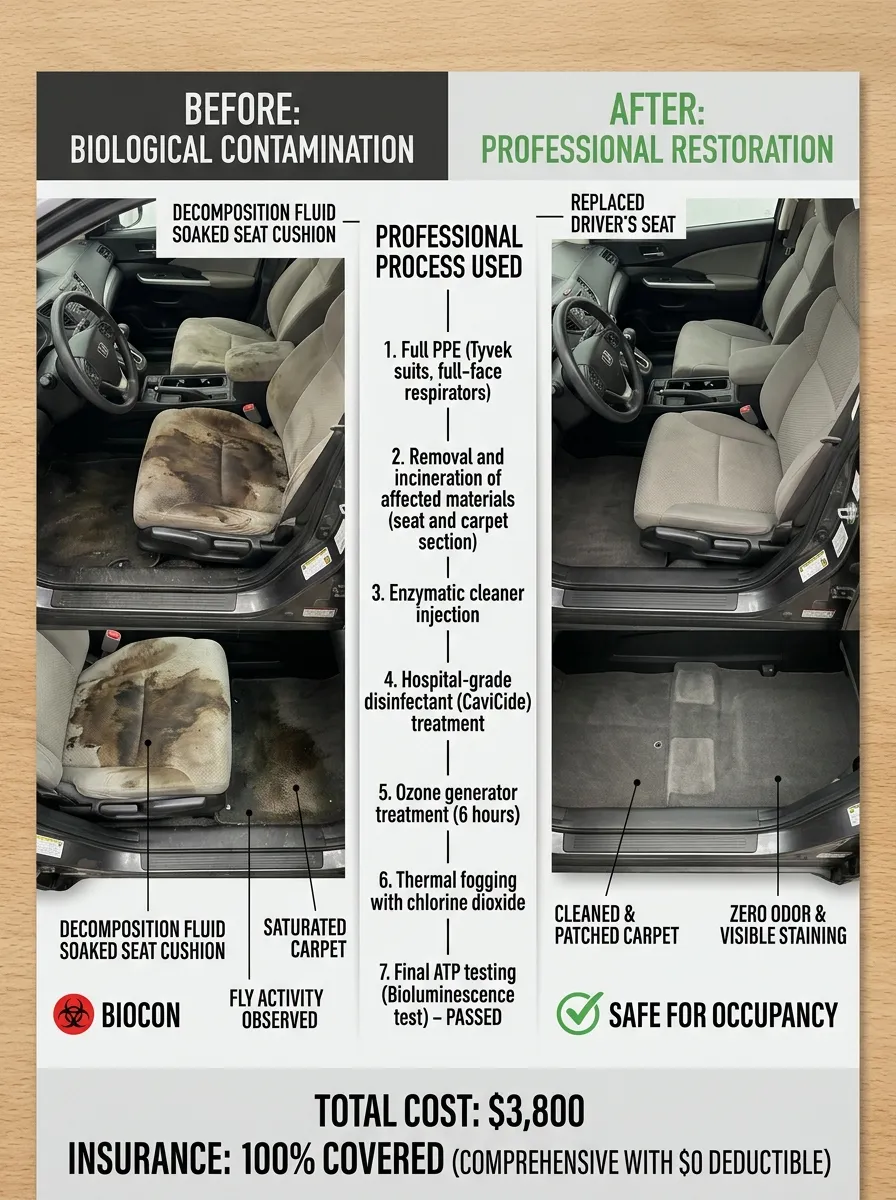
Scenario: 2015 Honda CR-V – Unattended death of owner. Decomposition fluids leaked into the driver’s seat and carpet. Vehicle sat for 3 weeks in summer heat. Extreme odor. Biological contamination throughout front cabin.
Before Description: The driver’s seat cushion is stained dark brown/black. Fluids have soaked through to the foam. The carpet under the seat is saturated. The smell is nauseating – sweet, rotting, and ammonia-like. Flies are present. The vehicle is uninhabitable. Biohazard testing would show high levels of putrescine, cadaverine, and bacteria.
Professional Process Used:
- Full PPE (Tyvek suits, full-face respirators with P100 filters)
- Removal and incineration of entire driver’s seat and carpet section
- Enzymatic cleaner injection into remaining foam
- Hospital-grade disinfectant (CaviCide) on all hard surfaces
- Ozone generator treatment (6 hours)
- Thermal fogging with chlorine dioxide
- Final ATP testing (bioluminescence test for organic matter) – passed
After Description: The driver’s seat has been replaced (new seat from junkyard – $300). The carpet was patched. There is no visible staining. No odor whatsoever – even with the windows closed on a hot day. ATP testing shows zero organic residue. The vehicle is safe for occupancy. Total cost: $3800. Insurance paid 100% (comprehensive coverage with $0 deductible).
What you cannot see: The headliner was also treated (decomposition gases rise). All HVAC vents were fogged. The spare tire compartment was inspected and cleaned.
Product Recommendations
Budget
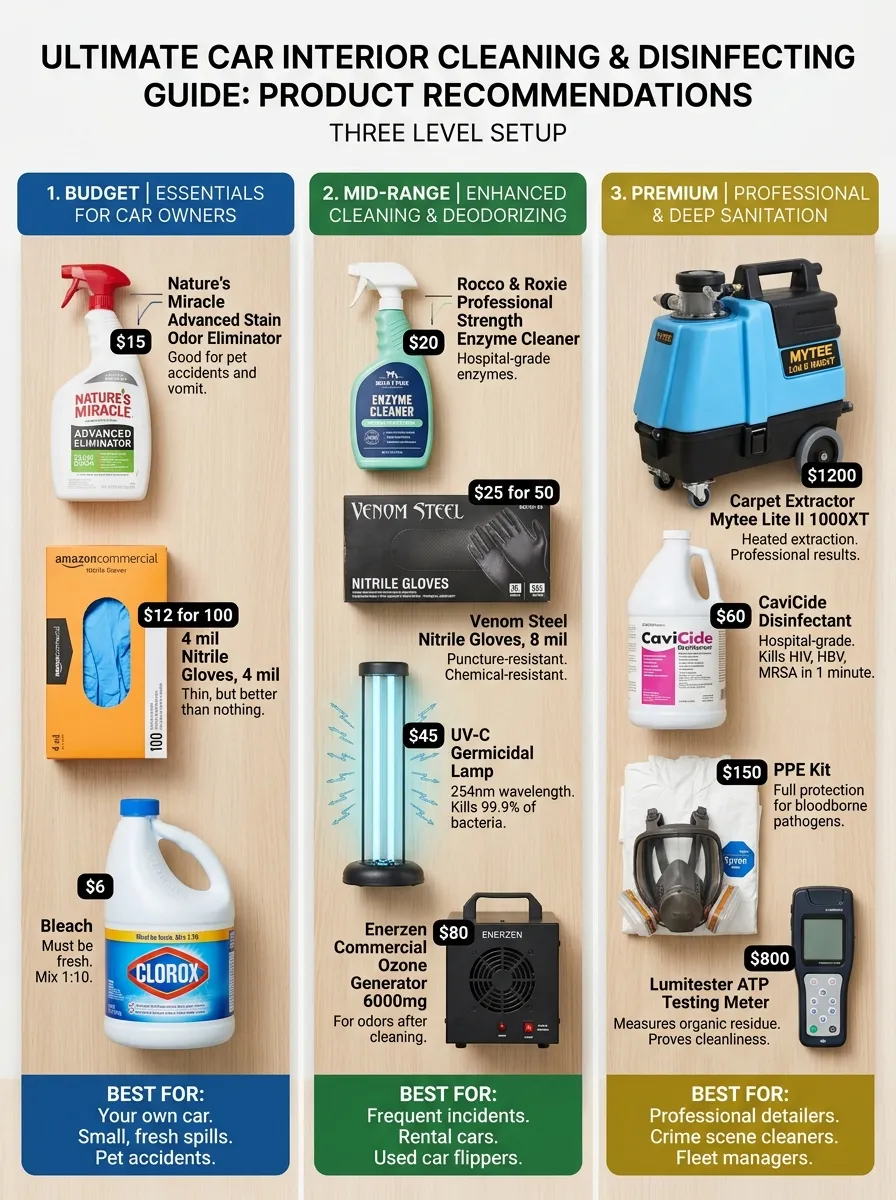
- Enzyme Cleaner: Nature’s Miracle Advanced Stain & Odor Eliminator ($15) – Good for pet accidents and vomit.
- Gloves: AmazonCommercial Nitrile Gloves, 4 mil ($12 for 100) – Thin, but better than nothing.
- Disinfectant: Clorox Bleach ($6) – Must be fresh. Mix 1:10.
- Best for: Your own car. Small, fresh spills. Pet accidents.
Mid-Range
- Enzyme Cleaner: Rocco & Roxie Professional Strength ($20) – Hospital-grade enzymes.
- Gloves: Venom Steel Nitrile Gloves, 8 mil ($25 for 50) – Puncture-resistant. Chemical-resistant.
- UV Sanitizing Light: UV-C Germicidal Lamp ($45) – 254nm wavelength. Kills 99.9% of bacteria.
- Ozone Generator: Enerzen Commercial Ozone Generator 6000mg ($80) – For odors after cleaning.
- Best for: Frequent incidents. Rental cars. Used car flippers.
Premium
- Carpet Extractor: Mytee Lite II 1000XT ($1200) – Heated extraction. Professional results.
- Disinfectant: CaviCide (gallon, $60) – Hospital-grade. Kills HIV, HBV, MRSA in 1 minute.
- PPE Kit: DuPont Tyvek Suit + 3M Full Face Respirator ($150) – Full protection for bloodborne pathogens.
- ATP Testing Meter: Lumitester ($800) – Measures organic residue. Proves cleanliness.
- Best for: Professional detailers. Crime scene cleaners. Fleet managers.
Comparison Section
Professional Biohazard Cleaner vs DIY Cleaning
| Feature | Professional | DIY |
|---|---|---|
| Safety | OSHA-compliant PPE. Vaccinated for Hep B. | Basic gloves. No bloodborne pathogen training. |
| Effectiveness | 99.99% pathogen kill. ATP tested. | Unknown. Bleach misses many pathogens. |
| Odor removal | Ozone + enzymes + fogging. Permanent. | Masking only. Odor returns in humidity. |
| Legal compliance | Biohazard waste manifest. Incineration. | Often illegal dumping. Liability if someone gets sick. |
| Insurance | Works with your insurer. Direct billing. | No coverage. Out of pocket. |
| Cost | $500 – $5000 | $50 – $150 |
| When to choose | Stranger’s blood. Decomposition. Legal protection needed. | Your own family. Small incident. No insurance. |
Winner: Professional for any serious biohazard. DIY only for very minor, low-risk incidents.
Insurance Claim vs Paying Out of Pocket
| Factor | Insurance Claim | Pay Out of Pocket |
|---|---|---|
| Out of pocket cost | $0 (after deductible) | Full amount ($500-$5000) |
| Time to file | 30 minutes on phone | $0 time |
| Premium impact | Usually none (comprehensive claim) | No impact |
| Claim on record | Yes (but comprehensive claims rarely raise rates) | No record |
| Best for | Any incident over $500 | Under your deductible ($250-$500) |
Winner: Insurance claim for anything over $500. Call your agent first.
Troubleshooting
| Problem | Likely Cause | Fix |
|---|---|---|
| Odor returned after cleaning | Biohazard soaked into foam. Surface cleaning only. | Replace affected seat foam or carpet. DIY cannot fix deep penetration. |
| Bleach smell is overwhelming | Used too much bleach or no ventilation. | Air out car for 24 hours. Use activated charcoal bags ($15 on Amazon). |
| Discoloration after cleaning | Bleach damaged fabric or dye. | Professional dye repair ($100-200). Or replace panel. |
| Mold growing after biohazard clean | Not dried completely. Biohazard fluids promote mold. | Professional mold remediation. HVAC system may be contaminated. |
| Insurance denied the claim | Policy does not include biohazard. Or incident was gradual (mold). | Appeal. Or switch to DIY if safe. |
| You feel sick after cleaning | Inhaled pathogens or fumes. | See a doctor. Mention biohazard exposure. Blood test for Hepatitis and HIV (window period matters). |
Time Required with Difficulty Level
| Task | Time | Difficulty (1-10) | Risk Level |
|---|---|---|---|
| DIY vomit cleanup (family) | 1-2 hours | 3 (easy) | Low |
| DIY blood cleanup (small, family) | 2-3 hours | 4 (medium) | Medium (Hep B risk) |
| DIY decomposition (any amount) | DO NOT DIY | N/A | EXTREME (life-threatening) |
| Professional biohazard (small) | 2-4 hours | N/A (pro does it) | N/A |
| Professional biohazard (death) | 6-12 hours | N/A (pro does it) | N/A |
Risk Level Key:
- Low: Unpleasant but not dangerous. Vomit, urine, feces from healthy family.
- Medium: Blood from known healthy family. Needles (puncture risk).
- High: Blood from unknown person. Decomposition. Feces from unknown person (Hepatitis A risk).
- Extreme: Unattended death. Crime scene. Needle-filled vehicle. HIV/Hep C risk.
Pro Tips
Do
- Do call your insurance before cleaning anything. Take photos. Get approval. Some require professional cleaning.
- Do wear double gloves when handling blood or needles. If outer glove tears, remove it immediately.
- Do use enzymatic cleaners before bleach. Enzymes break down proteins. Bleach just bleaches them.
- Do dispose of biohazard waste legally. Check local laws. Some areas allow household trash for family biohazards. Others require medical waste pickup.
- Do get a Hepatitis B vaccine if you frequently clean biohazards (professional detailers).
Don’t
- Don’t ever use a household vacuum on biohazards. You will aerosolize pathogens. Use a wet/dry vac with HEPA filter only.
- Don’t mix bleach with ammonia or other cleaners. Creates toxic chloramine gas (can kill you).
- Don’t steam clean biohazards without extracting fluids first. Heat sets protein stains permanently.
- Don’t ignore HVAC contamination. Biohazard odors recirculate through vents. Professional fogging is required.
- Don’t sell a car with undisclosed biohazard history. You can be sued for fraud and personal injury.
Best Picks
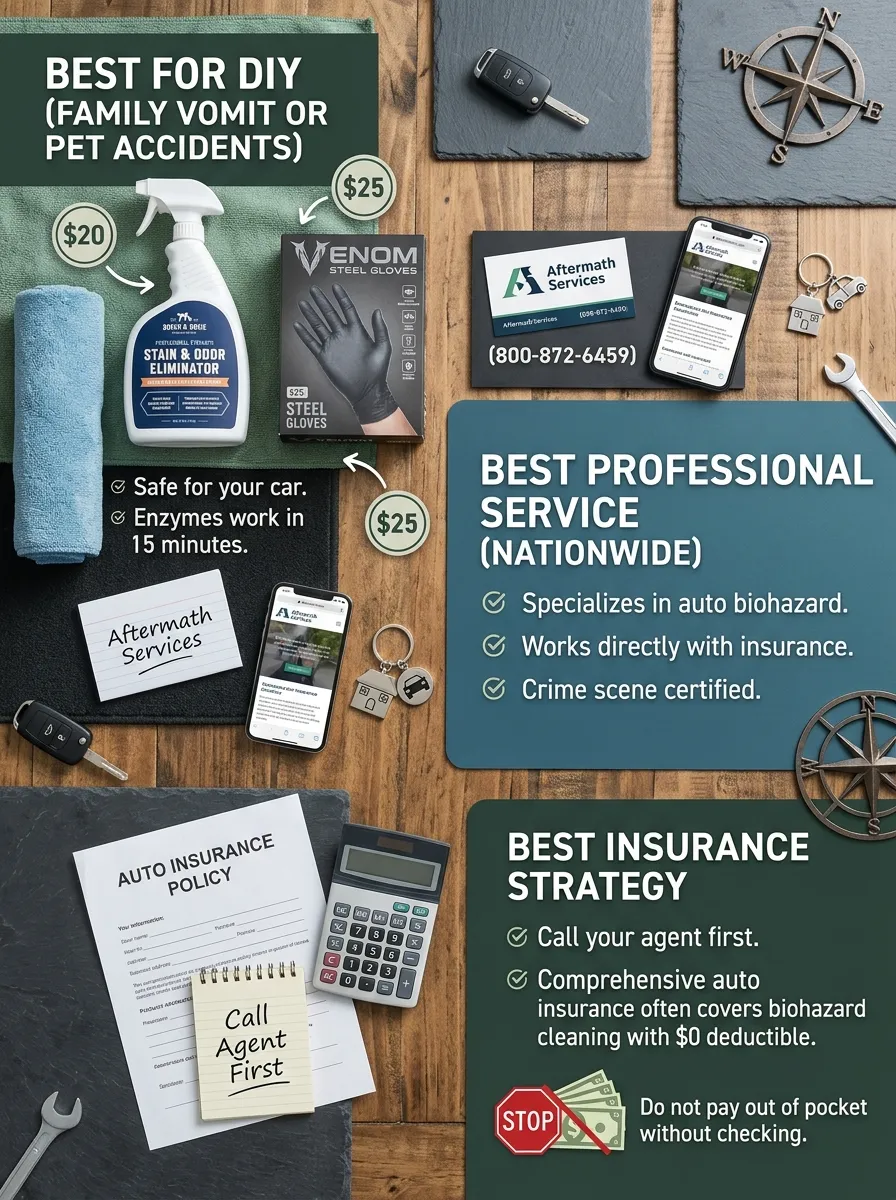
- Best for DIY (Family Vomit or Pet Accidents): Rocco & Roxie Professional Strength Stain & Odor Eliminator ($20) + Venom Steel Gloves ($25). Safe for your car. Enzymes work in 15 minutes.
- Best Professional Service (Nationwide): Aftermath Services (800-872-6459). Specializes in auto biohazard. Works directly with insurance. Crime scene certified.
- Best Insurance Strategy: Call your agent first. Comprehensive auto insurance often covers biohazard cleaning with $0 deductible. Do not pay out of pocket without checking.
Use Cases
| Your Situation | Best Action |
|---|---|
| Your child vomited in your car | DIY (Rocco & Roxie + gloves). $30. 2 hours. |
| Nosebleed on cloth seat (your blood) | DIY with hydrogen peroxide (breaks down blood). Then enzyme cleaner. $10. |
| You bought a used car with unknown stain/smell | Professional biohazard assessment ($100-200). Could be decomposition. |
| Blood from stranger after accident | Professional only. Insurance pays. Health risk is real. |
| Unattended death in vehicle | Professional only. Do not enter the vehicle. Call police first, then biohazard company. |
| Mold from flood or leak | Professional mold remediation. Insurance may not cover (maintenance issue). |
| Needle found in used car | Professional hazmat team. Do not touch. Needle-stick = HIV/Hep C risk. |
Common Mistakes to Avoid
- DIYing a stranger’s blood. HIV survives in dried blood for up to 7 days. Hepatitis B survives for 7 days. You cannot see pathogens. Professional testing is the only way to confirm safety.
- Using bleach on fabric without testing. Bleach destroys many fabrics (nylon, wool, some polyester blends). Test in a hidden area first.
- Not drying completely. Biohazard fluids + moisture = mold within 48 hours. Use fans and dehumidifiers. Do not reassemble carpets until bone dry.
- Throwing biohazard waste in household trash. In many states, this is a criminal offense (improper disposal of medical waste). Fines up to $10,000.
- Assuming insurance won’t pay. Most people never ask. Comprehensive auto insurance covers “sudden and accidental contamination.” Call and ask.
- Selling a car with biohazard history without disclosure. You can be sued for years. In some states, it is a felony. Disclose in writing or total the vehicle.
FAQs
1. What is the average cost of biohazard car cleaning?
Basic cases of professional biohazard cleaning typically cost between $250–$300, whereas extreme cases can top out over $2,500. (So, minor incidents like vomit or bodily fluids $120–$380 PLUS, blood cleanup $150–$320+, major trauma and/or decomposition $380–$1,900+ subject to severity)
2. Does car insurance cover biohazard cleaning?
The answer is yes, where many full-coverage policies will treat biohazard cleaning as a no-fault incident. A few specialized firms, including National Crime Scene Cleanup, may also liaise directly with insurance companies on your behalf.
3. Why is biohazard cleaning more expensive than regular detailing?
A task that requires special safety equipment (PPE), industrial-strength disinfectants and rigid protocols for disposing of hazardous waste, so it costs more. In addition, you are then trained to ensure the vehicle is completely sanitized and safe.
4. What factors impact the final price?
Many factors determine the final price such as: for what type of biohazard (e.g. blood, airborne risks), how extensive is the contamination (eg fluids soaking into upholstery) and how long it has been around to cause odor and damage issues.
5. Can I clean biohazards from my car myself to save money?
It is highly discouraged due to severe health hazards and the risk of not cleaning properly. A few special tools like ozone machines and enzyme cleaners are utilized to guarantee that bacteria or odor is completely gone.
6. Are there additional fees for odor removal?
Yes, odor removal is often an extra service and may cost around $80–$100 per hour, depending on the equipment and time required.
7. How long does a biohazard car cleaning take?
Cleaning time can vary widely. Minor jobs may take a few hours, while severe cases like decomposition or infestations can take several days and require partial disassembly of the vehicle.
8. What is the cost of cleaning a rodent-infested car?
Rodent cleanup typically starts around $300–$700 but can exceed $5,000 in severe cases, especially if wiring, insulation, or interior components are damaged.
9. Do biohazard cleaners charge by the hour or a flat fee?
Many companies use a mix of both. Hourly rates can range from $25 to $150+, with additional fees for PPE ($150–$200) and hazardous waste disposal ($50–$500).
10. Is there a “biohazard fee” for minor messes?
Yes, even small incidents often include a minimum biohazard surcharge, typically around $90–$200, due to the extra safety precautions required.
11. Are biohazard cleaning services discreet?
Most reputable companies operate discreetly, often using unmarked vehicles and maintaining strict privacy protocols for sensitive situations.
12. Do I get a certificate of completion?
Yes, many professional services provide a certificate of disinfection or verification (such as ATP testing) to confirm the vehicle is safe for use or resale.
Final Thought
The cost of cleaning a biohazard car ranges from cheap to staggering. But here is the one life-changing truth: Your coverage most likely covers those costly jobs. With one phone call to your agent, that $3000 bill can be a $0 bill.
Please save your health, do not try to save money. Bloodborne pathogens are invisible. Decomposition gases are toxic. It is not because they are dramatic that a professional biohazard cleaner wears a Tyvek suit and a respirator: It is because they know what is in that car.”
Fine, if the biohazard tolerably shot out from some healthy member of your own family. Wear gloves. Use enzyme cleaner. Dry completely. But wait one second before turning back — if you feel insecure, call a pro. Your Life is More than a Deductible
Clean the car. Protect yourself. Drive safely.

Leave a Reply