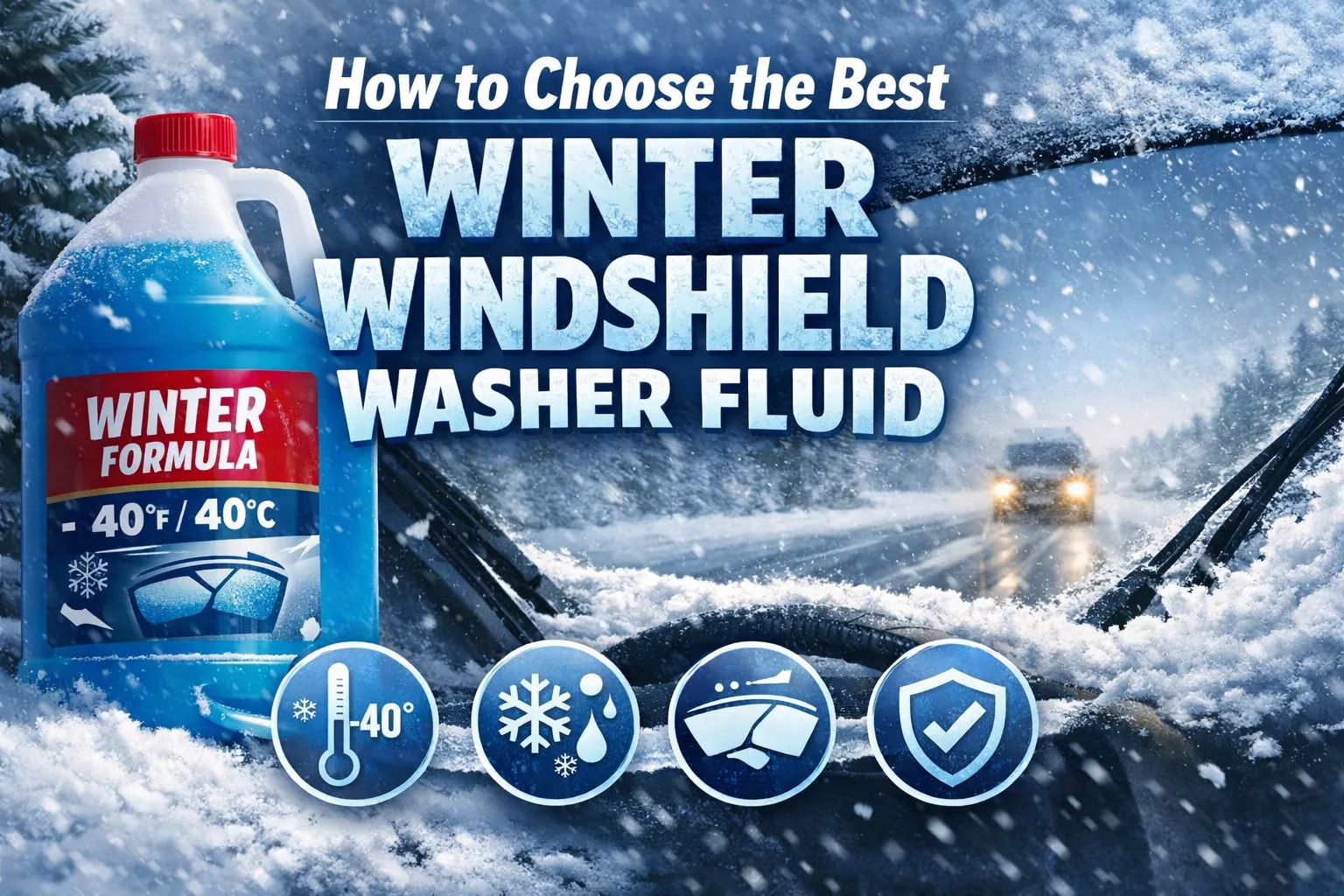
Visibility is one of the primary road-safety worries once that winter arrives. Snow, slush, salt and freezing temperatures can easily cloud your windshield into a dangerous mess. What many drivers do not know is that, if it gets cold enough (just a few degrees above freezing), plain washer fluid can freeze inside the reservoir or in the spray lines, leaving drivers with no windshield-cleaning protection at the worst possible time.
Which is where winter windshield washer fluid comes in.Created to endure freezing and dissolve obstinate road grime, the stuff can make sure you’ve got good visibility even when it’s absurdly cold. In this comprehensive guide, we’ll cover why it’s important to have winter windshield washer fluid on hand, which option is best for your vehicle and how to use it properly step by step. By the time you’re done, you’ll know exactly which products to pick up and how to keep your glass as clear as can be all season.
Quick Answer
Use a cold-season windshield washer fluid for such a low-temperature (–20°F or under). It stops freezing, salt and grime buildup and adds winter driving visibility.
Why It Matters
- Prevents washer fluid from freezing
- Removes salt, ice, and road grime
- Improves visibility and safety
- Protects washer system components
- Reduces windshield streaks
What You’ll Need (Tools + Products)
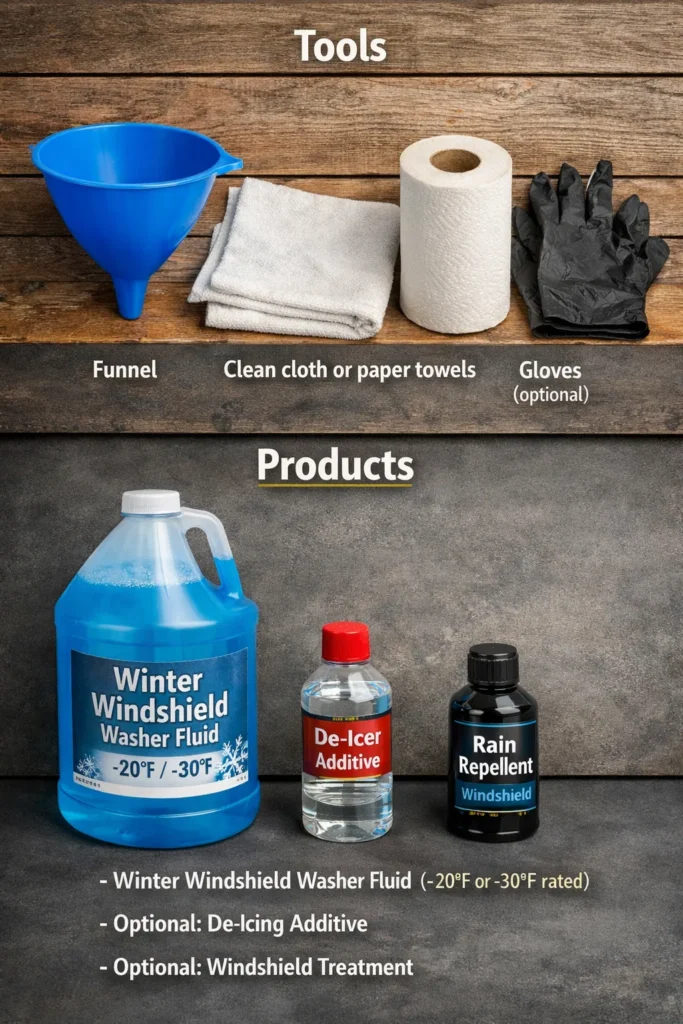
Tools
- Funnel (for clean pouring)
- Clean cloth or paper towels
- Gloves (optional)
Products
- Winter windshield washer fluid (–20°F or –30°F rated)
- Optional: de-icing additive
- Optional: windshield treatment
Step-by-Step Guide (How to Add Winter Washer Fluid)
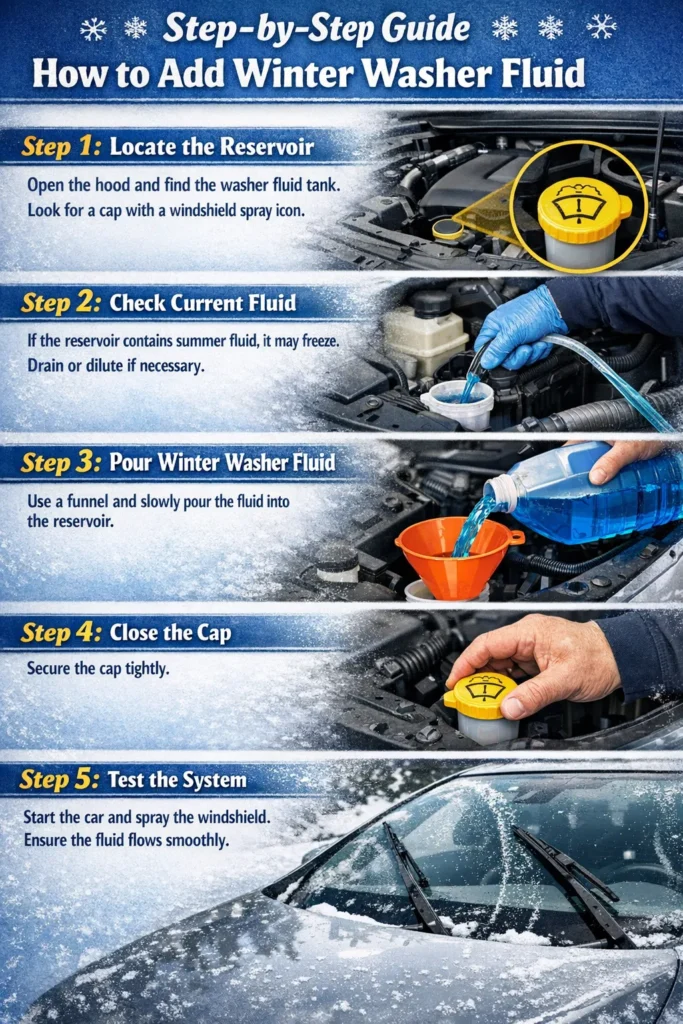
Step 1: Locate the Reservoir
Open the hood and find the washer fluid tank.
Look for a cap with a windshield spray icon.
Step 2: Check Current Fluid
If the reservoir contains summer fluid, it may freeze.
Drain or dilute if necessary.
Step 3: Pour Winter Washer Fluid
Use a funnel and slowly pour the fluid into the reservoir.
Step 4: Close the Cap
Secure the cap tightly.
Step 5: Test the System
Start the car and spray the windshield.
Ensure the fluid flows smoothly.
Cost Breakdown & Pricing Table
| Type | Price Range | Temperature Rating | Best For |
|---|---|---|---|
| Budget | $3–$5 | –20°F | Mild winters |
| Mid-Range | $5–$8 | –25°F | Most climates |
| Premium | $8–$15 | –30°F or lower | Extreme cold |
Typical yearly cost: $15–$40 depending on usage.
Before and After (Winter Fluid Upgrade)
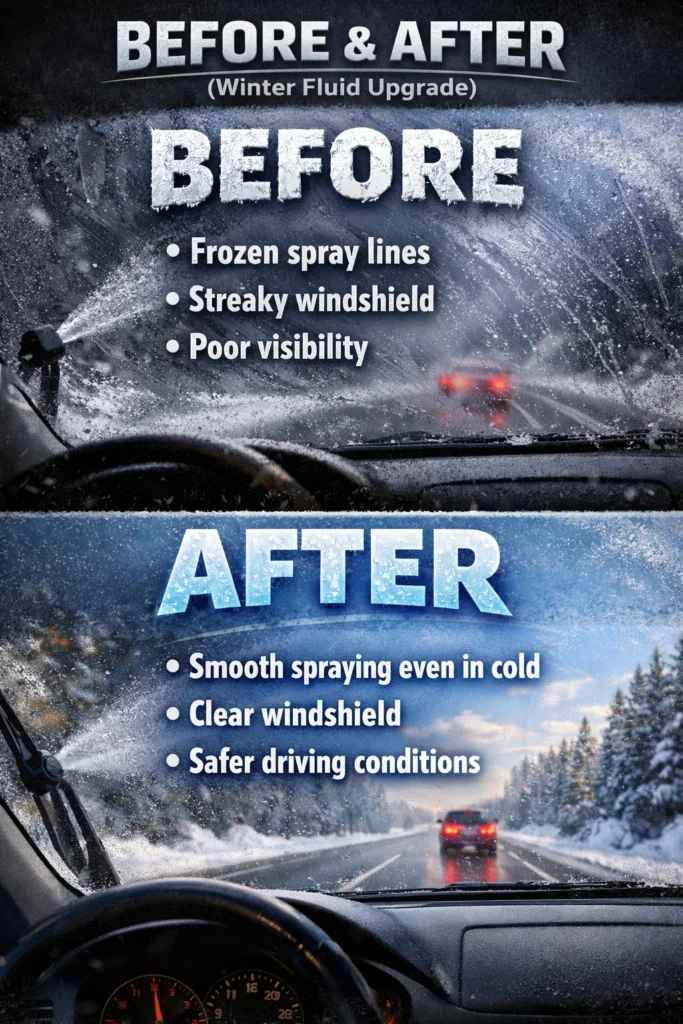
Before:
- Frozen spray lines
- Streaky windshield
- Poor visibility
After:
- Smooth spraying even in cold
- Clear windshield
- Safer driving conditions
Product Recommendations
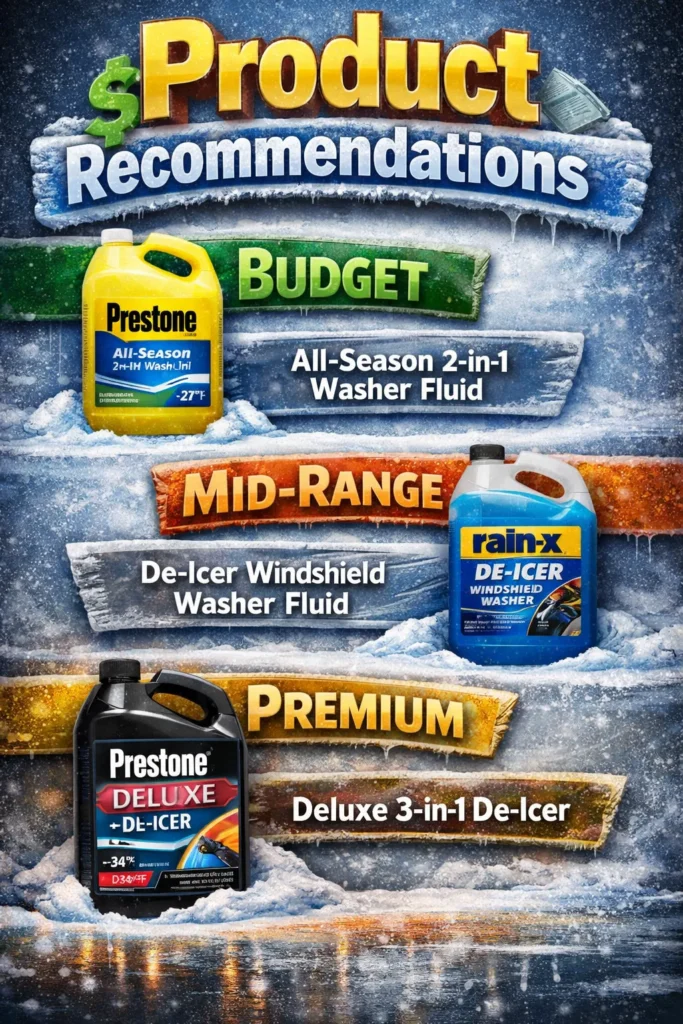
Budget
- Prestone All-Season 2-in-1 Washer Fluid
Mid-Range
- Rain-X De-Icer Windshield Washer Fluid
Premium
- Prestone Deluxe 3-in-1 De-Icer
Comparison Section (Option A vs Option B)
| Feature | Regular Fluid | Winter Fluid |
|---|---|---|
| Freeze Protection | Low | High |
| Ice Removal | No | Yes |
| Salt Cleaning | Limited | Strong |
| Winter Safety | Poor | Excellent |
Troubleshooting
| Problem | Likely Cause | Fix |
|---|---|---|
| No spray | Frozen lines | Warm garage or add winter fluid |
| Weak spray | Low fluid | Refill reservoir |
| Streaks on glass | Dirty windshield | Clean glass and wipers |
| Pump noise | Frozen pump | Thaw system |
Time Required & Difficulty
- Time: 5–10 minutes
- Difficulty: Very easy (Beginner level)
Pro Tips
Do
- Use fluid rated for your coldest temperatures
- Keep a spare bottle in the trunk
- Check fluid weekly in winter
Don’t
- Mix summer and winter fluids heavily
- Use plain water
- Ignore low fluid warnings
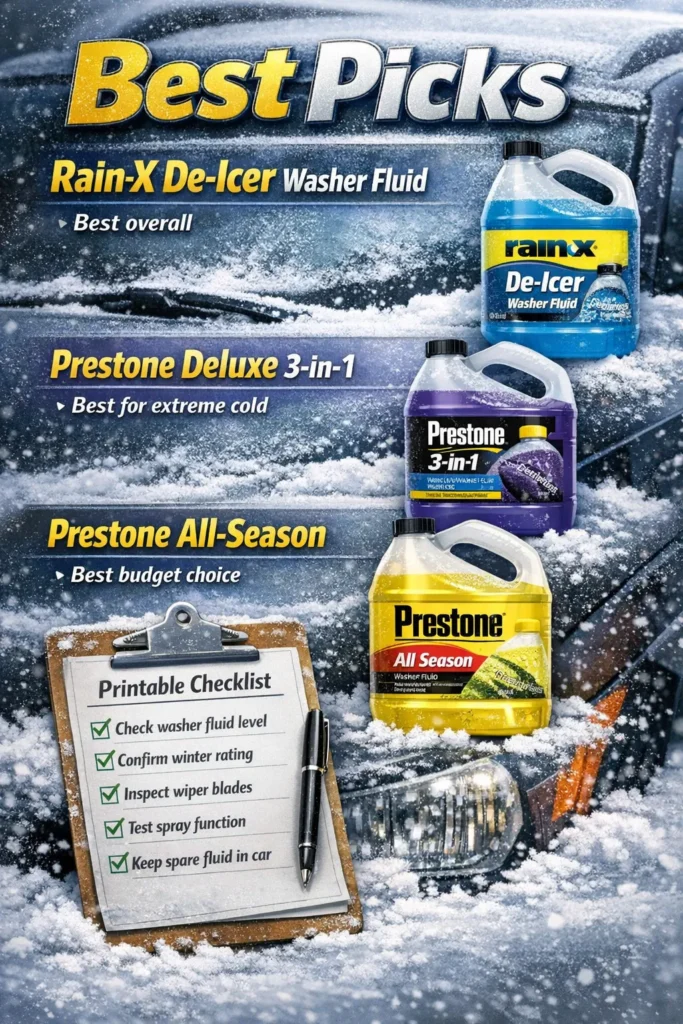
Best Picks
- Rain-X De-Icer Washer Fluid – Best overall
- Prestone Deluxe 3-in-1 – Best for extreme cold
- Prestone All-Season – Best budget choice
Printable Checklist
- Check washer fluid level
- Confirm winter rating
- Inspect wiper blades
- Test spray function
- Keep spare fluid in car
Use Cases (When to Choose What)
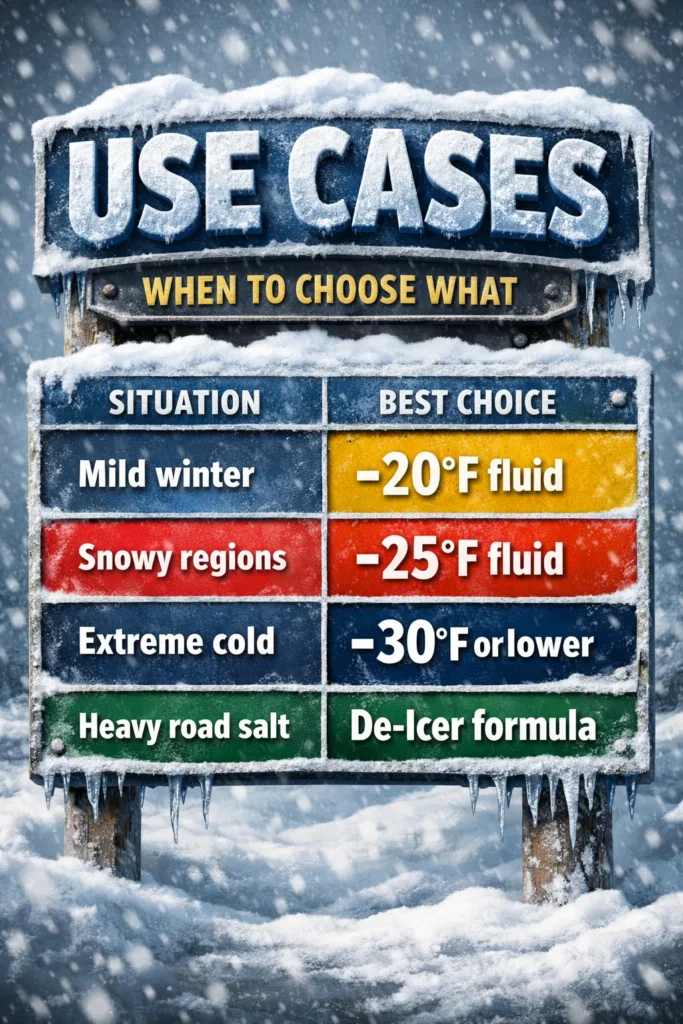
| Situation | Best Choice |
|---|---|
| Mild winter | –20°F fluid |
| Snowy regions | –25°F fluid |
| Extreme cold | –30°F or lower |
| Heavy road salt | De-icer formula |
Common Mistakes to Avoid
- Using summer washer fluid in winter
- Waiting until fluid freezes
- Overfilling the reservoir
- Ignoring worn wiper blades
Safety Notes & Warnings
- Washer fluid is toxic—keep away from children and pets.
- Avoid skin and eye contact.
- Store bottles in a sealed container.
- Never drink or inhale washer fluid.
FAQ
1. Can I use summer washer fluid in winter?
No, it can freeze and block the system.
2. What temperature rating should I choose?
Choose at least 10°F lower than your coldest local temperature.
3. Can I mix different brands?
Yes, but avoid mixing summer and winter fluids.
4. How often should I refill it?
Check weekly in winter.
5. Does winter fluid remove ice?
Yes, de-icer formulas help melt light ice.
6. Can washer fluid damage paint?
No, automotive fluids are paint-safe.
7. Is premium fluid worth it?
Yes, in extremely cold climates.
8. What happens if fluid freezes?
Lines and pump may stop working.
9. Can I make my own washer fluid?
Not recommended for winter conditions.
10. Does it help with road salt?
Yes, winter formulas are designed for salt removal.
Final Thought
Clear vision is essential for winter driving — and the right washer fluid has a larger part in it than many drivers realize. Best winter windshield washer fluid This high quality winter wind shield washer fluid stops freezing and aids to clean away salt build up while keeping your windshield clear during harsh conditions. It’s also one of the simplest and least expensive upgrades you can make for winter safety.
With a properly rated fluid and regular checking, you can prevent frozen lines, streaky glass and dangerous driving conditions. A little refill today can ensure safer and more comfortable driving in every winter to come.




Leave a Reply