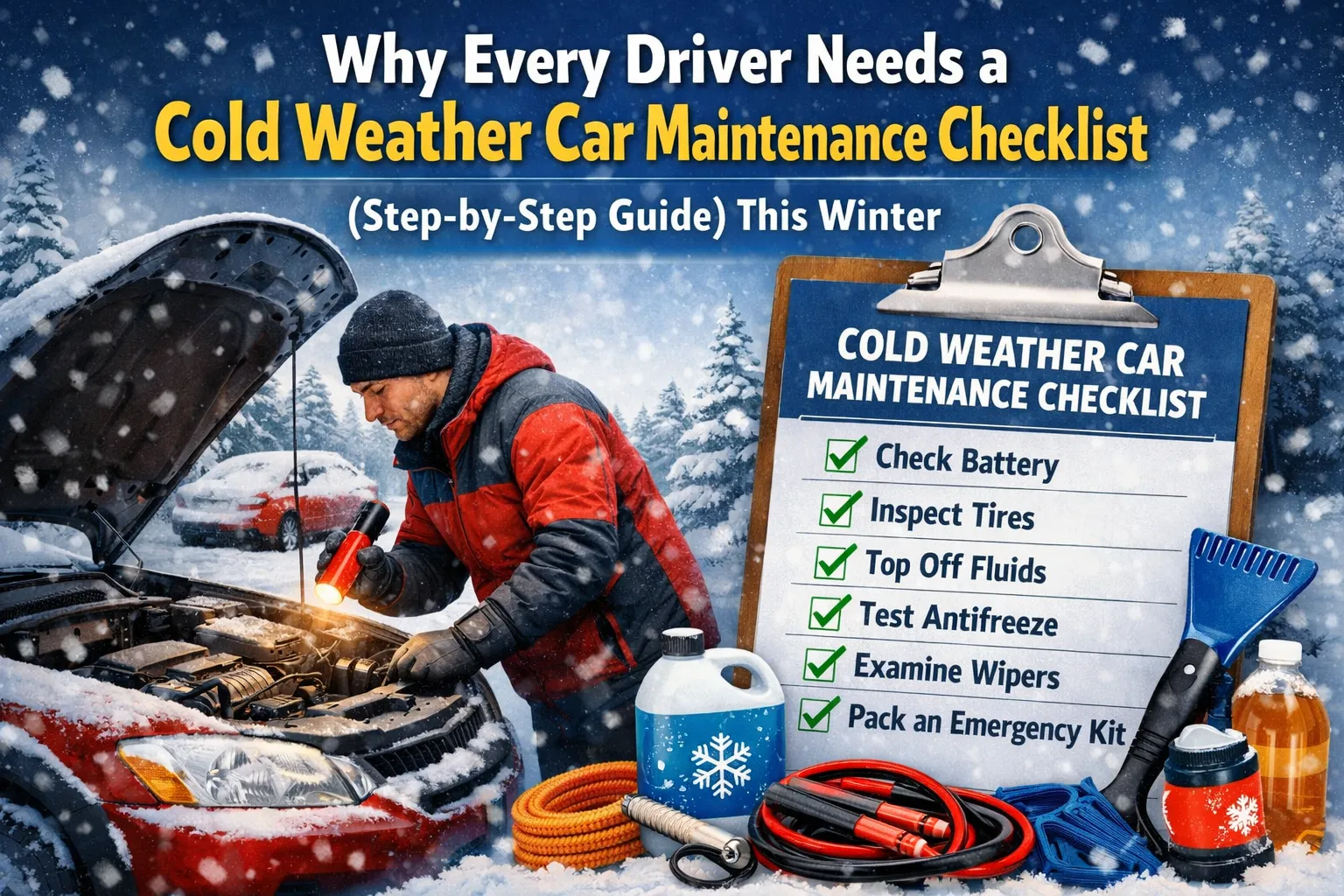
Your car is put through some of the most punishing conditions of the year when it gets cold. Freezing mornings, narrow tires, road salt and heavy snow can quickly make a dependable car into a breakdown waiting to strike. Only when their battery is dead in the cold, their tires have lost all traction or they can’t start the engine do many drivers admit that they didn’t maintain their vehicle properly for winter.
An adequate cold weather car maintenance checklist can keep those problems from ever occurring. Winter not only affects comfort but safety, fuel efficiency and also expensive components such as batteries, tires, brakes and cooling systems. Skipping winter prep can result in expensive repairs, unsafe driving conditions or getting stuck on the side of the road in subzero temperatures.
The good news is that caring for your car during winter doesn’t have to be complicated or costly. By following an easy checklist and arming yourself with the necessary tools, you can ensure that your vehicle is running smoothly throughout the season. In this in-depth guide you’ll discover what to check, how to do it step-by-step, and what products are worth your hard-earned cash—so your car stays up and running in even the most brutal weather.
Quick Answer
A cold weather car maintenance checklist includes:
- Check battery health
- Inspect tires and tire pressure
- Top up antifreeze and winter fluids
- Replace wiper blades
- Test heater and defroster
- Inspect brakes
- Keep an emergency winter kit
Why It Matters (Benefits)
- Prevents winter breakdowns
- Improves traction and safety
- Extends battery life
- Reduces repair costs
- Improves fuel efficiency
- Protects paint and underbody from salt
What You’ll Need (Tools + Products)
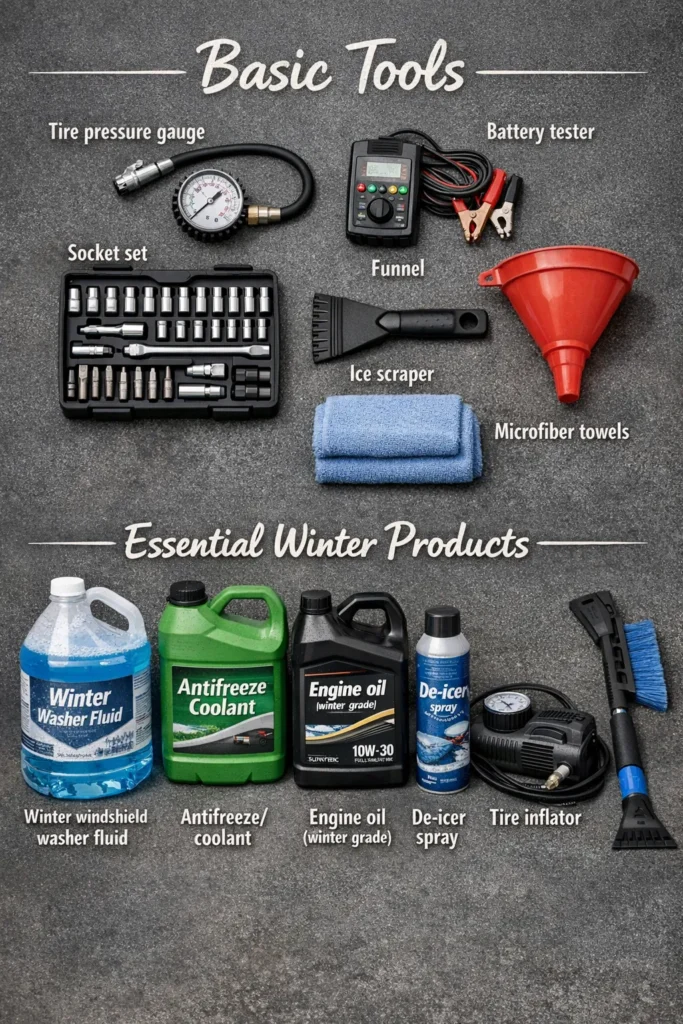
Basic Tools
- Tire pressure gauge
- Battery tester
- Socket set
- Funnel
- Ice scraper
- Microfiber towels
Essential Winter Products
- Winter windshield washer fluid
- Antifreeze/coolant
- Engine oil (winter grade)
- De-icer spray
- Tire inflator
- Snow brush
Step-by-Step Guide (How-To)
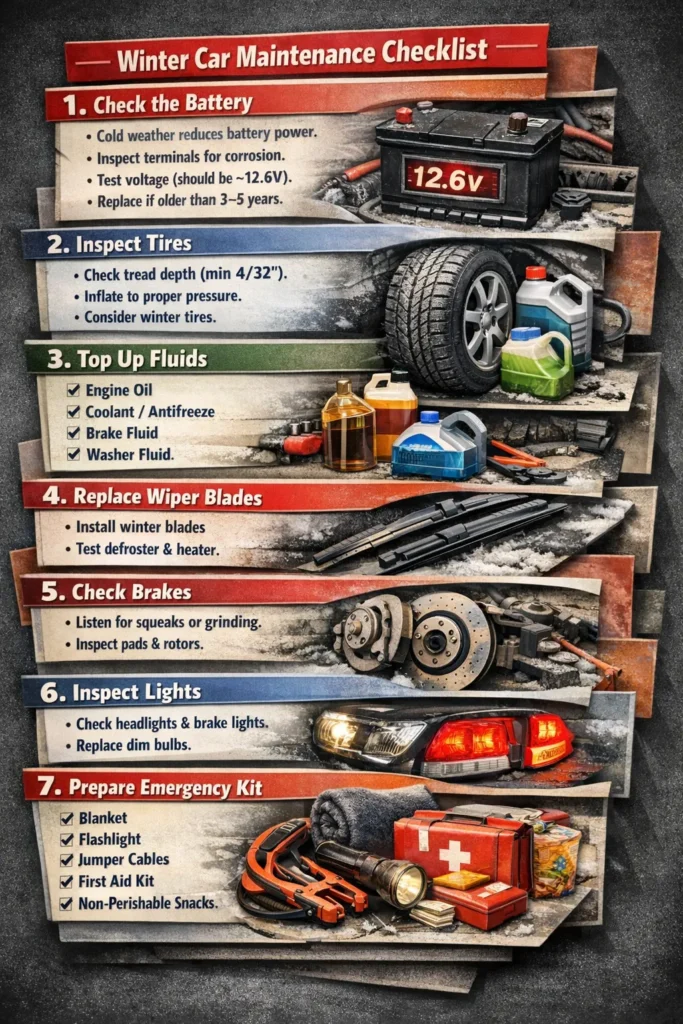
1. Check the Battery
Cold weather reduces battery power.
- Inspect terminals for corrosion.
- Test voltage (should be ~12.6V).
- Replace if older than 3–5 years.
2. Inspect Tires
- Check tread depth (minimum 4/32″ for winter).
- Inflate to manufacturer pressure.
- Consider winter tires if you live in snowy areas.
3. Top Up Fluids
Check:
- Engine oil
- Coolant/antifreeze
- Brake fluid
- Washer fluid (winter-rated)
4. Replace Wiper Blades
- Install winter-specific blades.
- Test defroster and heater.
5. Check Brakes
- Listen for squeaks or grinding.
- Inspect brake pads and rotors.
6. Inspect Lights
- Check headlights, brake lights, and signals.
- Replace dim bulbs.
7. Prepare Emergency Kit
Include:
- Blanket
- Flashlight
- Jumper cables
- First-aid kit
- Non-perishable snacks
Cost Breakdown / Pricing Table
| Service | DIY Cost | Mechanic Cost |
|---|---|---|
| Battery test | Free–$10 | $20–$40 |
| Battery replacement | $80–$180 | $150–$300 |
| Winter tire swap | $0–$40 | $60–$120 |
| Oil change | $30–$60 | $70–$120 |
| Coolant flush | $40–$70 | $100–$180 |
| Wiper replacement | $15–$40 | $30–$60 |
Explanation:
DIY maintenance saves money, but professional checks offer peace of mind before harsh weather arrives.
Before and After (Winter Prep Impact)
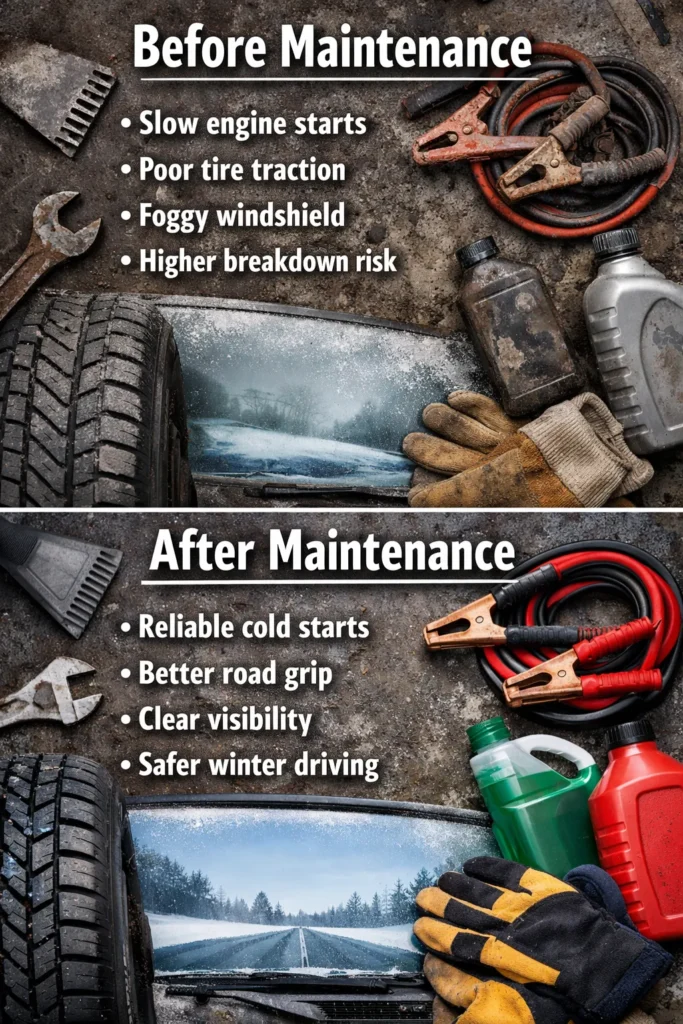
Before Maintenance
- Slow engine starts
- Poor tire traction
- Foggy windshield
- Higher breakdown risk
After Maintenance
- Reliable cold starts
- Better road grip
- Clear visibility
- Safer winter driving
Product Recommendations (Affiliate Friendly)
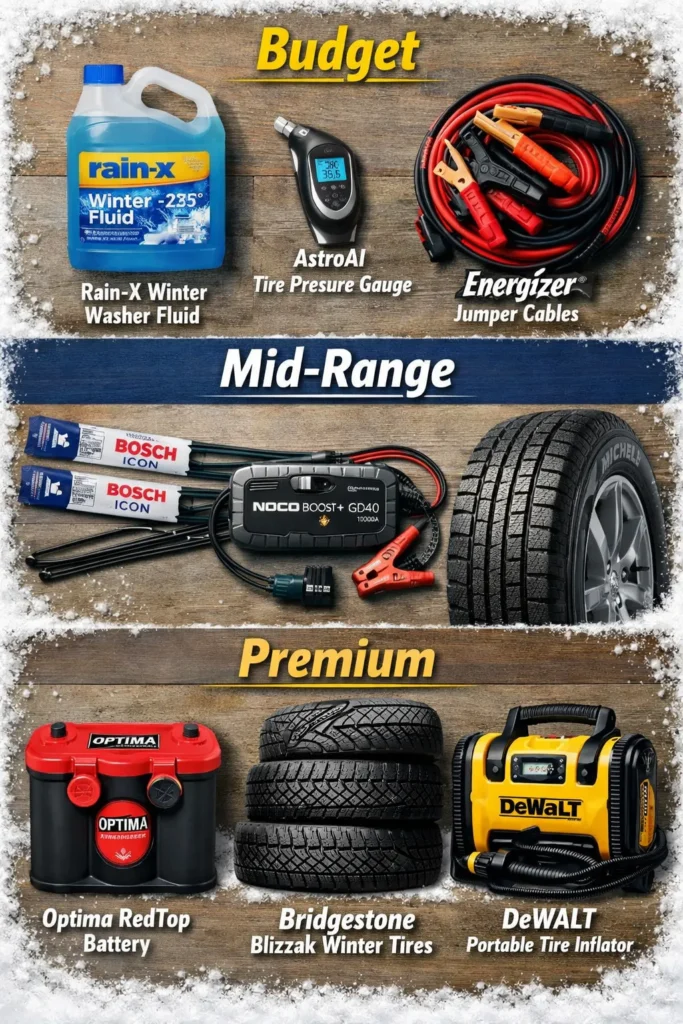
Budget
- Rain-X Winter Washer Fluid
- AstroAI Tire Pressure Gauge
- Energizer Jumper Cables
Mid-Range


- Bosch ICON Wiper Blades
- NOCO Boost Jump Starter
- Michelin Defender Tires
Premium
- Optima RedTop Battery
- Bridgestone Blizzak Winter Tires
- DeWalt Portable Tire Inflator
Comparison Section (Option A vs Option B)
| Feature | All-Season Tires | Winter Tires |
|---|---|---|
| Cold traction | Moderate | Excellent |
| Snow performance | Fair | Superior |
| Ice braking | Weak | Strong |
| Year-round use | Yes | No |
| Cost | Lower | Higher |
Conclusion:
Winter tires provide significantly better safety in snow and ice.
Troubleshooting Table
| Problem | Possible Cause | Fix |
|---|---|---|
| Car won’t start | Weak battery | Jump-start or replace |
| Low tire pressure | Cold air shrinkage | Inflate tires |
| Frozen windshield | Summer washer fluid | Switch to winter fluid |
| Heater not working | Low coolant | Top up coolant |
Time Required & Difficulty
- Total time: 1–2 hours
- Difficulty: Easy to Moderate
Pro Tips (Do / Don’t)
Do
- Warm up engine briefly before driving
- Keep fuel tank at least half full
- Wash car regularly to remove salt
Don’t
- Ignore low tire pressure warnings
- Use water instead of washer fluid
- Delay battery replacement
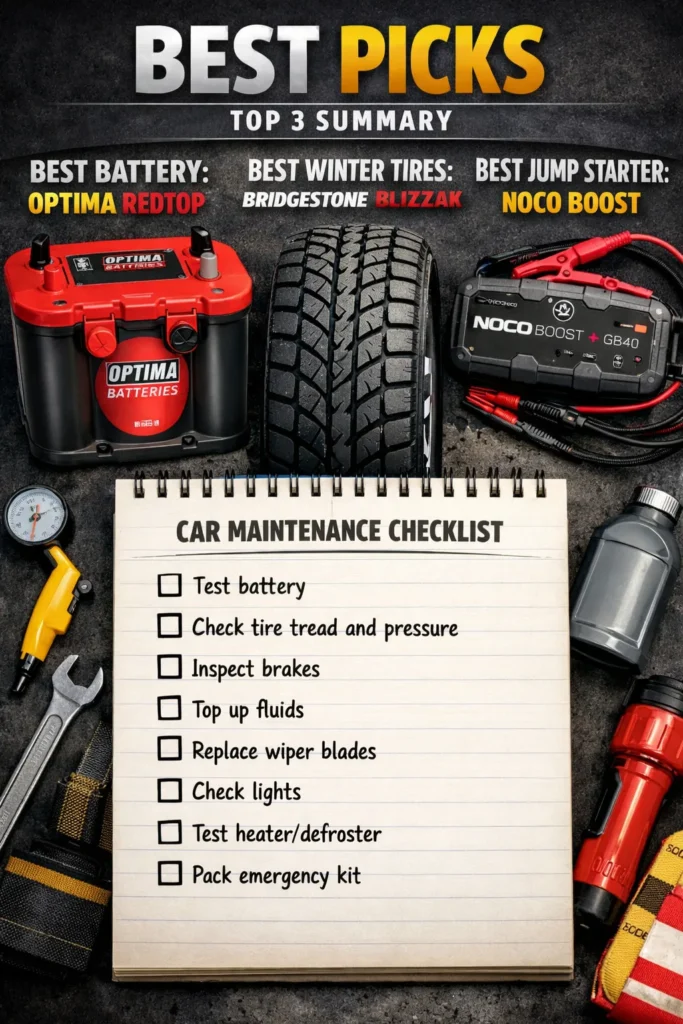
Best Picks (Top 3 Summary)
- Best Battery: Optima RedTop
- Best Winter Tires: Bridgestone Blizzak
- Best Jump Starter: NOCO Boost
Printable-Style Checklist
- Test battery
- Check tire tread and pressure
- Inspect brakes
- Top up fluids
- Replace wiper blades
- Check lights
- Test heater/defroster
- Pack emergency kit
Use Cases (When to Choose What)
| Situation | Best Choice |
|---|---|
| Mild winter climate | All-season tires |
| Heavy snow regions | Winter tires |
| Old battery | Replace before winter |
| Long road trips | Full winter prep |
Common Mistakes to Avoid
- Ignoring battery age
- Driving on worn tires
- Skipping coolant checks
- Forgetting emergency supplies
- Using wrong engine oil viscosity
Safety Notes / Warnings
- Never pour hot water on a frozen windshield.
- Always support the car properly when changing tires.
- Wear gloves when handling batteries.
- Avoid running the engine in enclosed spaces.
FAQs
1. How often should I check my car in winter?
At least once a month.
2. Do I really need winter tires?
Yes, if temperatures drop below 45°F (7°C) regularly.
3. How long do car batteries last in cold climates?
Typically 3–5 years.
4. What tire pressure is best in winter?
Follow the manufacturer’s recommended PSI.
5. Should I warm up my car?
Only for 30–60 seconds before driving.
6. Can I use water instead of washer fluid?
No, it will freeze.
7. Is antifreeze the same as coolant?
Yes, when mixed with water.
8. How much does winter prep cost?
Usually $100–$400 depending on parts.
9. What’s the most important winter check?
Battery and tires.
10. When should I start winter prep?
Before the first frost.
Final Thought
You never know what you’ll get when you’re out there in winter weather, but the right preparation is a huge plus. A basic cold weather car checklist can help you avoid a breakdown and keep your car in good condition, so take the time to complete the following checks. If you inspect your battery, tires, fluids and important systems before the mercury takes a nosedive, you can prevent the top winter car problems. Whether you’re a road warrior or a weekend cruiser in the cold, this checklist will keep your vehicle running strong all season long. The few hours of maintenance you perform today can save you many hours stranded in the cold tomorrow.

Leave a Reply