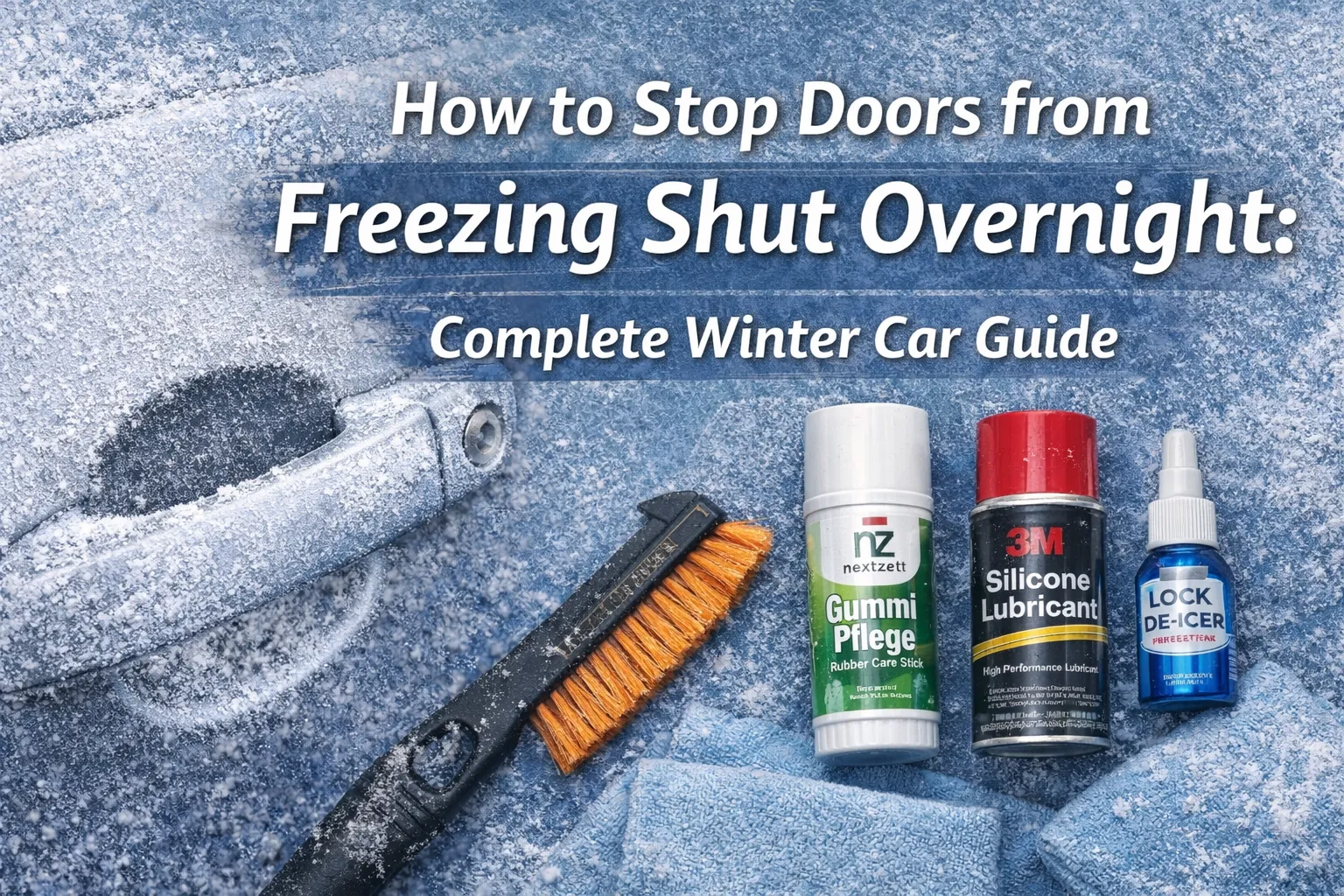
If you’ve opened the door on a frigid, snowy morning and discovered the car is completely stuck, you know how frustrating or even stressful this situation can be. Frozen car doors are a cold-weather headache for many drivers, especially in areas where snow, ice and water combine overnight. Water gets inside the door seals, freezes when it’s cold and locks the door tight.
Clearly how to stop doors from freezing shut this is not only a hassle, but can lead to ripped rubber seals, broken door handles and costly damage if you force the door. Many homeowners unwittingly exacerbate the problem by pouring hot water or forcing a shovel into that gap, which can harm your car.
The good news is that this prevention is easy, inexpensive and takes only a few minutes of preparation. With the proper products and methods, you can ensure your doors continue to swing smoothly all winter long.
In this ultimate guide on how to keep doors from freezing shut, you’ll learn why it happens, the easiest ways to prevent it from occurring in the first place, step-by-step solutions you can implement when your car’s locks are frozen as well as some product recommendations and expert tips for maintaining your car during winter.
Quick Answer
- Wipe door seals dry before parking.
- Apply silicone or rubber seal protectant.
- Use de-icer spray if frozen.
- Avoid pouring hot water on doors.
- Park in a garage or sheltered area when possible.
Why It Matters
- Prevents broken door handles.
- Protects rubber weather seals.
- Saves money on repairs.
- Reduces winter morning stress.
- Extends door seal lifespan.
What You’ll Need
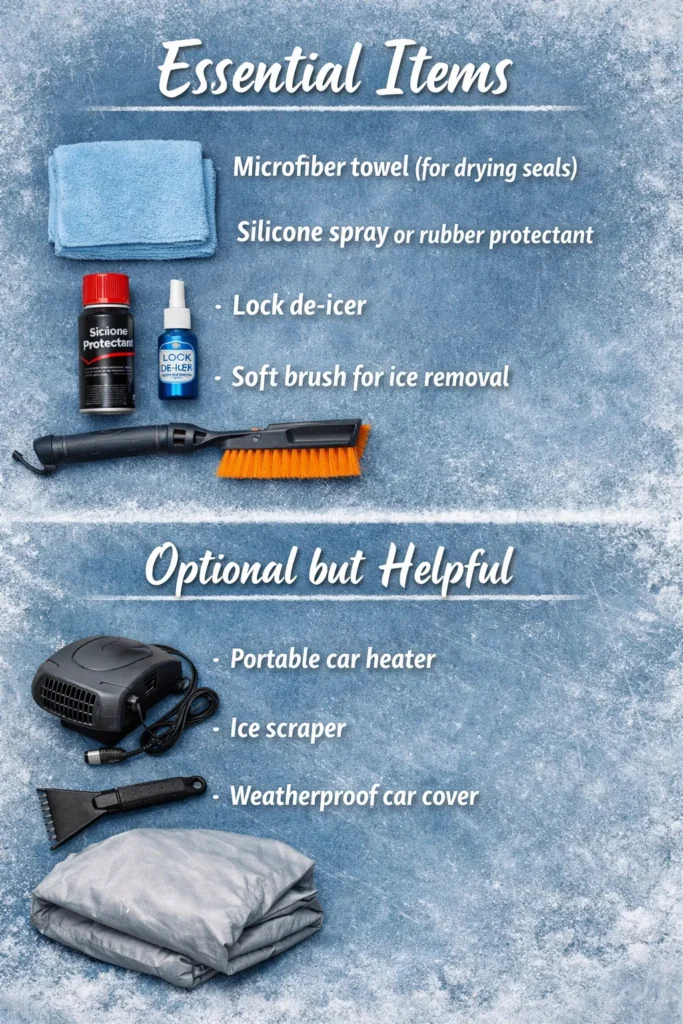
Essential Items
- Microfiber towel
- Silicone spray or rubber protectant
- Lock de-icer
- Soft brush for ice removal
Optional but Helpful
- Portable car heater
- Ice scraper
- Weatherproof car cover
Step-by-Step Guide: How to Stop Doors from Freezing Shut
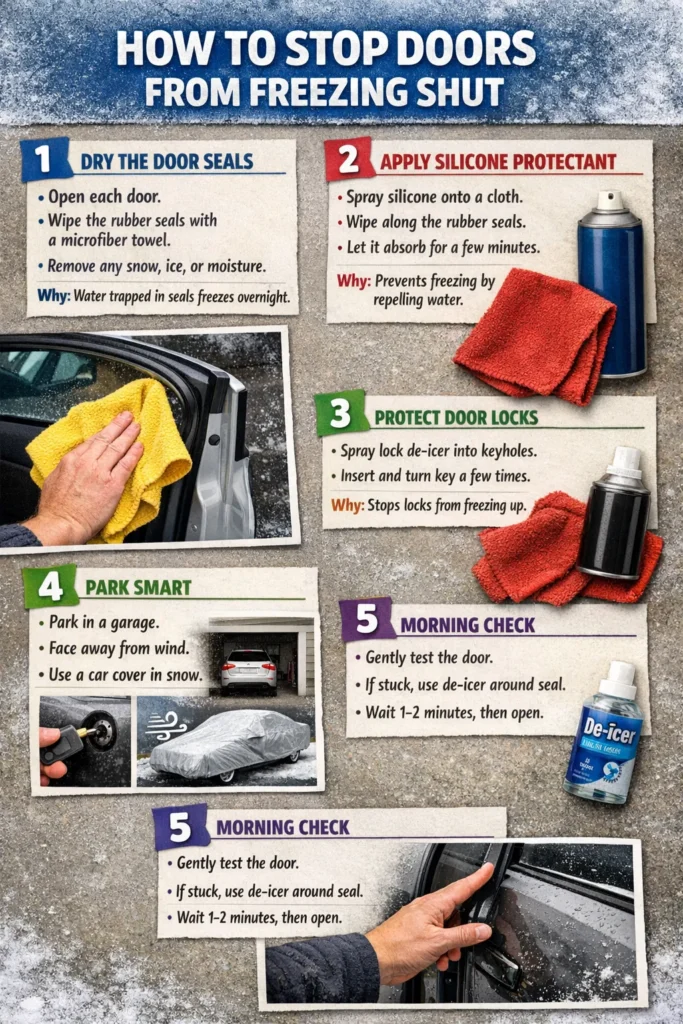
Step 1: Dry the Door Seals
Before parking at night:
- Open each door.
- Wipe the rubber seals with a microfiber towel.
- Remove any snow, ice, or moisture.
Why: Water trapped in seals freezes overnight.
Step 2: Apply Silicone or Rubber Protectant
- Spray silicone lubricant onto a cloth.
- Wipe along the door’s rubber seals.
- Let it absorb for a few minutes.
Why: Creates a water-repellent barrier that prevents freezing.
Step 3: Protect Door Locks
- Spray lock de-icer into keyholes.
- Insert and remove the key a few times.
Why: Prevents frozen locks in extreme cold.
Step 4: Park Smart
Whenever possible:
- Park in a garage.
- Face the car away from wind.
- Use a car cover during snowstorms.
Step 5: Morning Chec
- Gently test the door.
- If stuck, use de-icer around the seal.
- Wait 1–2 minutes before opening.
Cost Breakdown
| Item | Budget | Mid-Range | Premium |
|---|---|---|---|
| Silicone spray | $5 | $8 | $12 |
| Lock de-icer | $4 | $7 | $10 |
| Microfiber towels (pack) | $6 | $10 | $18 |
| Car cover | $25 | $45 | $90 |

Estimated Total Setup
- Budget: $15–$25
- Mid-range: $30–$50
- Premium: $80+
Explanation:
Even a small investment in seal protection products can prevent expensive repairs later.
Before and After
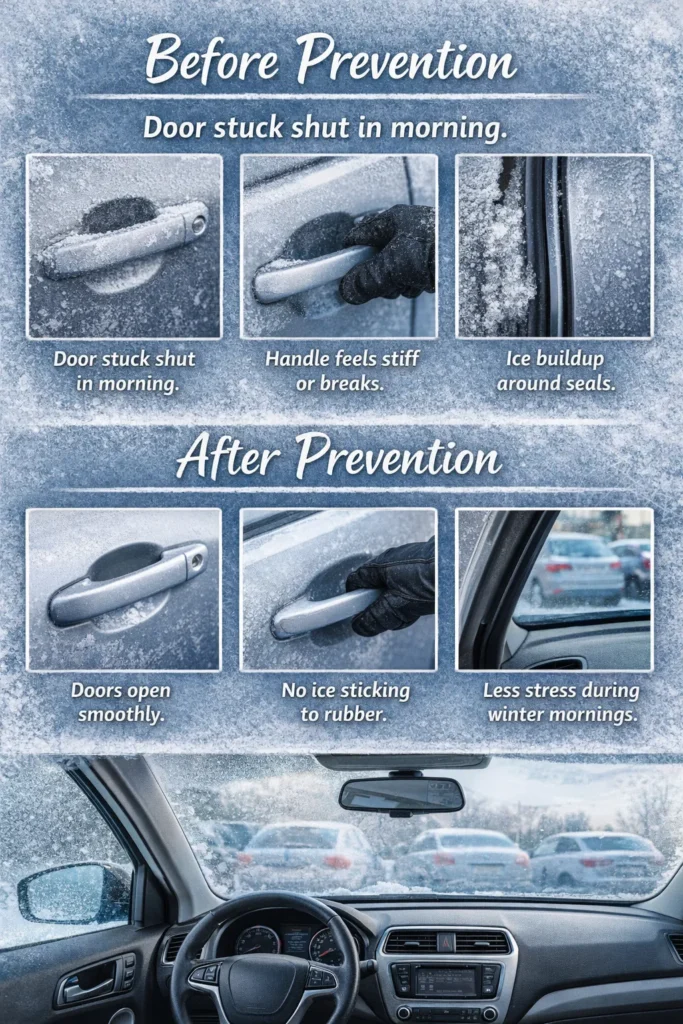
Before Prevention
- Door stuck shut in morning.
- Handle feels stiff or breaks.
- Ice buildup around seals.
After Prevention
- Doors open smoothly.
- No ice sticking to rubber.
- Less stress during winter mornings.
Product Recommendations
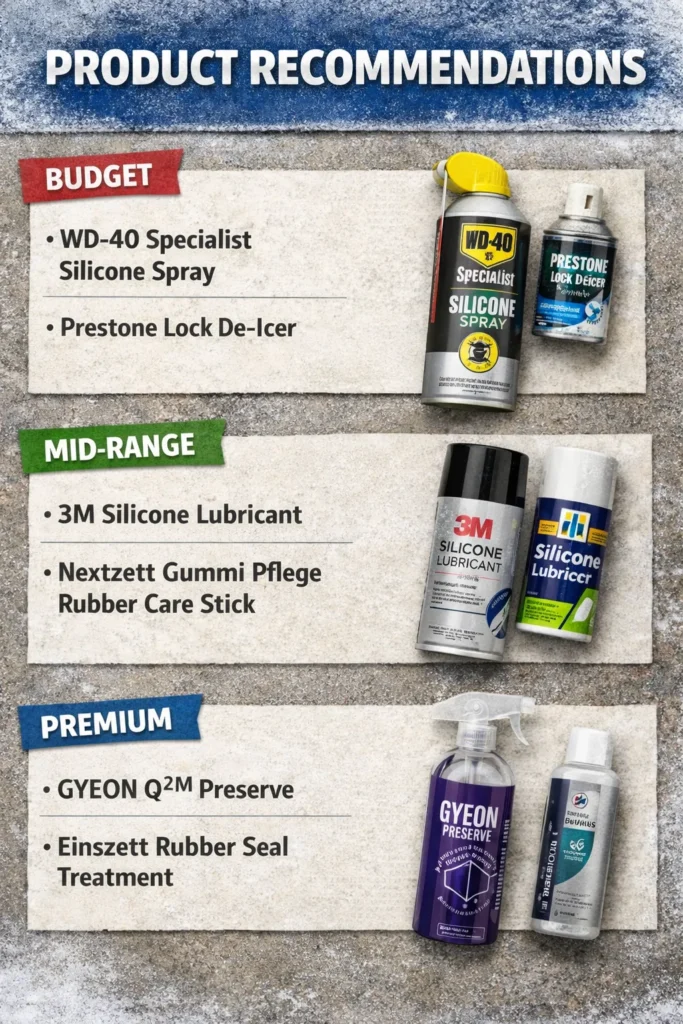
Budget
- WD-40 Specialist Silicone Spray
- Prestone Lock De-Icer
Mid-Range
- 3M Silicone Lubricant
- Nextzett Gummi Pflege Rubber Care Stick
Premium
- GYEON Q²M Preserve
- Einszett Rubber Seal Treatment
Comparison Section
| Feature | Silicone Spray | Rubber Seal Stick |
|---|---|---|
| Application | Spray and wipe | Direct applicator |
| Mess level | Slight overspray | Clean and precise |
| Longevity | Medium | Long-lasting |
| Cost | Cheaper | Slightly higher |
| Best for | Quick treatment | Long-term protection |
Troubleshooting Table
| Problem | Likely Cause | Fix |
|---|---|---|
| Door won’t open | Frozen seals | Spray de-icer and wait |
| Lock frozen | Moisture in lock | Use lock de-icer |
| Seal tearing | Forced opening | Replace seal and use protectant |
| Ice buildup | Snow left overnight | Brush off before parking |
Time Required and Difficulty
- Time: 5–10 minutes per treatment
- Difficulty: Easy (Beginner-friendly)
Pro Tips
Do
- Treat seals before winter starts.
- Keep de-icer in your glove box.
- Dry seals after car washes.
Don’t
- Pour hot water on doors.
- Yank frozen handles.
- Ignore cracked seals.
Best Picks
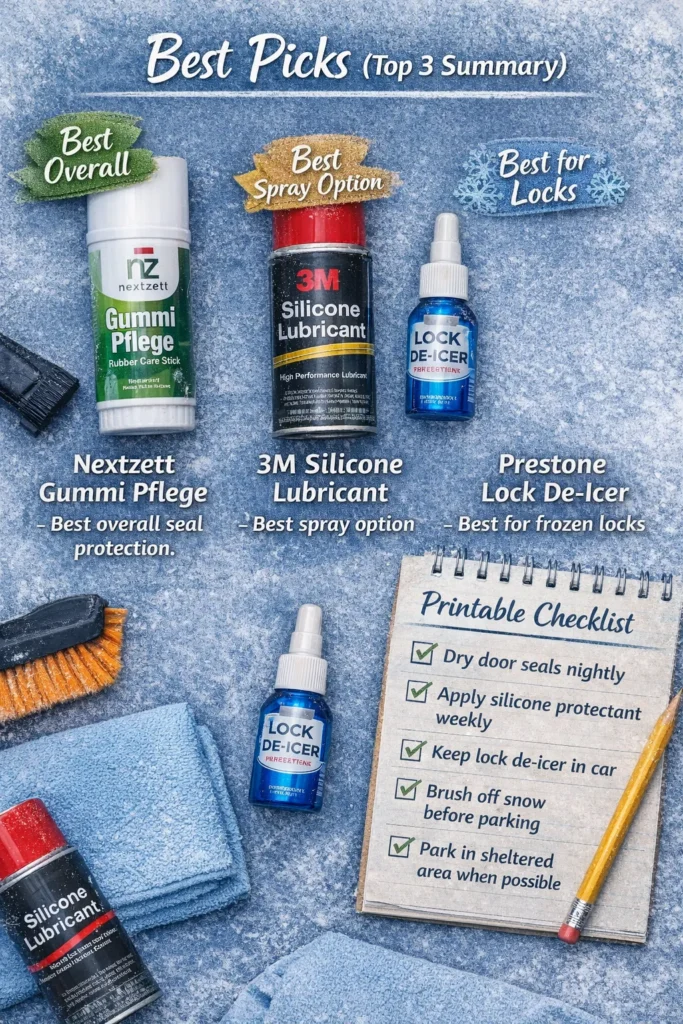
- Nextzett Gummi Pflege – Best overall seal protection.
- 3M Silicone Lubricant – Best spray option.
- Prestone Lock De-Icer – Best for frozen locks.
Printable Checklist
- Dry door seals nightly
- Apply silicone protectant weekly
- Keep lock de-icer in car
- Brush off snow before parking
- Park in sheltered area when possible
Use Cases
| Situation | Best Solution |
|---|---|
| Light frost areas | Silicone spray |
| Heavy snow regions | Rubber seal treatment |
| No garage parking | Car cover + seal protectant |
| Extreme cold | De-icer + premium seal product |
Common Mistakes to Avoid
- Using hot water to melt ice.
- Pulling the door too hard.
- Ignoring worn weather seals.
- Skipping seal treatment before winter.
Safety Notes
- Never use boiling water on frozen doors.
- Avoid open flames or heat guns.
- Use only automotive-safe lubricants.
- Keep de-icer away from eyes and skin.
FAQs
1. Why do car doors freeze shut?
Moisture in the rubber seals freezes and bonds the door to the frame.
2. Can I pour hot water to open a frozen door?
No. It can crack glass and refreeze.
3. How often should I apply silicone spray?
Every 1–2 weeks in winter.
4. Does WD-40 work on door seals?
Only the silicone version is recommended.
5. What if my lock is frozen?
Use a lock de-icer.
6. Can I use petroleum jelly?
It works temporarily but attracts dirt.
7. Is a car cover helpful?
Yes, especially in snowy areas.
8. Should I replace old seals?
Yes, cracked seals allow moisture inside.
9. Do automatic car washes cause freezing?
Yes, if the seals remain wet in cold weather.
10. What’s the best long-term solution?
Regular seal treatment with rubber protectant.
Final Thought
Frozen car doors are among the how to stop doors from freezing shut most frustrating of winter car complaints, yet it’s also one of the easiest to prevent. With a little bit of preparation, drying door seals, adding silicone protectant and having de-icer handy — you can avoid the stress, damage and costly repair bill that comes with frozen doors. These low-effort habits maintain the performance of your doors and help preserve weather seals, for better comfort on wintry drives. Some small investments in the right products now can save you time, headache and money all fall long.. how to stop doors from freezing shut.

Leave a Reply