We’ve all been there. You’re heading into the sun, and suddenly, the inside of your windshield is on a foggy grimy mess. You grab a rag and do a cursory wipe, resulting in more streaks than you started with. It’s one of the most maddening and ignored facets of automotive maintenance. But a spotless windshield isn’t solely style over substance; it’s an essential safety element.
In this ultimate guide, we will eliminate the haze for good. We will go beyond the typical errors, then teach you how to achieve that professional-grade clear streak-free finish. From the common microfiber towel to the magic of 70-percent isopropyl alcohol, you’ll learn exactly how to clean that inside part of your windshield so much that you won’t even remember there’s glass in front of you. Let’s transform that grungy pane into a showroom-ready window.
Quick Answer
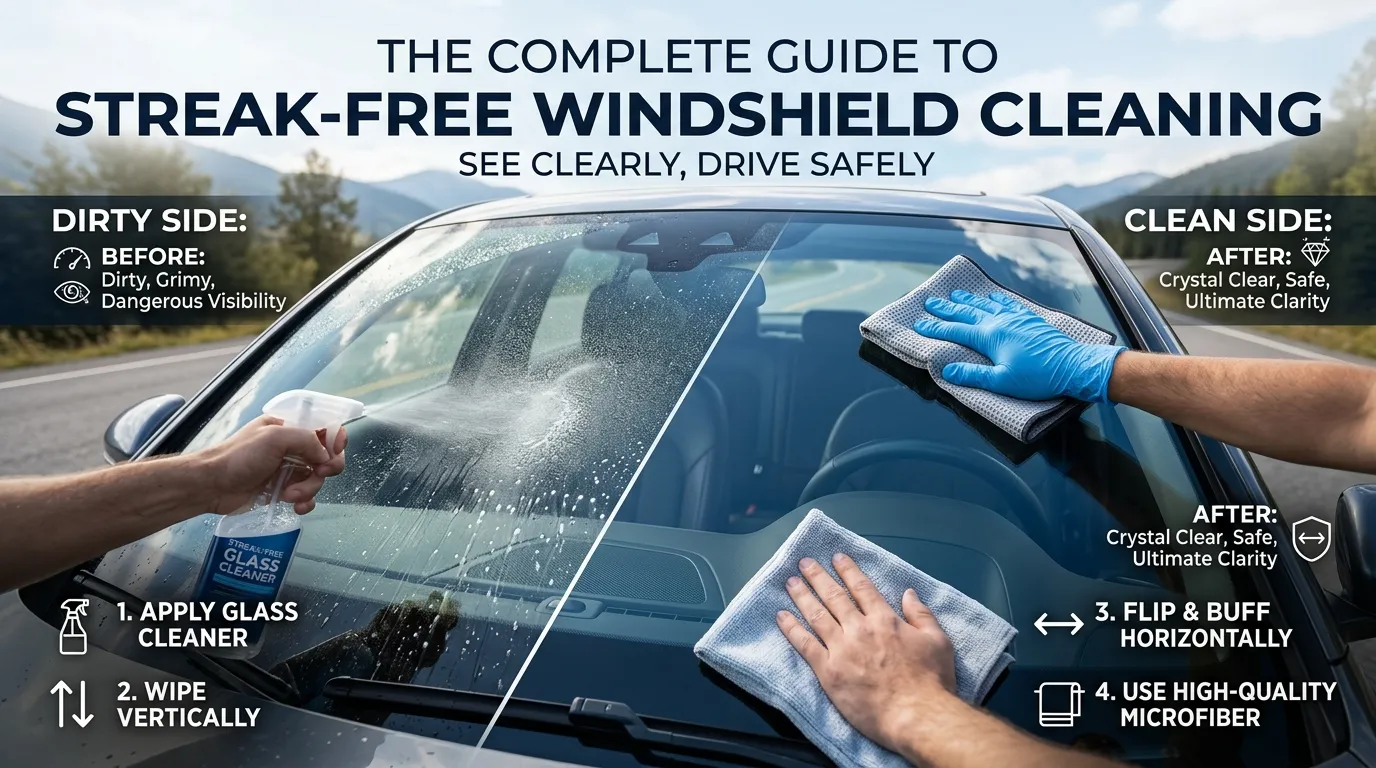
The inside of your windshield is a pain (in the glass) to clean without streaks. First, dry-mop the glass with a micro fiber towel to remove loose dust. Then spritz whatever cleaner you’ve chosen (a 50/50 mixture of water and 70% isopropyl alcohol is highly recommended) directly onto a clean microfiber towel—never directly on the glass. On one side use the vertical motion, and on the other, the horizontal to wipe off glass. This “directional wipe” method lets you see which side streaks. Lastly, polish the glass to a high gloss with a new dry microfiber towel.
Why It Matters (Benefits)
Cleaning your interior glass might seem like a minor chore, but the benefits are significant:
- More safety: This is the number 1 reason. A clean windshield removes hazardous glare from the sun and oncoming headlights at night. This allows for the highest road, pedestrian and hazard visibility.
- Less Eye Strain: Your eyes have to work harder to focus on the road when your windshield is dirty or streaky. This causes fatigue on long drives, rendering less vigilant.
- Looks Better: A clean interior, including sparkling glass makes the entire cabin feel newer fresher and more enjoyable. It’s the final step in what makes a car truly clean.
- Prevents Those Long-Term Problems: The inside of your windshield is not just dirt. That’s a mixture of tobacco tar, oils from your skin and breath and outgassing from the dashboard plastics — commonly known as “new car smell” residue. If it is not cleaned over time, this can harden into the glass to make it permanently cloudy.
- Higher Resale Value: A pristine maintained car, right down to clean glass, will always sell for a higher price and convey to a prospective buyer that the owner had care for every aspect.
What You’ll Need (Tools & Products)
Gathering the right supplies is half the battle. Using paper towels or old rags is the #1 cause of streaks and lint.
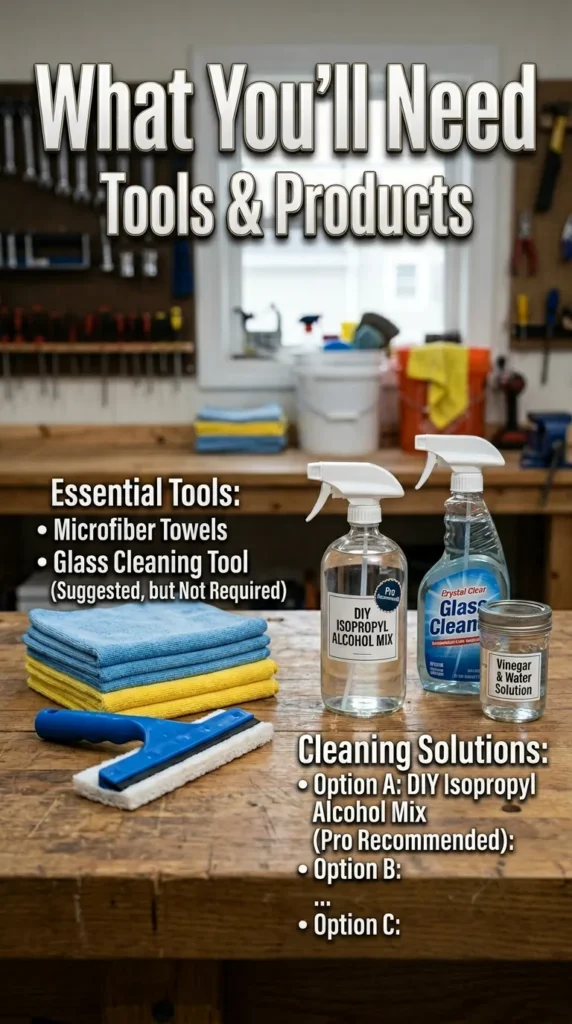
Essential Tools:
- Microfiber Towels (4-6) This is an absolute must. You want premium, lint-free microfiber towels. One for the first dry wipe, one for applying the cleaner and one or two more for the final buff. Cheap ones can scratch.
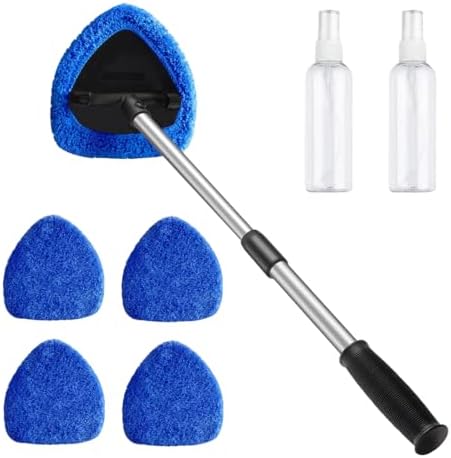
- Glass Cleaning Tool (Suggested, but Not Required): A small pad made of hard plastic or nylon scrubber, or a specialized glass-cleaning tool with scrubber head that helps to agitate stubborn film.
Cleaning Solutions:
- Option A: DIY Isopropyl Alcohol Mix (Pro Recommended):
- 1 part 70% Isopropyl Alcohol
- 1 part Distilled Water
- 1 drop of Blue Dawn Dish Soap (optional, helps cut grease)
- Why this works: The alcohol evaporates quickly, preventing streaks, and cuts through oily residue.
- Option B: Commercial Automotive Glass Cleaner: Invisible Glass or Stoner — Meguiar’s Perfect Clarity. Stay away from household cleaners like Windex, which typically have ammonia in the formula that can damage window tints and interior trim.
- Option C: The “Newspaper” Trick: In a crunch, you can use black-and-white newspaper (not glossy ad sections) along with your home-brewed cleaner instead of a microfiber towel. The ink also serves as a mild abrasive and absorbent.
Step-by-Step Guide (How To)
Follow these steps for a professional, streak-free finish.
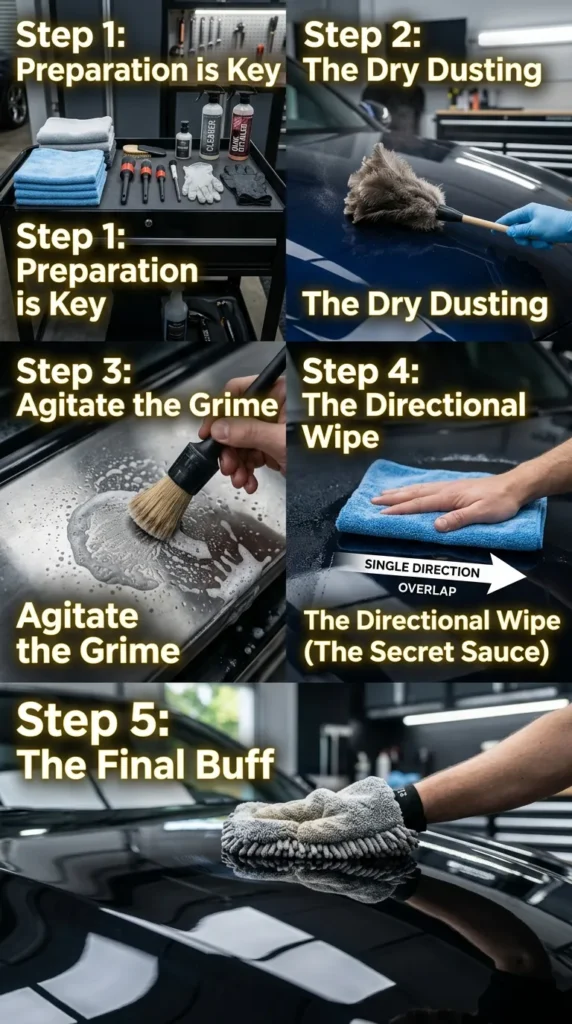
Step 1: Preparation is Key
Begin by lowering the windows an inch or so. This [[applied on the top edge of glass]] will break the seal and allows you to clean the very top edge of the glass. Cover your dashboard with an old towel for protection. This will catch any drips of cleaner you accidentally make that could cause stains or damage to the dashboard surface.
Step 2: The Dry Dusting
Grab a clean, dry microfiber towel and wipe down the entire inner surface of the windshield. Use firm pressure. This eliminates the loose dust, pollen and particles. Without this step, you’re essentially grinding dirt into the glass, which causes micro-scratches.
Step 3: Agitate the Grime
This is the step that most people forget — or don’t realize they need to do. The film on your windshield is cooked on. Apply a good amount of your chosen cleaner to your glass cleaning tool or a damp (not wet) microfiber towel. Scrub the whole surface gently in circular motions. You oughta be able to watch the haze lift.” For really stubborn areas right in front of the driver, pay a little extra attention to them.
Step 4: The Directional Wipe (The Secret Sauce)
This technique is the key to a streak-free finish.
- Spray your cleaner onto a fresh, clean microfiber towel. Never spray directly onto the windshield, as the liquid can run down into the dashboard vents or electronics.
- Starting at the top, wipe the glass using vertical strokes from the top down. Overlap each stroke slightly.
- Now, take a second, dry microfiber towel.
- Run a clean towel over the entire surface again, in horizontal strokes from one side to the other.
- The reasoning is simple — if you see a streak later, you will immediately recognize whether it indicates the initial pass (vertical) or the second pass (horizontal). It enables you to focus your correction without needing to re-clean the entire windshield.
Step 5: The Final Buff
Take a final, absolutely dry microfiber towel and gently buff the entire surface. This strips away any final remnants of moisture or cleaner, leaving the glass optically clear. Tell whether you are messed up by observing the glass at distinctive points of view, particularly in splendid light.
Cost Breakdown
You don’t need to spend a fortune to get a clean windshield. Here’s a realistic look at the costs.
| Item | Estimated Cost | Details & Why |
|---|---|---|
| Microfiber Towels (Pack) | $10 – $20 | The most important investment. A pack of 24-36 high-quality, 300-400 GSM towels will last for years if washed properly. |
| Isopropyl Alcohol (70%) | $2 – $5 | A cheap and highly effective base for your DIY cleaner. One bottle will make gallons of cleaner. |
| Spray Bottle | $3 – $5 | A simple, durable spray bottle for your DIY mix. |
| Distilled Water | $1 – $2 | Using distilled water prevents the mineral deposits that tap water leaves behind. |
| Commercial Glass Cleaner | $5 – $10 | A single can or bottle of a premium automotive glass cleaner like Invisible Glass will last for several full cleans. |
| Glass Cleaning Tool | $8 – $15 | A one-time purchase. The scrub pad is excellent for heavily soiled glass. |
| Total (Starting from scratch) | $15 – $30 | This gets you everything you need for dozens of cleaning sessions. The ongoing cost per clean is pennies. |


Before and After
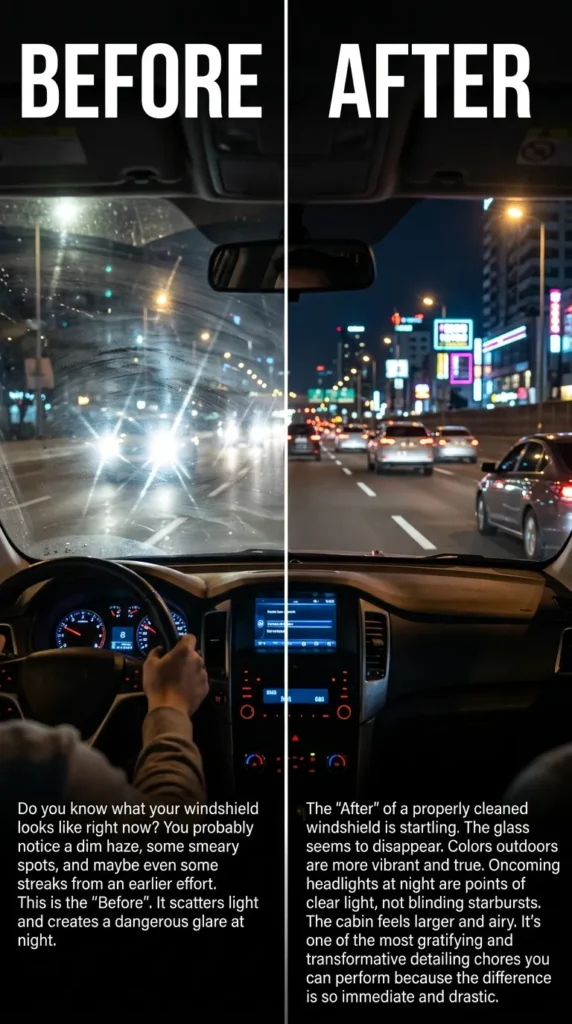
Do you know what your windshield looks like right now? You probably notice a dim haze, some smeary spots, and maybe even some streaks from an earlier mopping effort. This is the “Before.” It scatters light and creates a dangerous glare at night.
The “After” of a properly cleaned windshield is startling. The glass seems to disappear. Colors outdoors are more vibrant and true. Oncoming headlights in the night are points of clear light, not blinding starbursts. The cabin also feels larger and more airy. It’s one of the most gratifying and transformative detailing chores you can perform because the difference is so immediate and drastic.
Product Recommendations (Budget)
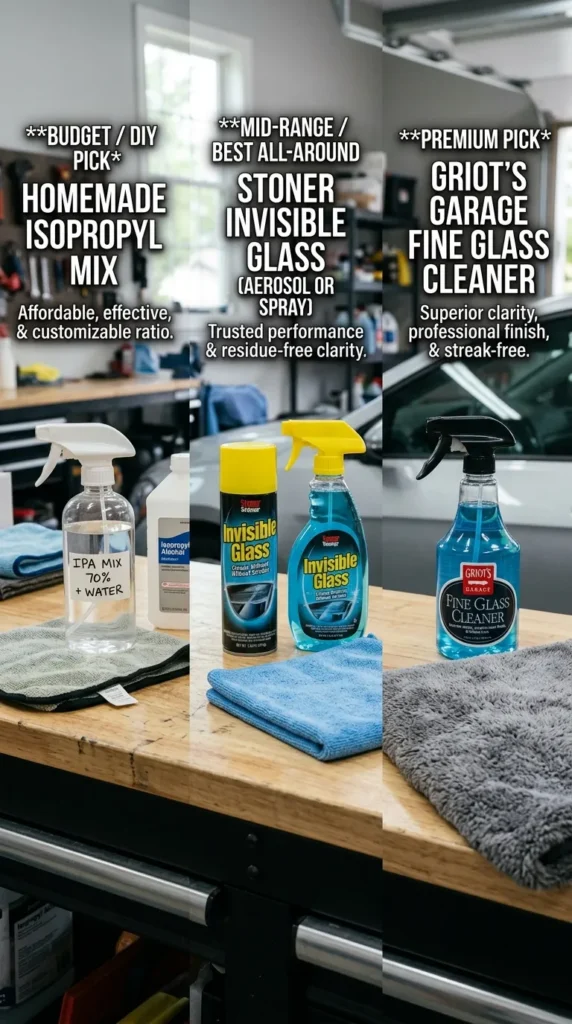
- Budget / DIY Pick: Homemade Isopropyl Mix You won’t find a better price-to-performance ratio. Mix equal parts 50% 70% isopropyl alcohol, distilled water in a spray bottle It’s a great cleaner and degreaser.
- Mid-Range / Best All-Around: Stoner Invisible Glass (Aerosol or Spray) There is a reason this is the industry standard. It’s foam-based, which allows for more dwell time to break down grunge and evaporates completely streak-free. You can find it at nearly any auto parts store.
- Premium Pick: Griot’s Garage Fine Glass Cleaner. This is a more high-end choice and safe to use on all automotive glass, including tinted windows. It has a refreshing mild scent and cleans vigorously but without scratching. Usually alongside their awesome microfiber “Speed Shine” towels.
Comparison Section: DIY Isopropyl Mix vs. Stoner Invisible Glass
Choosing the right cleaner often comes down to personal preference. Here’s a head-to-head comparison of the two most popular options.
| Feature | DIY Isopropyl Mix (50/50) | Stoner Invisible Glass |
|---|---|---|
| Cost | Winner: Extremely Low | Moderate |
| Cleaning Power | Excellent on oils and film | Winner: Excellent on all types of grime |
| Ease of Use | Good, requires mixing | Winner: Ready to use, convenient |
| Streak-Free Finish | Winner: Excellent, evaporates very fast | Excellent, foam prevents overspray |
| Scent | Strong alcohol smell (dissipates quickly) | Clean, mild, pleasant citrus scent |
| Tint-Safe | Yes (with 70% or lower alcohol) | Yes |
| Best For | Budget-conscious, heavy oil/film removal | Everyday convenience, quick touch-ups |
The Verdict: For a deep, budget-friendly clean, the DIY mix is unbeatable. For convenience and a foolproof, pleasant application, Stoner Invisible Glass is the top commercial choice.
Troubleshooting
| Problem | Likely Cause | The Fix |
|---|---|---|
| Stubborn Haze / Film | Tobacco tar, outgassing from dashboard. | Use a stronger cleaner like the DIY alcohol mix with a drop of Dawn. Agitate vigorously with a scrub pad. Repeat if necessary. |
| Streaks After Cleaning | Using too much cleaner, dirty towel, or cleaning in direct sunlight. | Use less product. Always use a fresh, dry microfiber for the final buff. Clean in the shade or on a cool day. |
| Lint Left on Glass | Using old rags, paper towels, or cheap microfiber. | Switch to high-quality microfiber towels. Wash new towels before first use to remove manufacturing residue. |
| Splotchy / Greasy Spots | Not removing all the cleaning product. | Your final buffing towel wasn’t dry enough. Go over the area with a completely dry, clean microfiber towel. |
| Cleaner Running into Dash | Spraying directly on the windshield. | Never spray directly on the glass. Always spray your cleaner onto your towel or cleaning tool. |
Time Required & Difficulty Level
- Time Required: 15 – 20 minutes.
- Difficulty Level: Easy. The method is easy enough, but requires some patience and meticulousness for it to turn out nicely. It’s a technique anyone can learn in one or two attempts.
Pro Tips
DO:
- Use the “Two-Towel” method: One for applying cleaner, one for drying/buffing.
- Work in the shade: Direct sunlight causes cleaners to evaporate too quickly, leading to streaks.
- Clean your microfiber towels: Wash them separately with a mild, fragrance-free detergent. Do not use fabric softener, as it clogs the fibers and reduces absorbency.
- Check your work from the driver’s seat: Sit down and look at the glass from your natural driving angle to spot any missed spots or streaks.
DON’T:
- Don’t use paper towels or newsprint as your primary tool: While old-school methods exist, microfiber is superior and safer.
- Don’t use ammonia-based cleaners (like Windex) if you have tinted windows: The ammonia will discolor and peel the tint film over time.
- Don’t forget the very top and bottom edges: These are common missed areas that collect the most grime.
- Don’t use the same towel for wheels or paint on your glass towels: Cross-contamination will lead to scratches.
Best Picks (Top 3 Summary)
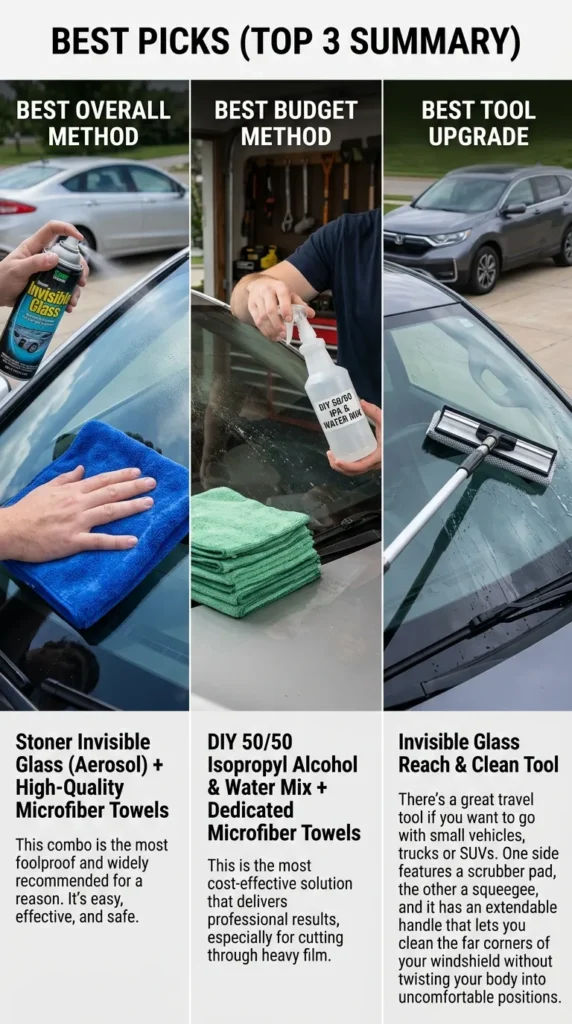
- Best Overall Method: Stoner Invisible Glass (Aerosol) + High-Quality Microfiber Towels. This combo is the most foolproof and widely recommended for a reason. It’s easy, effective, and safe.
- Best Budget Method: DIY 50/50 Isopropyl Alcohol & Water Mix + Dedicated Microfiber Towels. This is the most cost-effective solution that delivers professional results, especially for cutting through heavy film.
- Best Tool Upgrade: Invisible Glass Reach & Clean Tool. There’s a great travel tool if you want to go with small vehicles, trucks or SUVs. One side features a scrubber pad, the other a squeegee, and it has an extendable handle that lets you clean the far corners of your windshield without twisting your body into uncomfortable positions.
Use Cases (When to Choose What)
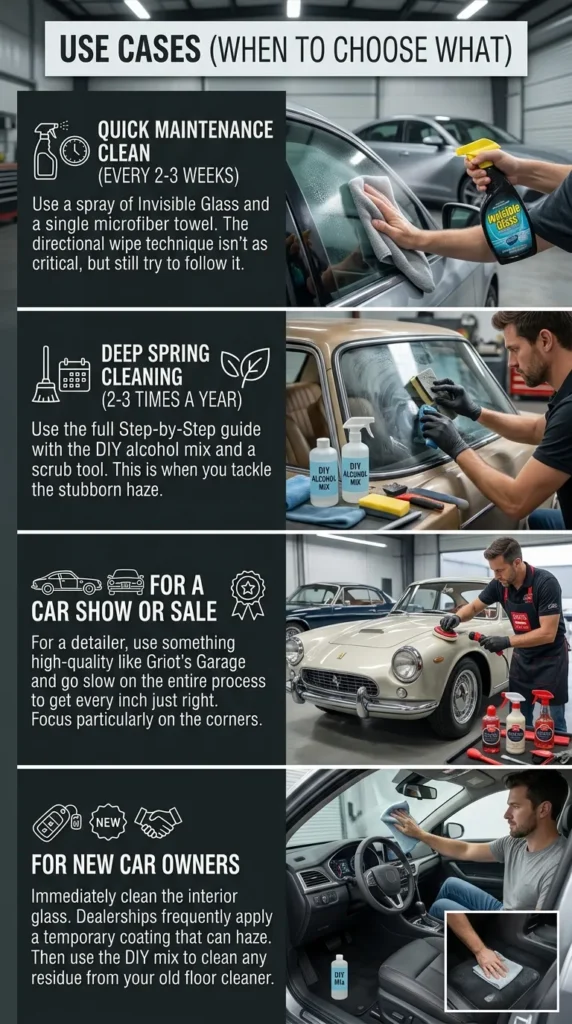
- For a Quick Maintenance Clean (Every 2-3 weeks): Use a spray of Invisible Glass and a single microfiber towel. The directional wipe technique isn’t as critical, but still try to follow it.
- For a Deep Spring Cleaning (2-3 times a year): Use the full Step-by-Step guide with the DIY alcohol mix and a scrub tool. This is when you tackle the stubborn haze.
- For a Car Show or Sale: For a detailer, use something high-quality like Griot’s Garage and go slow on the entire process to get every inch just right. Focus particularly on the corners.
- For New Car Owners: Immediately clean the interior glass. Dealerships frequently apply a temporary coating that can haze. Then use the DIY mix to clean any residue from your old floor cleaner.
Common Mistakes to Avoid
- Cleaning in Direct Sunlight: This is the fastest way to get streaks. The cleaner evaporates before you can wipe it off.
- Using the Wrong Towel: Paper towels leave lint. Old t-shirts can scratch. Low-quality microfiber sheds. Always use high-quality, clean microfiber.
- Forgetting to Protect the Dash: Cleaner drips can leave permanent white spots or stains on your dashboard. Always cover it.
- Using Household Glass Cleaner: Ammonia in cleaners like Windex can damage tint and dry out interior plastic trim.
- Using a Dirty Towel: A towel used for one or two wipes is now dirty. Flip to a clean side or grab a fresh one immediately. A dirty towel just redistributes the grime.
Safety Notes
- Tinted Windows: Be sure your glass cleaner is safe for after-market tinted windows. Over time, ammonia-based cleaners will cause the tint to bubble, discolor and peel. The majority of automotive-specific cleaners and the DIY alcohol mix (using 70% isopropyl or less) are tint safe.
- Dashboard & Electronics: The typical dashboards of today contains delicate electronics. When it comes to cleaning the windshield, do not spray any liquid on or near the windshield. Always spray onto your towel first to avoid liquids penetrating air vents, speaker grilles or around the base of the rearview mirror, where rain sensors and cameras can sometimes be found.
- Ventilation: If you are using commercial cleaners, particularly on an enclosed area, have good ventilation. Leave the car doors open for a few minutes.
- No Abrasives: Never use harsh scrub pads (like Scotch-Brite) or abrasive powders on your glass; these can create micro
FAQs
- Why does the inside of my windshield get dirty so fast?
The biggest offenders are outgassing from your dashboard plastics (plasticizers boiling off in the heat), oils and residue shed by your breath and skin, and tobacco tar if you smoke in the car. - Can I use Windex on my car windows?
Not for use inside it seems. Ammonia in Windex can damage window tint and can be rough on interior trim. That’s fine for the outside glass, but dedicated automotive cleaners are a safer bet. - What is the best homemade recipe for cleaning car windows?
The best and safest recipe is a spray bottle with a 50/50 mix of 70% isopropyl alcohol and distilled water. Add just a drop or two of blue Dawn dish soap to help dissolve any extra grease. - How do I get a streak-free finish every time?
A directional wipe technique (up, then side to side with different towels) Always, always use clean, quality microfiber towels and never wipe in direct sunlight. - Do I really need special microfiber towels for glass?
Yes. Quality microfiber (300–400 GSM) is designed to catch the dirt and absorb liquid – all without leaving any lint. Streaks and lint are mainly caused by the use of old rags or paper towels. - Is it safe to clean the inside of a heated windshield?
Yes, it is safe. The heating elements consist of thin wires that are embedded in the glass. Be careful not to use any abrasive tools which could scratch or damage them. The chemical cleaners won’t hurt them. - How often should I clean the inside of my windshield?
For most people, a deep clean every 1-2 months is sufficient. A quick maintenance wipe-down can be done every few weeks. - Can I use vinegar to clean my car windows?
While vinegar is a natural cleaner, it’s not the best choice for car windows. It can leave a film and the smell is unpleasant. The alcohol-based DIY mix is far more effective. - Why does my windshield fog up so easily after I clean it?
This typically occurs if you applied too much product and didn’t buff it out enough. The same can happen if you used a cleaner that does leave a protective residue. Buff it again with a dry microfiber. - How do I clean the very bottom of the windshield where it meets the dashboard?
This is tricky. Use a soft, lint-free cloth wrapped around something thin and blunt (like a plastic trim removal tool, or even a ruler). Spray the cleaner on the cloth (not the glass) and gently work it into the gap.
Final Thought
Arguably the easiest, most effective upgrade you can make to your driving experience is a clean windshield. It elevates a chore into a moment of clarity, literally. It’s a small investment of time and a few dollars in materials that pays dividends in safety and satisfaction every time you slide behind the wheel. And by throwing out the paper towels and following this pro guide, you’ll make sure your view of the road ahead is always perfectly clear. So go get your microfiber towels, make up that solution and enjoy driving again with a crystal clear view.


Leave a Reply