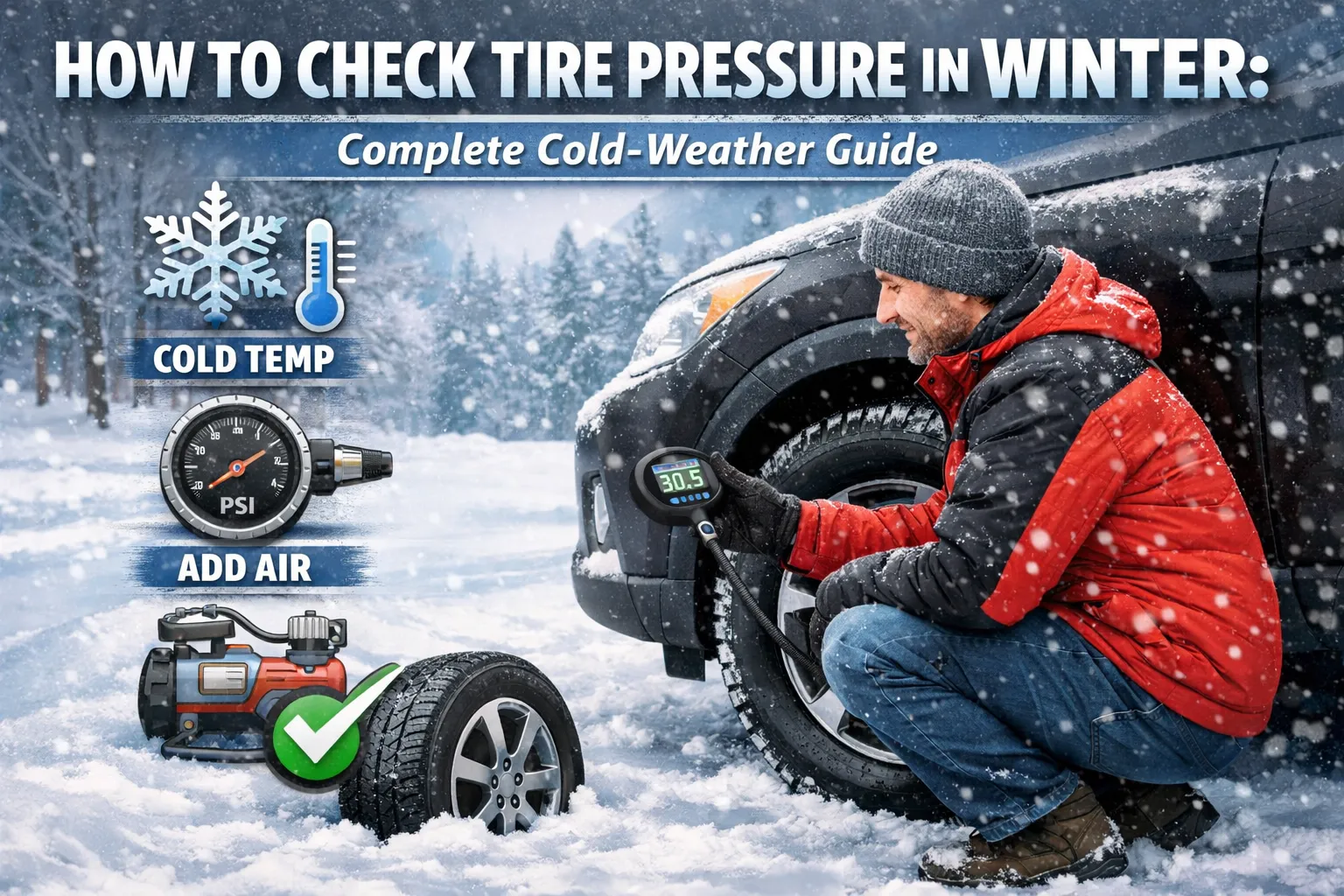
And when it’s cold, so is your tire pressure. What many drivers may not know is that cold weather can cause tire pressure to drop dramatically — resulting in poor handling, diminished fuel efficiency and even hazardous blowouts. If you’ve ever looked down at a cold morning and seen your tire pressure warning light glowing, then you’re in good company.
Winter can wreak havoc on tires. Cold air compresses, and when that’s inside a tire it reduces the pressure. Snow and wet roads simply require more traction yet under-inflated tires can seriously undermine your control on ice or slippery surfaces. Disregarding tire pressure in the winter can decrease tire life, cost you more at the pump and keep your safety hanging in the balance.
The good news is, it’s really easy to check your tire pressure in the winter, and it only takes a few minutes. When done right, you can make sure your tires stay properly inflated so they last longer, perform more safely and give you the longest life out of your vehicle.
This all-encompassing guide will tell you how to check tire pressure in winter, which tools and materials you need for checking the air in your tires, the right products to use and expert advice on keeping your car safe all season long.
Quick Answer
- Cold weather lowers tire pressure.
- Check tire pressure at least once a week in winter.
- Always check when tires are cold.
- Use a digital tire pressure gauge for accuracy.
- Inflate to the manufacturer’s recommended PSI (found on driver’s door sticker).
Why It Matters
- Better traction on snow and ice
- Improved fuel efficiency
- Longer tire lifespan
- Prevents uneven tire wear
- Reduces risk of blowouts
- Improves braking performance
What You’ll Need (Tools + Products)
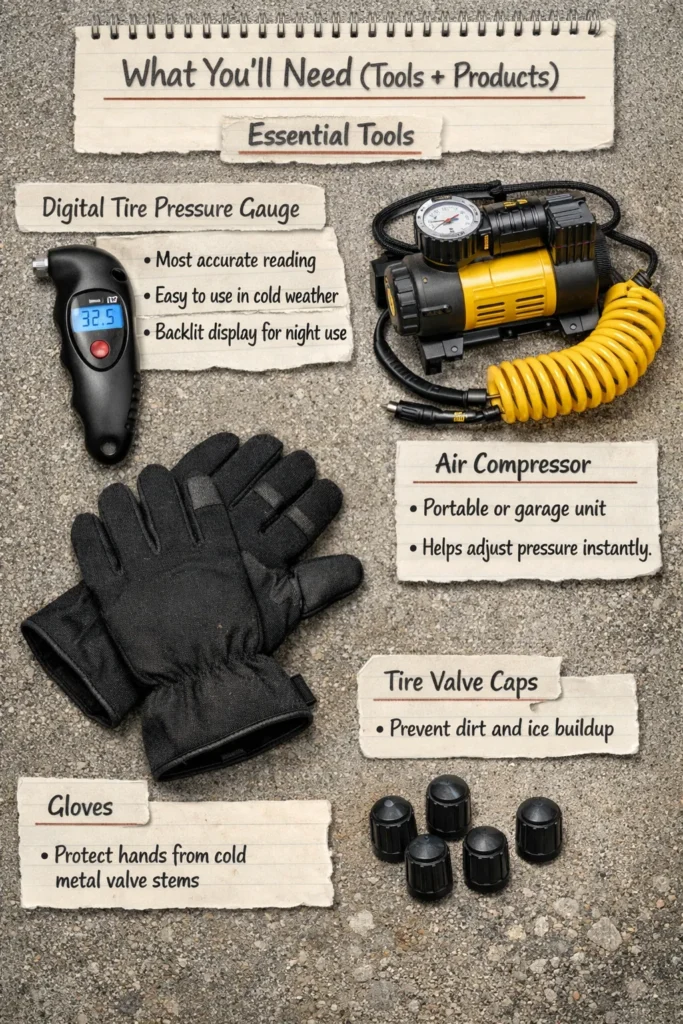
Essential Tools
- Digital Tire Pressure Gauge
- Most accurate reading
- Easy to use in cold weather
- Backlit display for night use
- Air Compressor
- Portable or garage unit
- Helps adjust pressure instantly
- Gloves
- Protect hands from cold metal valve stems
- Tire Valve Caps
- Prevent dirt and ice buildup
Step-by-Step Guide (How to Check Tire Pressure in Winter)
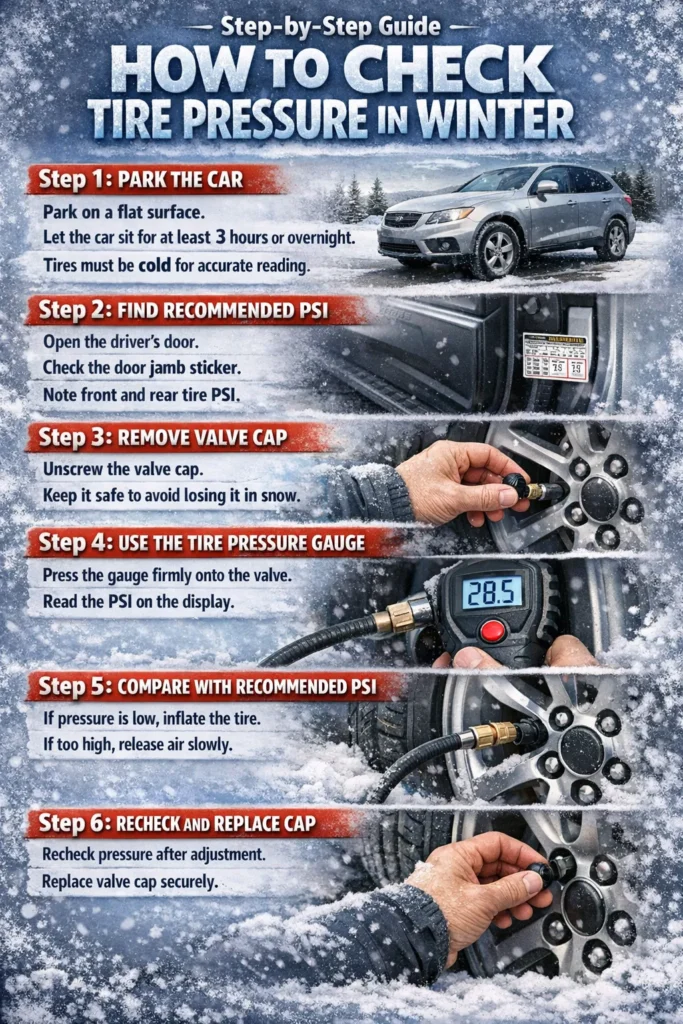
Step 1: Park the Car
- Park on a flat surface.
- Let the car sit for at least 3 hours or overnight.
- Tires must be cold for accurate reading.
Step 2: Find Recommended PSI
- Open the driver’s door.
- Check the door jamb sticker.
- Note front and rear tire PSI.
Step 3: Remove Valve Cap
- Unscrew the valve cap.
- Keep it safe to avoid losing it in snow.
Step 4: Use the Tire Pressure Gauge
- Press the gauge firmly onto the valve.
- Read the PSI on the display.
Step 5: Compare With Recommended PSI
- If pressure is low, inflate the tire.
- If too high, release air slowly.
Step 6: Recheck and Replace Cap
- Recheck pressure after adjustment.
- Replace valve cap securely.
Repeat for all four tires.
Cost Breakdown & Pricing Table
| Item | Budget | Mid-Range | Premium |
|---|---|---|---|
| Tire Pressure Gauge | $5–$10 | $15–$25 | $30–$50 |
| Portable Air Compressor | $20–$40 | $50–$80 | $100–$150 |
| Winter Tire Kit | $30 | $70 | $150+ |
Explanation
- Budget tools are fine for occasional use.
- Mid-range tools offer better accuracy and durability.
- Premium kits include digital displays, auto shut-off, and fast inflation.
Before and After (Winter Tire Pressure Check)
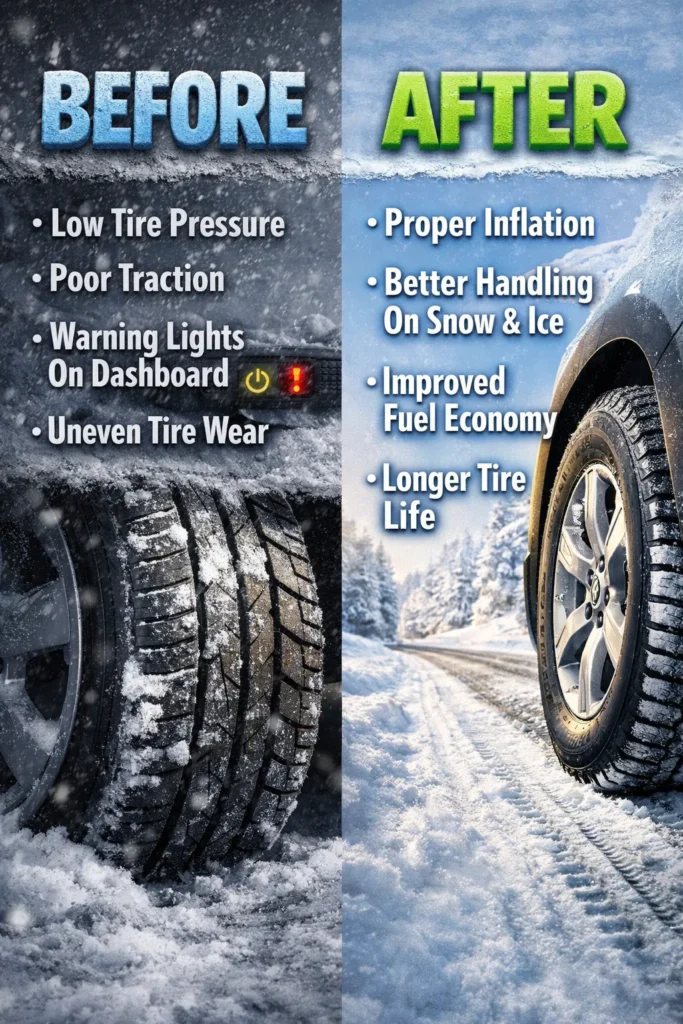
Before
- Low tire pressure
- Poor traction
- Warning lights on dashboard
- Uneven tire wear
After
- Proper inflation
- Better handling on snow and ice
- Improved fuel economy
- Longer tire life
Product Recommendations (Affiliate-Friendly)
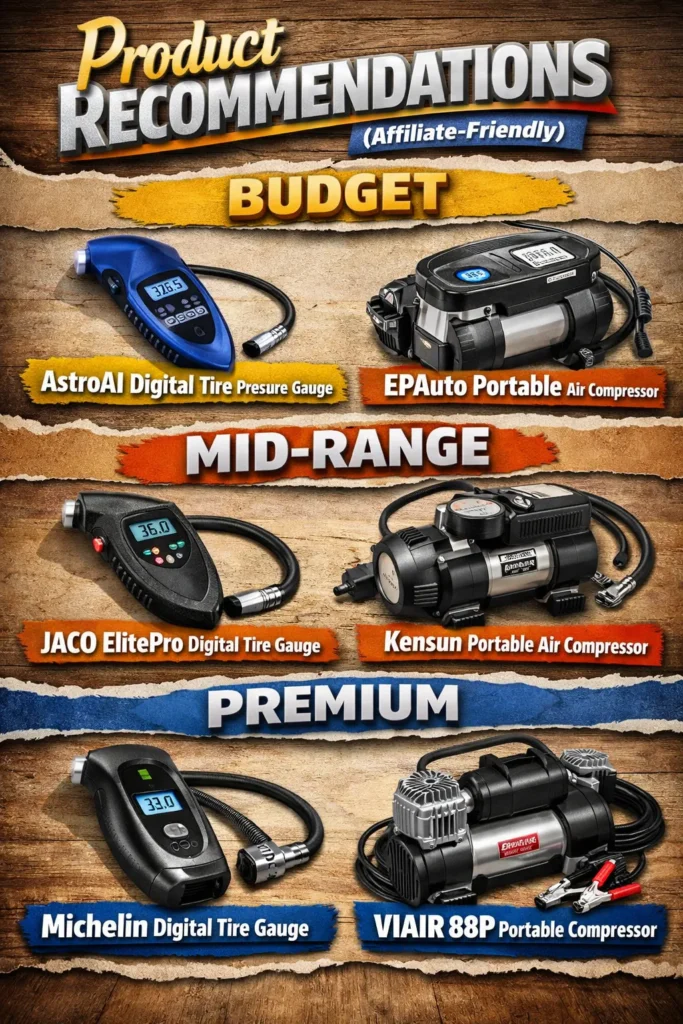
Budget
- AstroAI Digital Tire Pressure Gauge
- EPAuto Portable Air Compressor
Mid-Range
- JACO ElitePro Digital Tire Gauge
- Kensun Portable Air Compressor
Premium
- Michelin Digital Tire Gauge
- VIAIR 88P Portable Compressor
Comparison Section (Option A vs Option B)
| Feature | Digital Gauge | Analog Gauge |
|---|---|---|
| Accuracy | Very high | Moderate |
| Ease of Use | Easy, quick reading | Requires interpretation |
| Night Use | Backlit display | Hard to read |
| Durability | Good | Very durable |
| Price | Slightly higher | Cheaper |
Winner: Digital gauge for winter use.
Troubleshooting Table
| Problem | Cause | Fix |
|---|---|---|
| TPMS light on | Cold air reduced pressure | Inflate to correct PSI |
| Gauge shows no reading | Poor valve seal | Press gauge firmly |
| Tire loses pressure quickly | Leak or puncture | Inspect or repair tire |
| Valve frozen | Ice buildup | Warm valve area gently |
Time Required & Difficulty Level
- Time: 5–10 minutes
- Difficulty: Very easy (Beginner level)
Pro Tips
Do
- Check pressure weekly in winter.
- Check tires when cold.
- Keep a portable compressor in the trunk.
Don’t
- Inflate tires to sidewall PSI.
- Ignore TPMS warning lights.
- Check tires after long drives.
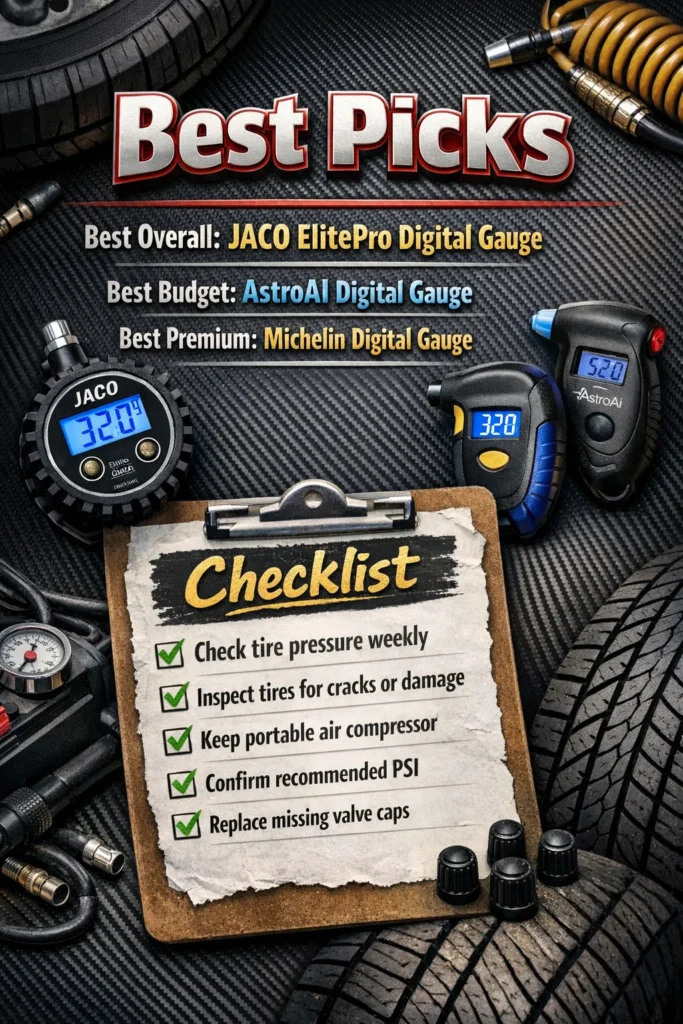
Best Picks
- Best Overall: JACO ElitePro Digital Gauge
- Best Budget: AstroAI Digital Gauge
- Best Premium: Michelin Digital Gauge
Checklist
- Check tire pressure weekly
- Inspect tires for cracks or damage
- Keep portable air compressor
- Confirm recommended PSI
- Replace missing valve caps
Use Cases (When to Choose What)
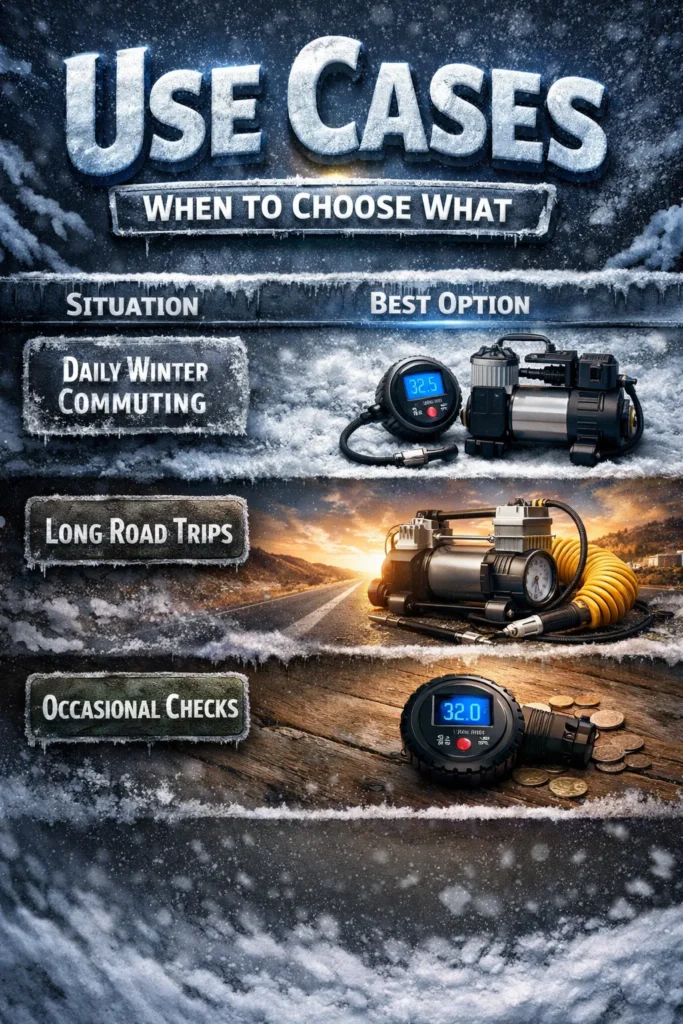
| Situation | Best Option |
|---|---|
| Daily winter commuting | Digital gauge + portable compressor |
| Long road trips | Premium compressor |
| Occasional checks | Budget digital gauge |
Common Mistakes to Avoid
- Checking tires when hot
- Ignoring pressure drops in cold weather
- Over-inflating tires
- Using inaccurate gauges
- Forgetting spare tire pressure
Safety Notes & Warnings
- Never drive with severely under-inflated tires.
- Over-inflated tires reduce traction on snow.
- Check spare tire pressure monthly.
- Avoid inflating tires in moving traffic areas.
- Use gloves to prevent frostbite.
FAQ
1. How often should I check tire pressure in winter?
At least once a week or every temperature drop.
2. Why does tire pressure drop in winter?
Cold air contracts, lowering internal pressure.
3. What is the ideal tire pressure in winter?
Follow the manufacturer’s recommended PSI.
4. Should I over-inflate tires in winter?
No. Always stick to recommended PSI.
5. Can cold weather damage tires?
Yes, low pressure causes uneven wear and cracking.
6. Is TPMS reliable in winter?
Yes, but it activates after pressure drops significantly.
7. Should I check pressure after driving?
No, tires must be cold.
8. Do winter tires need different pressure?
Usually the same recommended PSI.
9. Can I use gas station air pumps in winter?
Yes, but check pressure afterward.
10. What happens if I ignore low pressure?
Reduced traction, poor fuel economy, and tire damage.
Final Thought
One of the easiest and most important aspects of winter car maintenance is checking tire pressure. Cold temperatures reduce tire pressure naturally, and any reduction makes a difference in safety, fuel economy and the life of the tire. Spending only a couple of minutes per week checking your tires will save you hundreds in repair costs and allow you to go about in confidence on foul-weather days.
For those on the go, a digital tire gauge with a portable air compressor helps you maintain proper pressure no matter the destination. Running periodic tire checks should be part of your routine during the winter, and your car will thank you throughout the season with better performance, safety and efficiency.

Leave a Reply