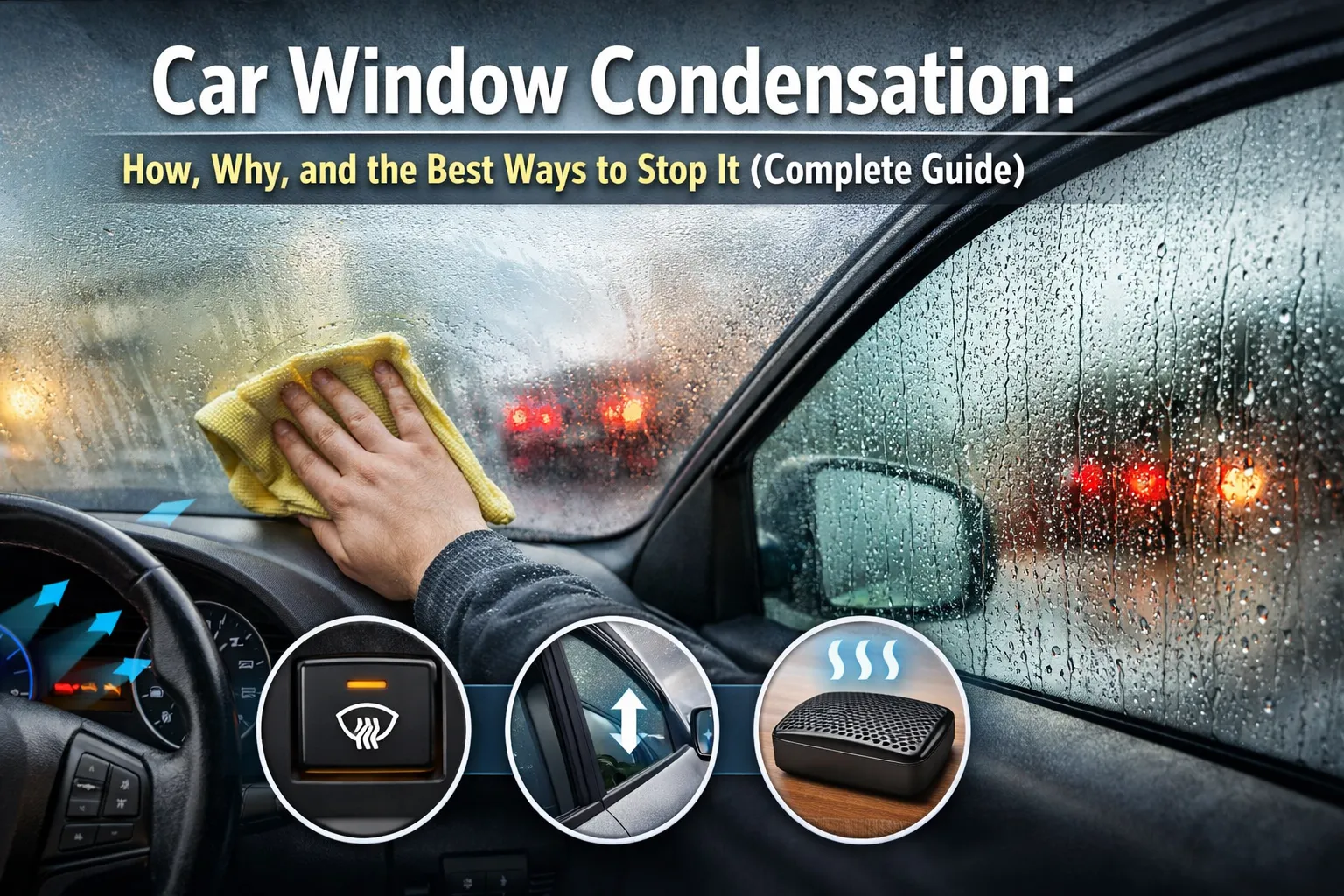
One of the most annoying things for drivers is window condensation that occurs particularly cold mornings or in wet periods. You step out of your house, hop into the car and starting driving. You can’t see the road, your trip is delayed and safety becomes a major issue.
Condensation occurs when warm, moist air in your car comes into contact with the cold surface of the windows. Because of the difference in temperatures, small water droplets will form over glass, obstructing sight and causing driving hazards. Lots of drivers rub it away with their fingers or a cloth, but the fog returns.
Good news though: Car window condensation is totally avoidable. With the proper techniques, tools and habits you can keep your windows sparkling all year long. In this full guide, you’ll find out why it occurs and what to do about it including how to fix it step by step, products that work best and expert tips for keeping your car fog-free all year.
Quick Answer
- Condensation forms when warm, moist air meets cold glass.
- Turn on the defroster and AC together.
- Use anti-fog sprays or moisture absorbers.
- Keep the car interior dry and clean.
- Replace cabin air filter if needed.
Why It Matters
Fixing condensation is more than comfort—it’s about safety and car health.
Key benefits:
- Clear visibility for safer driving
- Faster morning start times
- Reduced mold and odor inside the car
- Protection for electronics and upholstery
- Better overall driving comfort
What You’ll Need (Tools + Products)
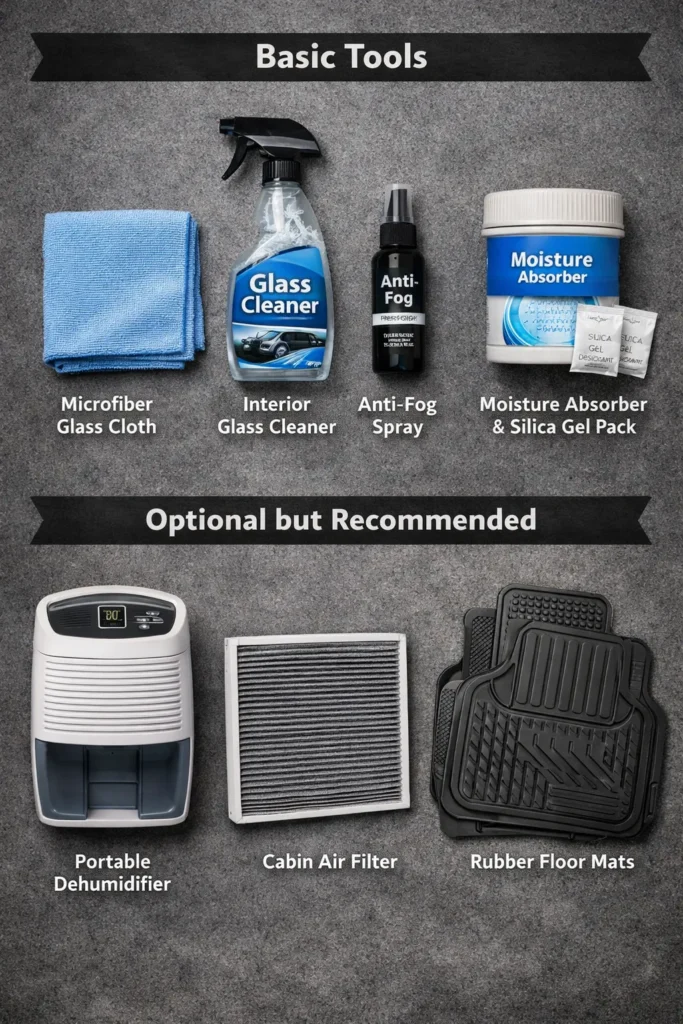
Basic Tools
- Microfiber glass cloth
- Interior glass cleaner
- Anti-fog spray
- Moisture absorber or silica gel pack
Optional but Recommended
- Portable dehumidifier
- Cabin air filter replacement
- Rubber floor mats (to reduce moisture)
Step-by-Step Guide How to Stop Car Window Condensation
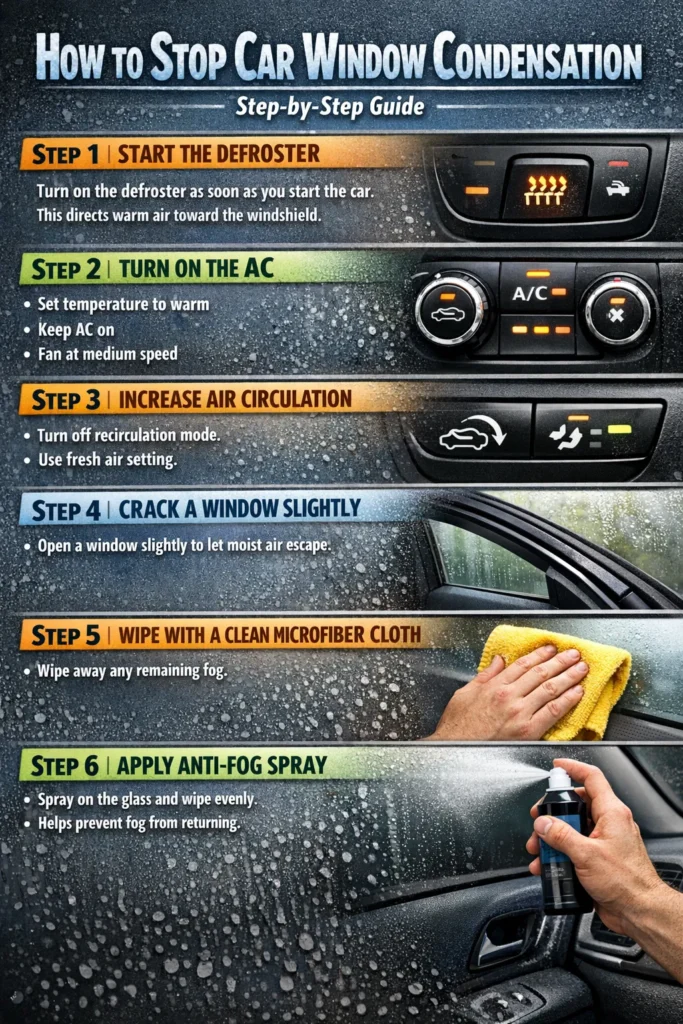
Step 1: Start the Defroster
Turn on the defroster as soon as you start the car. This directs warm air toward the windshield.
Step 2: Turn On the AC
Even in winter, the air conditioner removes moisture from the air.
- Set temperature to warm
- Keep AC on
- Fan at medium speed
Step 3: Increase Air Circulation
Switch off recirculation mode.
Fresh air helps reduce humidity inside the cabin.
Step 4: Crack a Window Slightly
Open one window slightly to allow moist air to escape.
Step 5: Wipe with a Clean Microfiber Cloth
Use a dry microfiber cloth to remove any remaining fog.
Step 6: Apply Anti-Fog Spray
Spray on interior glass and wipe evenly.
This prevents fog from returning.
Cost Breakdown & Pricing Table
| Item | Budget | Mid-Range | Premium |
|---|---|---|---|
| Microfiber cloth | $3 | $8 | $15 |
| Anti-fog spray | $6 | $12 | $20 |
| Moisture absorber | $5 | $10 | $18 |
| Cabin air filter | $12 | $25 | $45 |
| Portable dehumidifier | $15 | $35 | $80 |
Typical total cost:
- Budget setup: $15–$25
- Mid-range setup: $40–$70
- Premium setup: $100+
Before and After Explanation
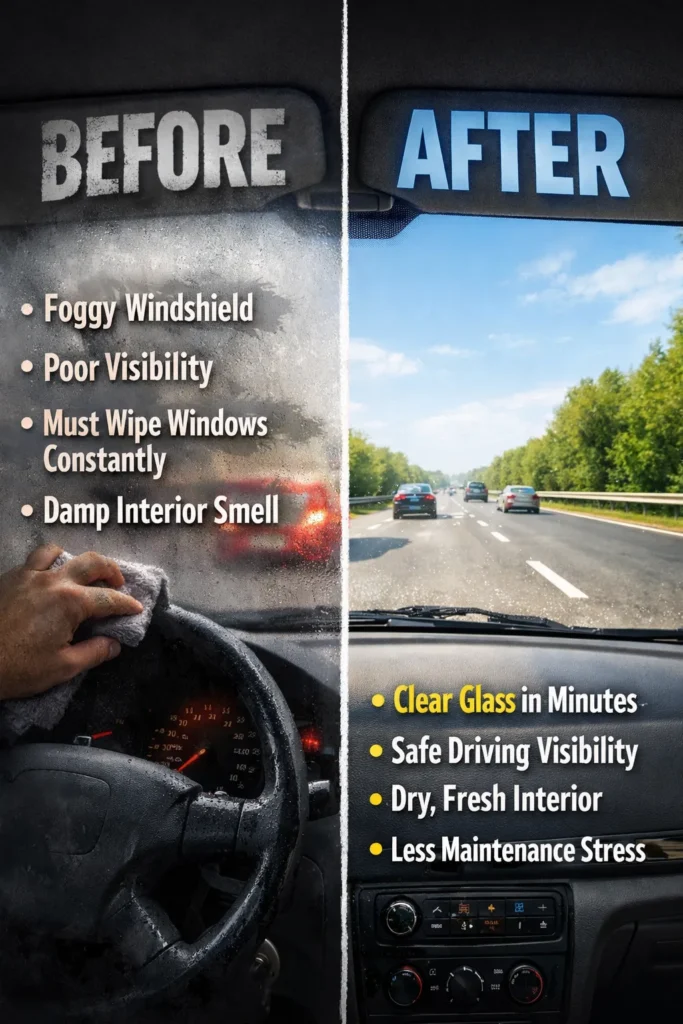
Before
- Foggy windshield
- Poor visibility
- Must wipe windows constantly
- Damp interior smell
After
- Clear glass in minutes
- Safe driving visibility
- Dry, fresh interior
- Less maintenance stress

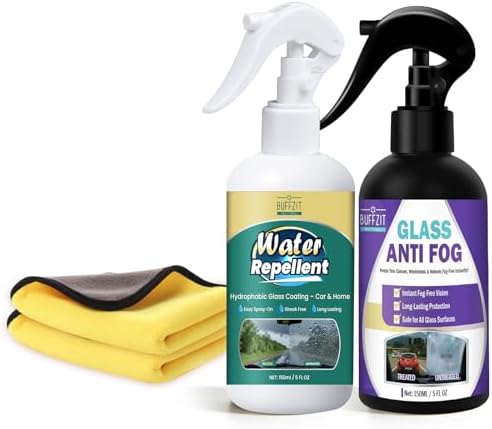
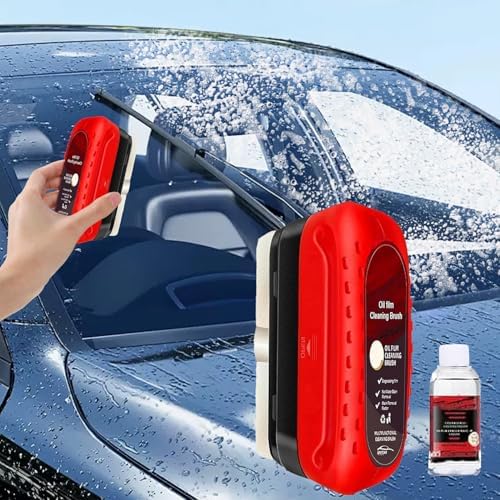
Product Recommendations (Budget / Mid / Premium)
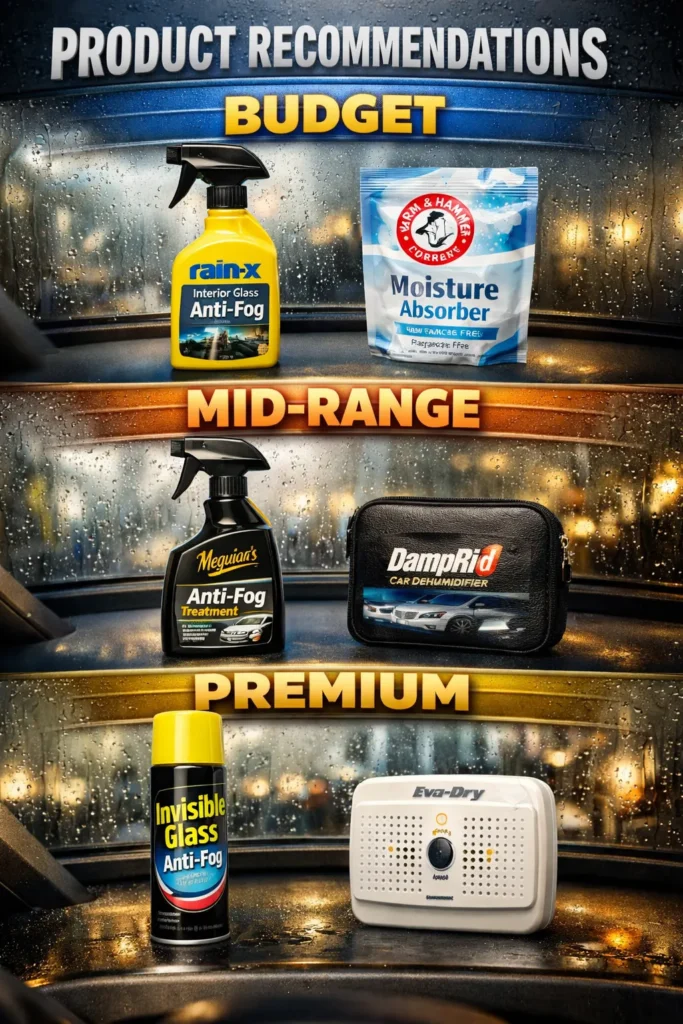
Budget
- Rain-X Interior Glass Anti-Fog
- Arm & Hammer Moisture Absorber
Mid-Range
- Meguiar’s Anti-Fog Treatment
- DampRid Car Dehumidifier
Premium
- Invisible Glass Anti-Fog
- Eva-Dry Wireless Mini Dehumidifier
Comparison Section: Option A vs Option B
| Feature | Anti-Fog Spray | Moisture Absorber |
|---|---|---|
| Works instantly | Yes | No |
| Long-term effect | Medium | High |
| Reusable | Sometimes | Yes |
| Easy to install | Very easy | Easy |
| Best for | Daily drivers | Parked cars, humid areas |
Troubleshooting Table
| Problem | Likely Cause | Fix |
|---|---|---|
| Fog returns quickly | High humidity | Use moisture absorber |
| Windows fog while driving | Recirculation mode on | Switch to fresh air |
| Musty smell | Damp carpets | Dry interior thoroughly |
| Defroster not working | Dirty cabin filter | Replace filter |
| Fog only in rain | Wet shoes/mats | Use rubber mats |
Time Required & Difficulty Level
| Task | Time | Difficulty |
|---|---|---|
| Quick defog with AC | 2–5 minutes | Easy |
| Apply anti-fog spray | 10 minutes | Easy |
| Replace cabin air filter | 15–30 minutes | Moderate |
| Deep interior drying | 1–2 hours | Moderate |
Pro Tips
Do
- Use AC with heat during defogging
- Keep interior glass clean
- Replace cabin filter regularly
- Use moisture absorbers in winter
Don’t
- Wipe with dirty cloths
- Use hand or sleeve to clear fog
- Leave wet items in the car
- Keep recirculation on in humid weather
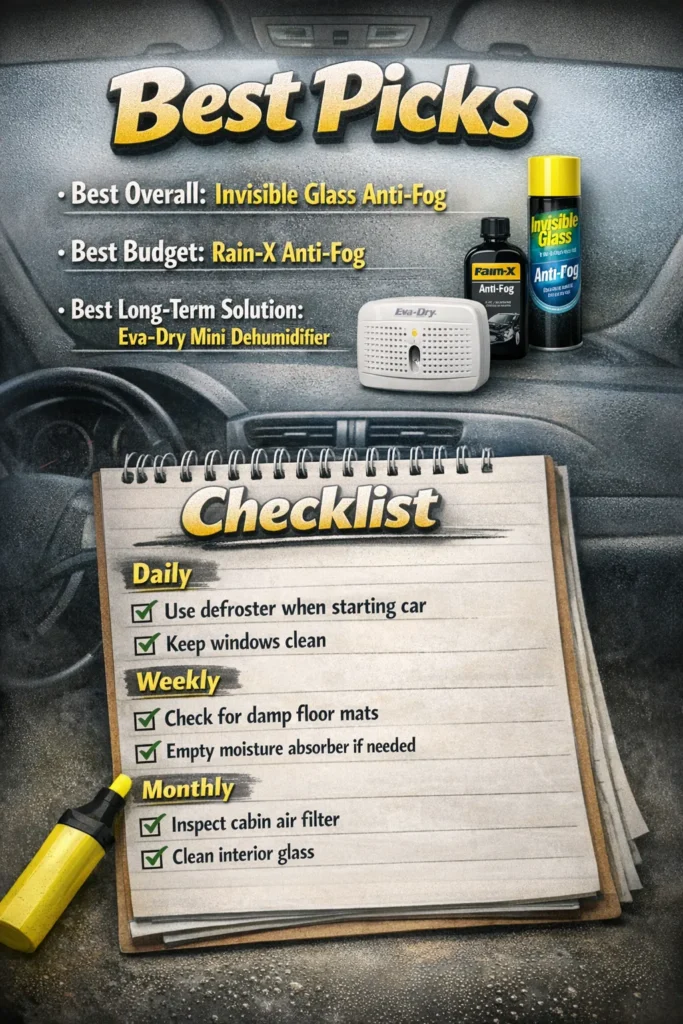
Best Picks
- Best Overall: Invisible Glass Anti-Fog
- Best Budget: Rain-X Anti-Fog
- Best Long-Term Solution: Eva-Dry Mini Dehumidifier
Checklist
Daily
- Use defroster when starting car
- Keep windows clean
Weekly
- Check for damp floor mats
- Empty moisture absorber if needed
Monthly
- Inspect cabin air filter
- Clean interior glass
Use Cases (When to Choose What)
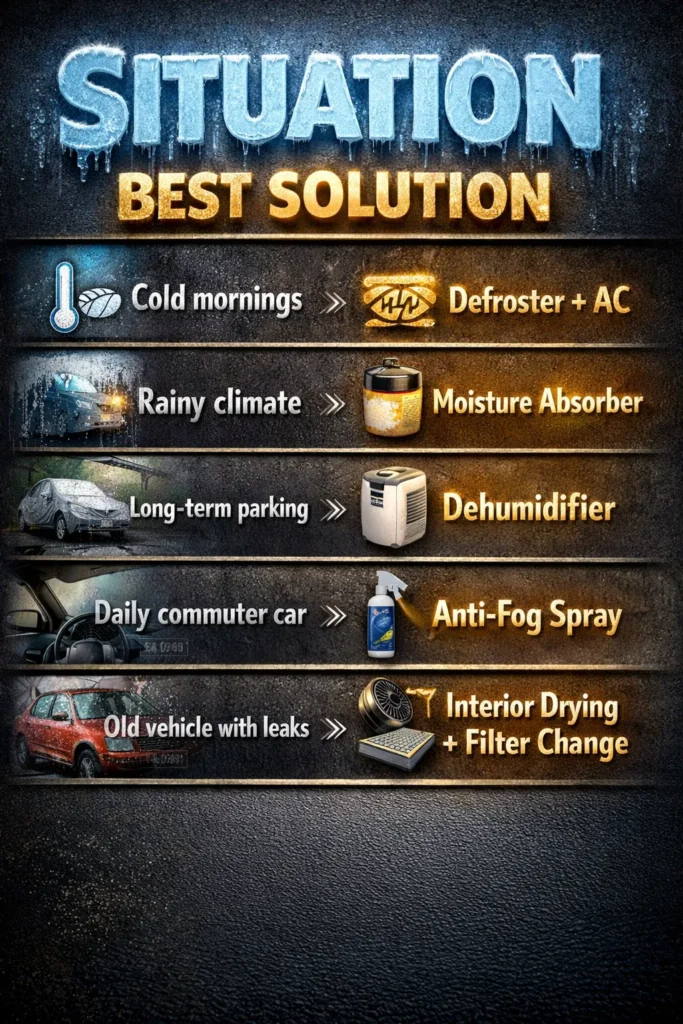
| Situation | Best Solution |
|---|---|
| Cold mornings | Defroster + AC |
| Rainy climate | Moisture absorber |
| Long-term parking | Dehumidifier |
| Daily commuter car | Anti-fog spray |
| Old vehicle with leaks | Interior drying + filter change |
Common Mistakes to Avoid
- Ignoring cabin air filter replacement
- Leaving wet umbrellas or towels inside
- Using household cleaners on glass
- Running heater without AC in humid weather
Safety Notes & Warnings
- Never drive with a fogged windshield.
- Pull over safely if visibility drops.
- Avoid using harsh chemicals on interior glass.
- Ensure defroster vents are not blocked.
FAQ
Why do my car windows fog up overnight?
Moisture inside the car cools overnight and condenses on cold glass.
Does AC help with condensation?
Yes. AC removes moisture from the air, even in winter.
Is condensation inside the car normal?
Occasional fog is normal, but constant condensation may indicate excess moisture or leaks.
How long does anti-fog spray last?
Most sprays last 1–4 weeks depending on usage.
Can a bad cabin filter cause foggy windows?
Yes. A clogged filter restricts airflow and increases humidity inside the cabin.
Final Thought
If you can see small puddles of water forming in your cup holders, you may have a leak somewhere in the car. House windows are especially vulnerable to air leaks, so these should be checked before looking elsewhere. Simple routines – such as using your defroster properly, keeping the interior of your car dry and using appropriate anti-fog products – allow you to maintain a clear vent on the cold mornings. A little investment in the proper tools can greatly enhance how safe comfortable, and fresh you’ll be.




Leave a Reply