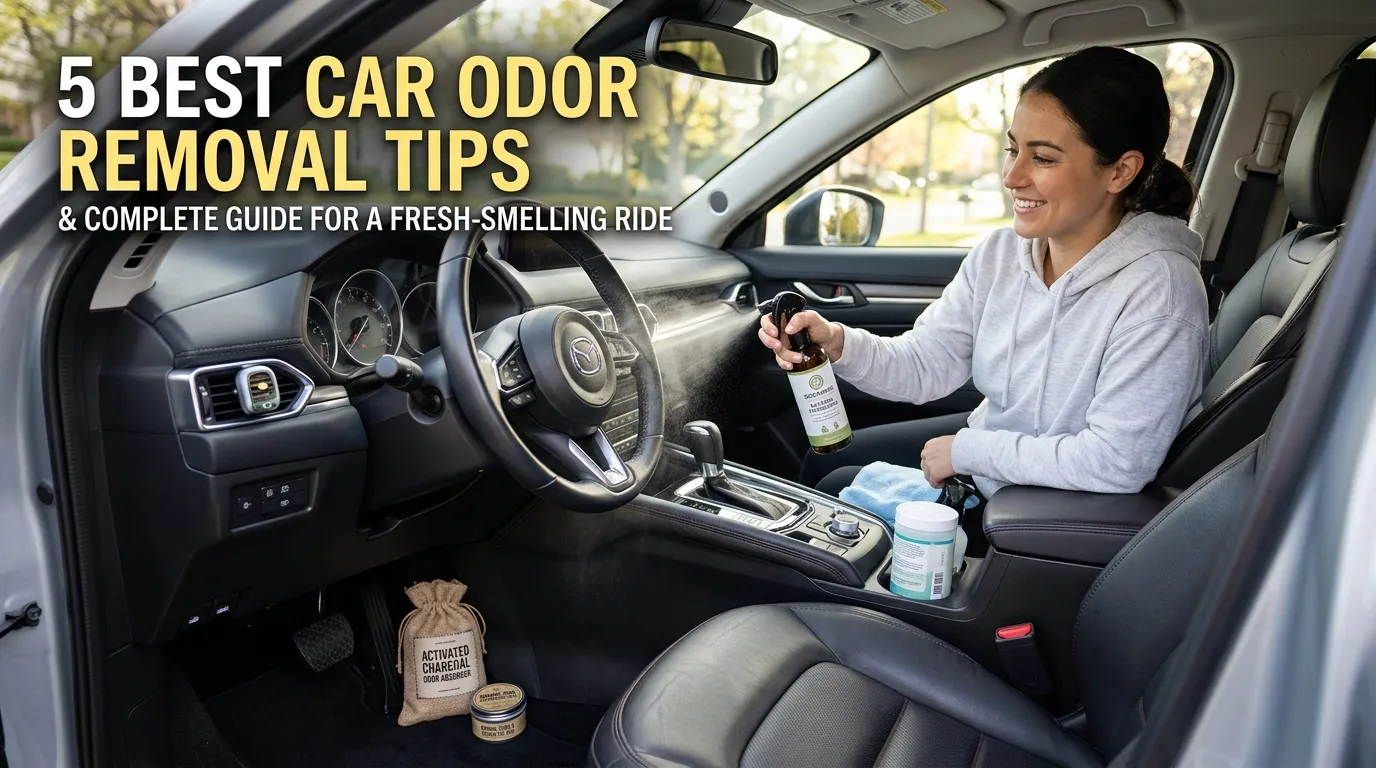
We’ve all been there. You get into your car, ready for your drive, but contrary to comfort you are greeted with a funky, fragrant smell. Perhaps it’s the sour smell of a spilled latte that never quite came out or the remnants of a road trip with your furry companion, or maybe it’s that musty odor that creeps up every time you run the A/C. You hang an air freshener, and within 24 hours the stench returns proving just how much it was masking something larger. Here’s the reality: foul odours don’t just vanish into thin air. They burrow themselves into the fabrics, carpets and ventilation system of your vehicle, making every single place where you sit an unpleasant environment. But here’s the thing: you don’t have to put up with it. From quick fixes to professional-grade solutions, this comprehensive guide is filled with the best car odor removal tips. We’ll guide you through the steps needed to locate the origin of a stinky smell, neutralize odors at a molecular level and make sure your vehicle smells showroom-fresh permanently. Prepare to fall in love with your car all over again.
Quick Answer
The only way to permanently remove car odors is to get rid of the source — not just cover it up. You can begin by clearing out trash and vacuuming well. Trace the source (spills, mold, food). Use an enzyme cleaner or steam cleaner to deep clean fabrics. Sprinkle baking soda to eliminate any remaining odors. For heavy odors such as smoke or mildew, use an odor eliminator fogger (like the Chemical Guys Total Reset) or have a professional ozone treatment performed. Lastly keep everything fresh with activated charcoal bags & regular cleaning.
Why It Matters (Benefits)
Eliminating bad odors from your car goes far beyond just making it smell good. It has real benefits for you, your passengers, and your vehicle’s value.
- Healthier Environment: Most bad smells come from things like bacteria, mold, and volatile organic compounds (VOCs). Inhalation of these materials can exacerbate allergies, cause headaches and respiratory problems. The cleaner the car, the healthier it is.
- Enhanced Driving Experience: It is a big part of your daily life, and since you spend so much time with it. Nothing like a fresh, clean interior to make every drive enjoyable, stress less, and keep the atmosphere nice for you and your passengers.
- Preserves Resale Value: A lingering bad odor is a major red flag for prospective buyers. It indicates lack of maintenance and can substantially decrease your vehicle’s resale value. New-car smell suggests to buyers that the vehicle has been well maintained.
- Cost Savings:Early intervention with some simple DIY methods can offer better prevention of odors before they worsen and you find yourself paying for costly professional detailing services.
What You’ll Need (Tools + Products)
Having the right tools on hand makes the job easier and more effective. Here’s a list categorized by the type of cleaning you’ll be doing.
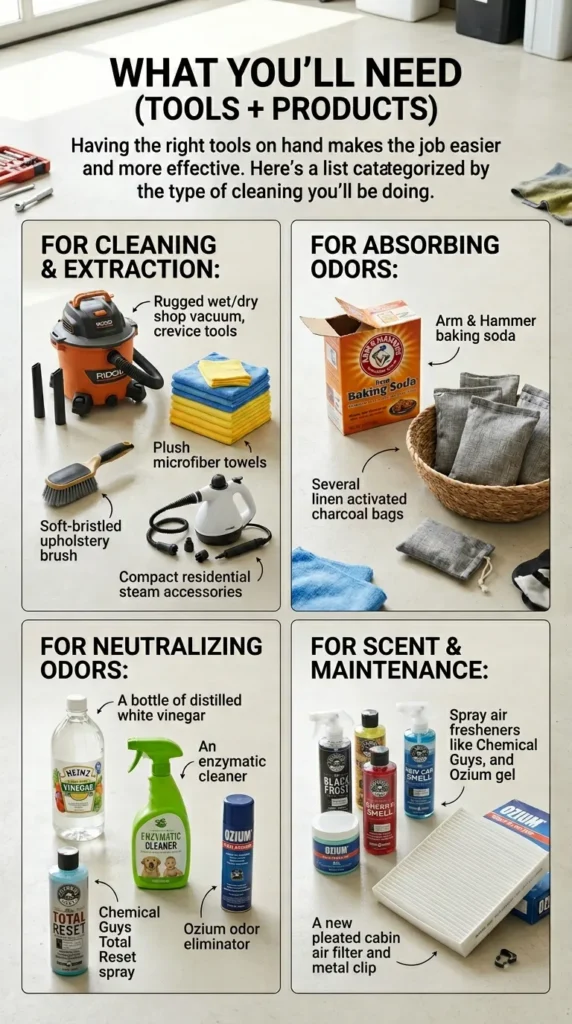
For Cleaning & Extraction:
- Vacuum Cleaner: A wet/dry vacuum is ideal for extracting liquid, but a strong household vacuum with crevice tools is great for dry debris .
- Microfiber Towels: Lint-free and gentle on surfaces for wiping and applying products .
- Soft-Bristled Brush: For scrubbing carpets and fabric seats without damaging fibers .
- Steam Cleaner: (Optional but powerful) Uses high heat to penetrate fabrics, disinfect, and dissolve grime .
For Absorbing Odors:
- Baking Soda: A natural, cheap deodorizer that absorbs moisture and smells from fabrics .
- Activated Charcoal Bags: Highly porous and reusable, these are excellent for long-term odor absorption .
For Neutralizing Odors:
- White Vinegar: Mixed with water, it breaks down alkaloids in odors and kills mold and bacteria .
- Enzymatic Cleaner: A must-have for organic stains like vomit, urine, food, or milk. The enzymes break down the odor-causing proteins .
- Specialized Odor Eliminator: Products like Chemical Guys Total Reset or Ozium are designed to neutralize odors at the molecular level rather than just masking them .
For Scent & Maintenance:
- Quality Air Freshener: For a final touch after the odor is gone. Look for sprays from reputable brands like Chemical Guys .
- Cabin Air Filter: A fresh filter is crucial for preventing smells from the vents .
Step-by-Step Guide (How-To) with Explain Details
Removing a bad smell is a process. Follow these steps in order for the best results.
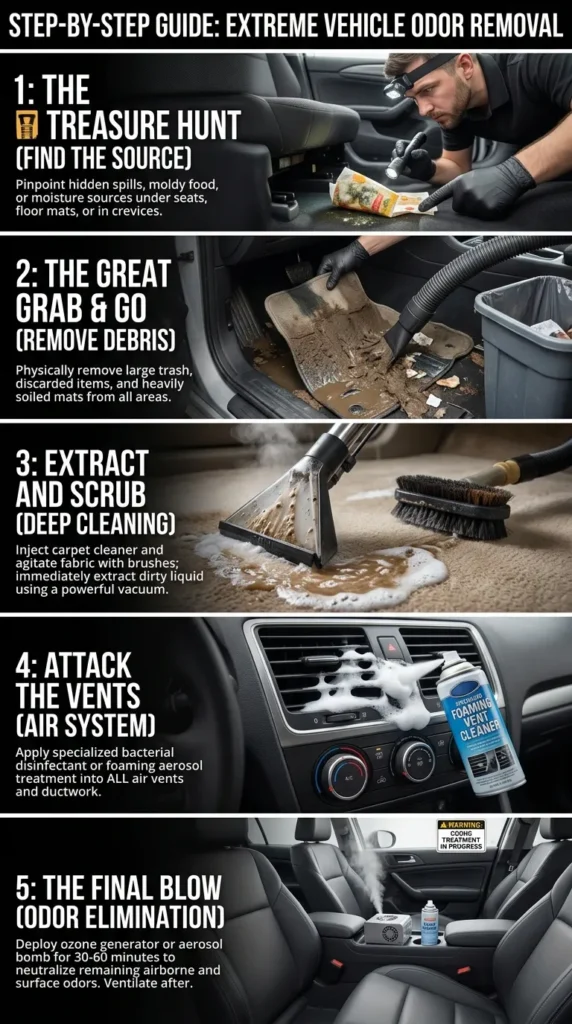
Step 1: The Treasure Hunt (Find the Source)
Before doing anything, play detective. An odor cannot be eliminated without eliminating the source of that odor. Take everything out of the car—mats, trash, phone chargers, gym bags and kids’ car seats. Look under the seats, in every nook and cranny, and in the trunk. Watch for spilled liquids, old food, wet spots or mold. Sniff the carpets and seats to identify problem areas.
Step 2: The Great Grab & Go (Remove Debris)
Once you’ve identified the culprits, it’s time to evict them. Throw away all trash. For semisolid spills, you can use a plastic scraper or an old credit card to lift off as much as possible. Clean every seam and cranny between each seat using a vacuum that has a crevice tool. Remember to vacuum the trunk and the area under the seats.
Step 3: Extract and Scrub (Deep Cleaning)
This is where you tackle the source.
- Fabric Seats & Carpets: Dust the affected areas liberally with baking soda. Leave for a few hours or overnight to draw out odors and moisture. Vacuum it up thoroughly. For stains, an enzymatic cleaner or an all-purpose cleaner such asChemical Guys Nonsense. Spray it on, gently scrub with a brush, and blot with a microfiber towel . A steam cleaner is excellent for this step, as the heat kills bacteria .
- Leather Seats: Use a specific leather cleaner to clean seats, and follow it with a leather conditioner to keep them supple. Do not use harsh chemicals or vinegar on leather.
- Floor Mats: Remove them completely. For rubber mats, wash with soap and water. For fabric mats, scrub with a carpet cleaner and hose off the mat, or if the care tag allows it, stick in the washing machine. Make sure to dry them completely in the sun before returning them.
Step 4: Attack the Vents (Air System)
A musty smell when you turn on the A/C means bacteria or mold is growing in your ventilation system.
- Locate your cabin air filter (usually behind the glove box). Replace it if it’s dirty or smells. This should be done every 12,000 to 15,000 miles .
- With the engine running and the A/C set to maximum (recirculation mode off), spray an enzymatic A/C cleaner or a disinfectant spray into the exterior air intake vents (often located at the base of the windshield). It will cleanse the system from the inside out.
Step 5: The Final Blow (Odor Elimination)
If a faint smell still lingers after deep cleaning, it’s time for molecular elimination.
- Activated Charcoal: Place a few bags under the seats. They will silently absorb any remaining VOCs and moisture for months .
- The Fogger Method: For serious odors like smoke, use a product like Chemical Guys Total Reset.This is an aerosol fogger which can be used only once. You trigger the thing inside of the car, activate recirc on your AC and let it fog everything — including vents — perma-neutalizing smells.


Cost Breakdown
The cost of removing a car odor can vary dramatically based on the method you choose and the severity of the smell.
| Method | Description | Price Range (USD) | Best For |
|---|---|---|---|
| DIY with Household Items | Using baking soda, white vinegar, and lots of elbow grease. | $5 – $15 | Minor, surface-level odors, maintenance. |
| DIY with Specialized Products | Buying enzymatic sprays, odor eliminator foggers, and high-quality cleaners. | $20 – $60 | Moderate odors like food, mild smoke, or pet smells. |
| Professional Detail (Deep Clean) | A full interior detail including steam cleaning, extraction, and shampooing. | $150 – $400 | General deep cleaning, persistent odors from dirt/stains. |
| Professional Odor Removal | Specialized treatment using ozone generators or hydroxyl machines to chemically break down odors. | $100 – $500+ | Severe, embedded odors like heavy smoke, mildew, or urine . |
Before and After with Explain Details
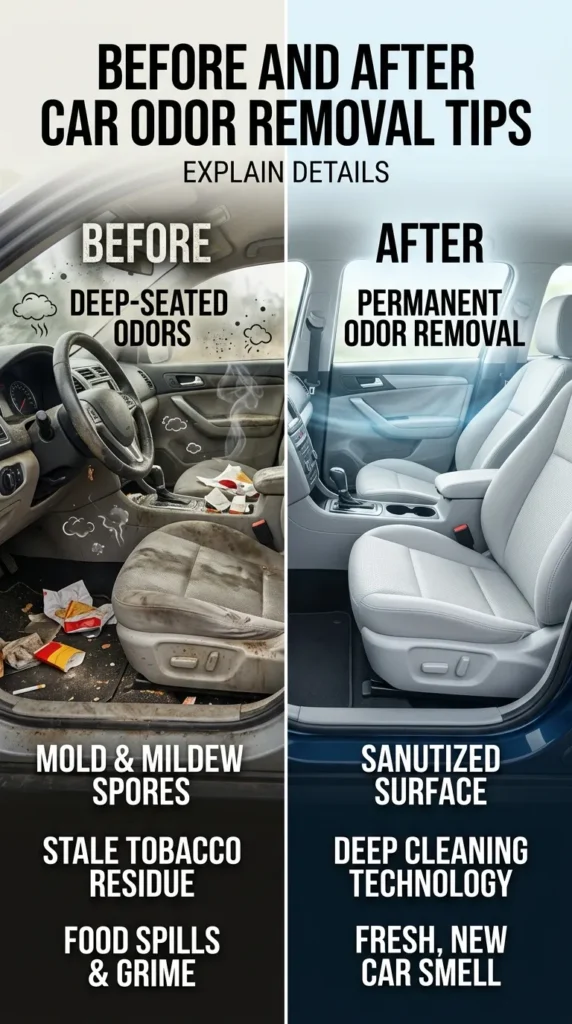
The “Before” Scenario:
Think used car, the kind that still smells ever so slightly of cigarette smoke. The owner has vacuumed and hung air fresheners, but the smell comes back every time the car sits in the sun. The upholstered seats are dingy, and the windows have a slight mist. The smell is strong almost as soon as you open the door, giving the car an unclean feeling and detracting from its attraction. The culprits are tar and nicotine residue that can be found deep within the fabric, carpet, and headliner, as well as permeating through the A/C system.
The “After” Transformation:
Well, the first change following the step-by-step guide is visual. A full vacuuming and extraction cleaning of the seats and carpets makes the fabrics look brighter and feel fluffier. The window is scrubbed free of its smoky coating. The cabin air filter is replaced. Finally, the fogger from Chemical Guys Total Reset gets deployed. The next day, when the owner gets back in the car, poof: it’s complete. The smell of smoke is entirely over. The air is clean and crisp. The fogger’s “new car scent” is a nice bonus, but the real win is that the old, tenacious smoke smell is gone entirely.
Product Recommendations (Budget)
Here are top-tier product suggestions to help you on your quest for a fresh car interior.
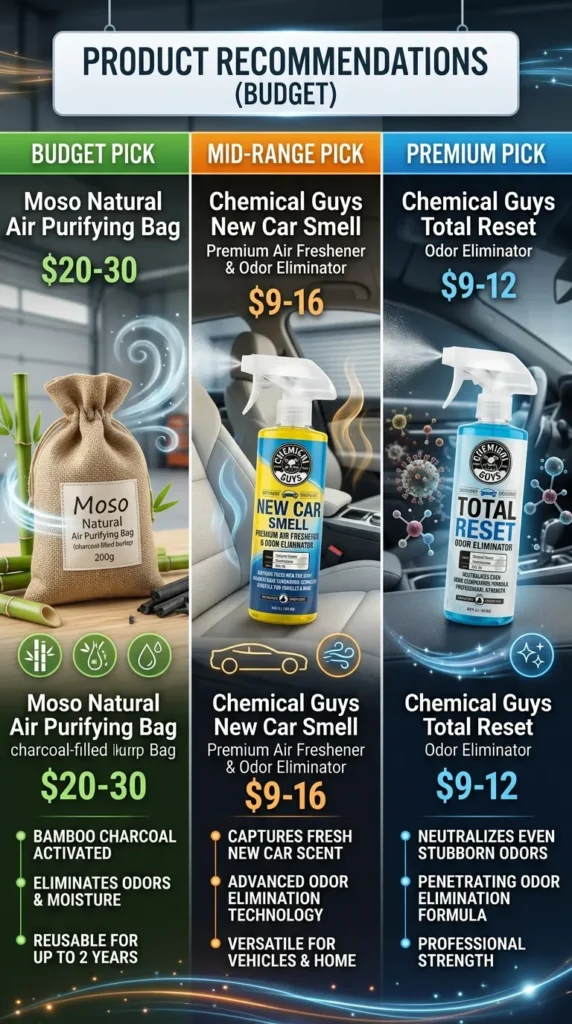
- Budget Pick: Moso Natural Air Purifying Bag ($20-30)
- Why: This is the set-it-and-forget-it solution. It has activated bamboo charcoal that absorbs odors, moisture and harmful substances naturally for up to two years. Simply put a bag underneath your seat, and it operates 24/7 with no scents or chemicals.
- Mid-Range Pick: Chemical Guys New Car Smell Premium Air Freshener & Odor Eliminator ($9-16)
- Why: A favorite of the avid ones, this spray employs enzymes to trap and kill odor molecules, rather than masking them. It is safe on most interior surfaces, and as a bonus leaves behind that classic, widely beloved “new car” smell.
- Premium Pick: Chemical Guys Total Reset Odor Eliminator ($9-12)
- Why: This is a professional-grade solution in a do-it-yourself-ready can. It’s a one-and-done kind of fogger that taps into your car’s AC system to disperse a molecular odor eliminator through all the nooks and crannies — every vent, every crevice, every inch of fabric. It’s the end-all be-all of toughest smell fighters from smoke, pet and mildew removal.
Comparison Section: Fogger vs. Charcoal
Two popular methods for odor removal are foggers and activated charcoal, but they serve very different purposes. Here’s how to choose between them.
- Winner for Instant, Permanent Elimination: The Fogger (e.g., Chemical Guys Total Reset)
A fogger is an active, heavy duty treatment. It does this by launching a chemical agent into the entire cabin, targeting and eliminating odor-causing molecules at their source. It’s ideal for when you need a reset, such as after purchasing a used car with smoke smell or tackling a serious mildew problem. Results are instant and long-lasting, but it’s a one-and-done wonder per treatment. - Winner for Long-Term, Passive Maintenance: Activated Charcoal (e.g., Moso Natural Bag)
Carbon is a passive, long-term fix. It functions by absorbing odors and moisture in its porous surface as time goes on. It isn’t made to remove a heavy smoke odor overnight, but it excels at keeping an environment fresh. You throw a bag under your seat and don’t think twice about it for two years. It’s easiest to keep odors from accumulating in the first place.
The Verdict: For the best results, use both. Hit the reset button with a fogger to permanently eliminate a current problem, then maintain that freshness with an activated charcoal bag to prevent future odors.
Troubleshooting
| Problem | Possible Cause | The Fix |
|---|---|---|
| Musty smell when A/C is on | Mold or bacteria in the evaporator or cabin air filter. | Replace the cabin air filter. Use an A/C vent cleaner spray . |
| Smell of sour milk | A protein-based spill that has seeped deep into the carpet padding. | This requires an enzymatic cleaner. The enzymes are the only thing that can break down the milk proteins. You may need to inject the cleaner deep into the carpet . |
| Pet odor lingers | Dander and oils soaked into fabric seats and carpets. | Vacuum thoroughly with a pet hair tool. Use an enzymatic cleaner designed for pet stains. An ozone treatment is a guaranteed permanent fix for severe cases . |
| Smoke smell returns after cleaning | Residue is trapped in the headliner or deep in the ventilation system. | The headliner is delicate and difficult to clean. This is often a job for a professional. Try a fogger to reach the ventilation system . |
| Smell is gone, but then comes back | The source wasn’t completely eliminated, or moisture has reactivated it. | You likely missed a spot. Repeat the deep cleaning process, paying special attention to the exact area. Ensure everything is completely dry. |
Time Required & Difficulty Level
- Time Required:1 to 4 hours (varies with stink intensity) A basic freshen-up would likely take an hour, while a deep clean to eliminate smoke smells could take a whole afternoon.
- Difficulty Level: Easy to Moderate. The majority of steps are basic cleaning methods. The hardest part is the physical labor of scrubbing and vacuuming. And while using a fogger is super easy, you really should read the instructions carefully.
Pro Tips
- DO act fast. The quicker you clean a spill, the less chance it has to sink in and breed bacteria .
- DO always test any new cleaner on a small, hidden area first to ensure it doesn’t stain or damage the material .
- DO let your car air out. On a nice day, roll down all the windows for 15-20 minutes to let fresh air circulate .
- DON’T just mask the smell with a powerful air freshener. This creates a “cover-up” smell that is often worse than the original problem .
- DON’T soak electronics. Be careful when cleaning around buttons, screens, and controls. Spray your cleaner onto a microfiber towel first, not directly onto the surface .
- DON’T forget the trunk. It’s a common hiding place for smells from groceries, gym bags, or spilled fluids.
Best Picks
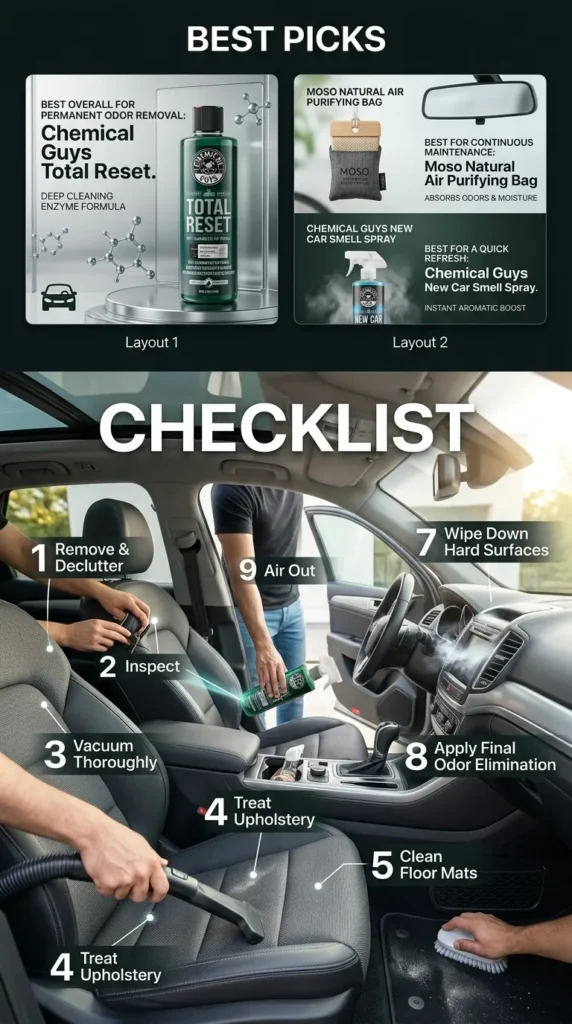
- Best Overall for Permanent Odor Removal: Chemical Guys Total Reset. This fogger is unmatched in its ability to permanently destroy even the toughest smells like smoke and mildew. It’s the professional standard for a complete interior reset .
- Best for Continuous Maintenance: Moso Natural Air Purifying Bag. For a hands-off approach to keeping your car fresh, this activated charcoal bag is the winner. It silently fights odors and moisture every day for up to two years .
- Best for a Quick Refresh: Chemical Guys New Car Smell Spray. When you need a quick and easy refresh after a cleaning, this spray provides an authentic, long-lasting scent while also helping to neutralize odors with its enzymatic formula .
Checklist
- Step 1: Remove & Declutter: Take out all trash, floor mats, and personal items.
- Step 2: Inspect: Check under seats, in cup holders, and in the trunk for the odor source (spills, old food, dampness).
- Step 3: Vacuum Thoroughly: Use crevice tools to get into every seam and corner of seats, carpets, and the trunk.
- [Step 4: Treat Upholstery:
- Sprinkle baking soda on fabric, let sit (hours), then vacuum.
- Spot-clean stains with an appropriate cleaner (enzyme for organics, all-purpose for dirt).
- Use a steam cleaner for deep disinfection (optional).
- Step 5: Clean Floor Mats: Wash separately and let dry completely in the sun.
- Step 6: Address the A/C System:
- Replace the cabin air filter.
- Spray cleaner into exterior air intake vents.
- Step 7: Wipe Down Hard Surfaces: Clean dashboard, door panels, and console with an interior cleaner.
- Step 8: Apply Final Odor Elimination:
- Place activated charcoal bags under seats for continuous cleaning.
- OR Use an odor eliminator fogger for severe smells.
- Step 9: Air Out: Leave windows open for a while to ventilate.
Use Cases
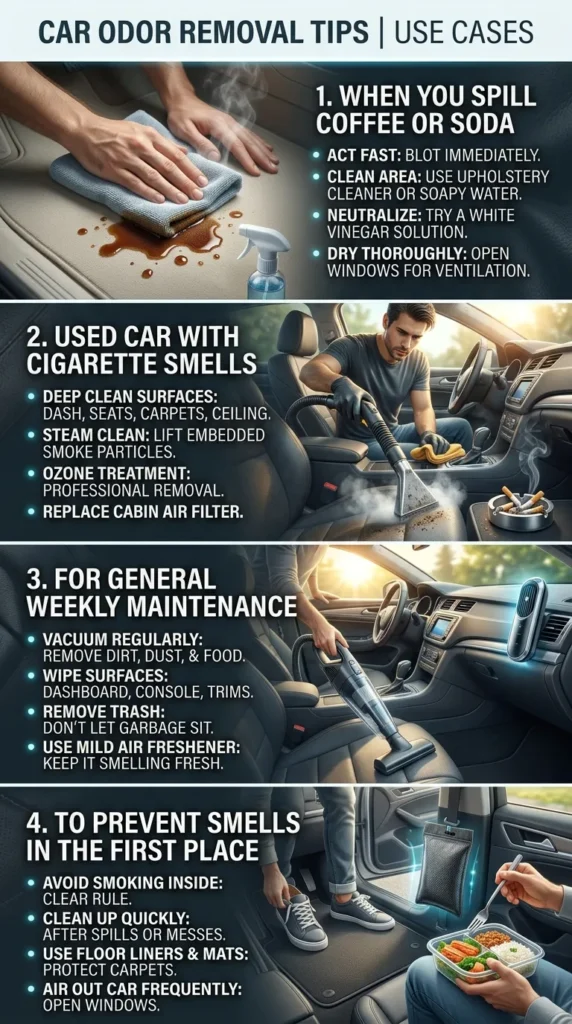
- When you spill coffee or soda: Use an enzymatic or all-purpose cleaner immediately to blot and clean the spot. Don’t let it dry.
- When you buy a used car that smells like cigarettes: Choose a two-pronged approach: a deep clean of all fabrics followed by an ozone treatment or a fogger like Total Reset to permanently neutralize the embedded tar and nicotine .
- For general weekly maintenance: A quick vacuum and a wipe-down of surfaces, followed by cracking the windows open when parked in a safe area, is your best bet.
- To prevent smells in the first place: Place an activated charcoal bag under a seat and make it a habit to remove trash daily .
Common Mistakes to Avoid
- Mistake #1: Masking Instead of Eliminating. This is the #1 error. Air fresheners don’t clean; they just add another layer of scent. You must remove the source of the smell.
- Mistake #2: Over-Wetting Carpets and Seats. Using too much water or cleaner can soak into the padding underneath, leading to mold and mildew, which creates a worse smell. Use products sparingly and ensure everything dries fully .
- Mistake #3: Using Bleach or Harsh Chemicals. These can damage and discolor your car’s interior. They are also dangerous to inhale in an enclosed space. Stick to products designed for automotive use .
- Mistake #4: Ignoring the Cabin Air Filter. If your filter is old and clogged with debris, it will make your whole car smell bad every time you turn on the fan. Replace it regularly .
Safety Notes
- Ventilation is Key: Make sure the area is well-ventilated when using any chemical cleaners, sprays, or foggers inside your car. Open doors or windows to keep fumes from building up.
- Ozone Machine Safety:Never sit in a vehicle with an ozone machine on. Ozone irritates the lungs and can be dangerous to inhale. The treated car needs to be well-ventilated (windows leaning) post-treatment for a least 30 – 60 minutes, before anyone gets into that car.
- Avoid Direct Heat: Don’t leave aerosol cans (cleaners, air fresheners) in your car on hot sunny days. As altitude increases, so does boiling point: it gets higher and results in the can building pressure — even exploding.
- Product Specifics:Always read and follow the manufacturer’s directions on any cleaning product. Some products aren’t safe for use on leather, some plastics or electronics.
FAQ
1. What is the fastest way to get a bad smell out of a car?
The quickest method for surface smells is to ventilate, open all the windows. When it comes to ridding a bad smell, the quickest approach is an odor eliminator Fogger, such as Chemical Guys Total Reset (about 15-20 minutes to treat the entire cabin ).
2. How do I get the smoke smell out of a used car?
The smoke smell calls for a multi-step method that involves thoroughly deep cleaning all fabrics — so all the seats, carpets, headliner — or replacing them if necessary followed by flushing and replacing cabin air filters and cleaning the ventilation system before finishing off with an ozone generator or some molecular fogger to neutralize embedded odors forever.
3. Does baking soda really remove car odors?
Yes, baking soda is a very effective natural deodorizer. It works by absorbing odors and moisture from fabrics. Sprinkle it on carpets and seats, let it sit for several hours (or overnight), and then vacuum it up thoroughly .
4. Why does my car smell musty when I turn on the AC?
A musty AC smell is almost always caused by mold or bacteria growing on the evaporator core inside your dashboard. The first step is to replace your cabin air filter. You can also buy special A/C vent cleaner sprays to kill the bacteria .
5. Can I use vinegar to clean my car interior?
Yes, diluted white vinegar (4 parts water to 1 part vinegar) is a safe and effective cleaner for many hard surfaces and can help neutralize odors. However, avoid using it on leather seats as it can dry them out .
6. What is an enzymatic cleaner and when should I use it?
An enzymatic cleaner uses specialized proteins to break down organic stains and odors at a molecular level. You should use it for biological messes like food spills, vomit, urine, milk, or blood, where other cleaners just won’t work .
7. How often should I replace my cabin air filter?
It is generally recommended to replace your cabin air filter every 12,000 to 15,000 miles, or at least once a year. If you often drive in dusty or polluted areas, you may need to replace it more frequently .
8. Are charcoal bags better than air fresheners?
For removing odors, yes. Charcoal bags are superior because they physically absorb and trap odor molecules and moisture. Air fresheners simply mask the smell by releasing a stronger scent, they don’t remove the cause .
9. How do professional detailers remove odors?
Professionals detailers do use deep extraction cleaning (steam and wet vacuums) to remove dirt, but they also often finish with ozone generators or hydroxyl machines. These units generate a gas that oxidizes and eliminates odor-causing bacteria and molecules in the entire automobile.
10. Why does my car smell like rotten eggs?
A rotten egg smell is usually a mechanical issue, not a cleaning issue. It often indicates a problem with the catalytic converter or other fuel system components. You should have your car inspected by a mechanic as soon as possible.
Final Thought
A bad smell in your car isn’t just annoying it means that unwanted bacteria, mold or chemicals have moved into your personal space. As we have discussed before, for a car to stay permanently fresh it is actually not about masking those odors with another scent but rather wiping them out at source. From sprinkling a little baking soda for minor spills to applying a targeted enzymatic cleaner for organic stains, or using an aggressive fogger for a full interior reset there’s a remedy close at hand. With this step-by-step guide and some of the preventative habits detailed here, you can change your driving space from being a point of embarrassment to an environment of comfort and pride. So stock up on your supplies, spend a bit of time, and remember what it’s like to drive in a car that really does smell as clean as it looks. Your nose (and your passengers) will appreciate it.



Leave a Reply