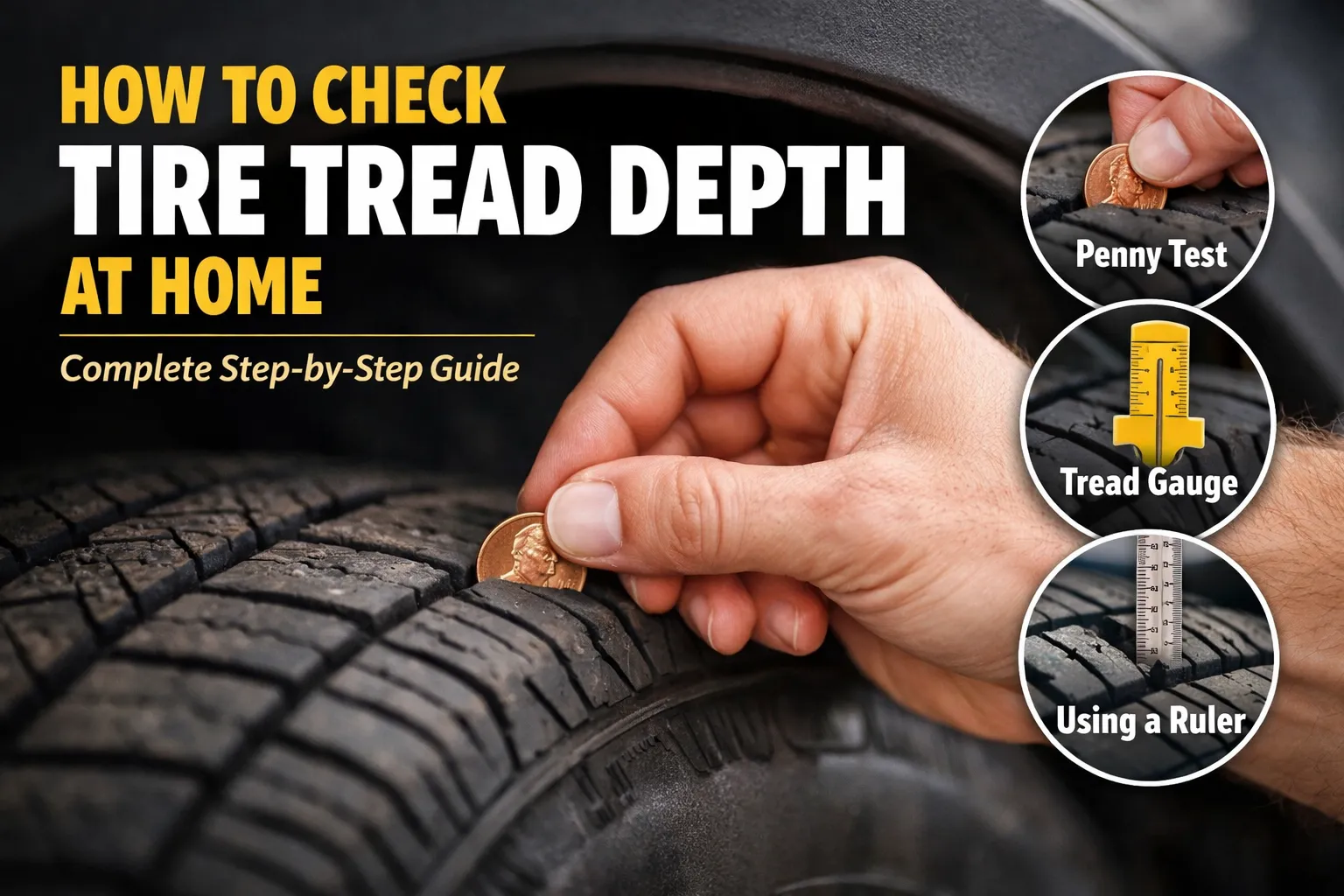
How to check tire tread is one of the easiest but the most important car maintenance for any driver. Your tires are the only part of your car that actually makes contact with the road, and if you’ve got a tread worn down to nothing, you’re not going to get as good of traction, which can lead to needing way more stopping distance than normal, and possibly just staring disaster in the face—especially when rain or snow is involved.
Most drivers don’t know their tires are no longer safe until they’ve become dangerous. Bald or Irregular Tread Uneven wear can cause hydroplaning, sloppy handling and even blowouts. The good news: Checking your tire tread depth only takes a few minutes and can be done at home with easy-to-reach tools — or even a coin.
In this ultimate guide, you’ll learn exactly how to check tire tread depth step by step, what different measurements mean, when it’s time to get a new set of tires and which tools work the best. Whether you’re a newbie or an experienced rider who needs a refresher, these tips can help keep you safe and get the most from your tires with the least expense down the road.
Quick Answer
- Minimum legal tread depth: 2/32 inch (1.6 mm)
- Recommended replacement: 4/32 inch for wet roads, 6/32 inch for snow
- Fastest method: Use a tire tread depth gauge or the penny test
- Check at 3 different points across the tire
Why It Matters
- Better traction on wet and dry roads
- Shorter stopping distances
- Reduced hydroplaning risk
- Improved fuel efficiency
- Longer tire lifespan
- Safer handling and cornering
What You’ll Need (Tools + Products)
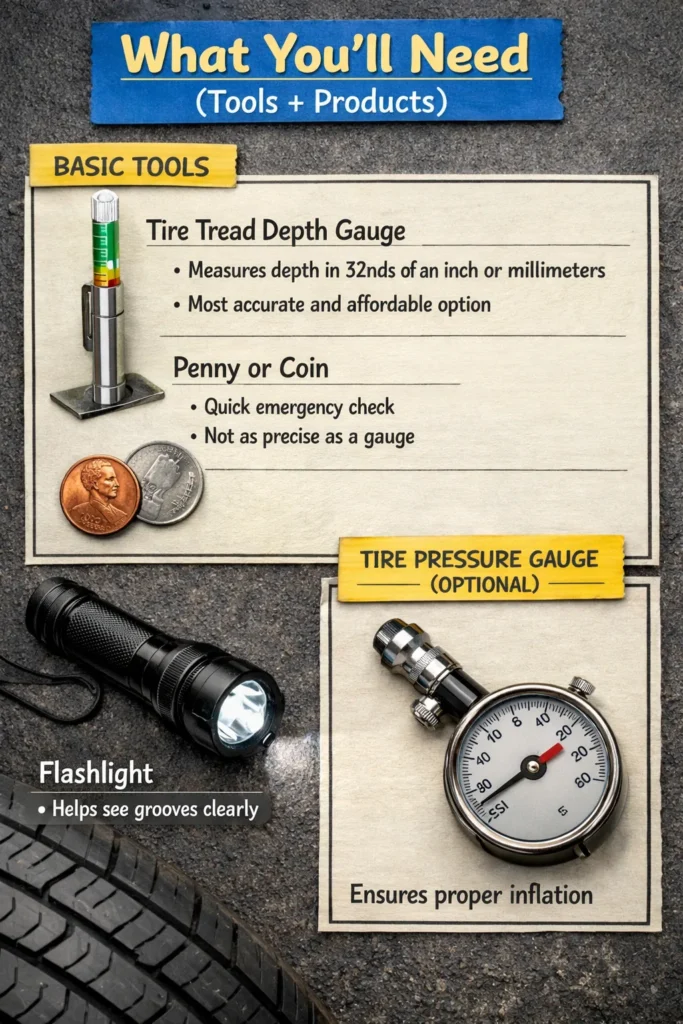
Basic Tools
- Tire tread depth gauge
- Measures depth in 32nds of an inch or millimeters
- Most accurate and affordable option
- Penny or coin
- Quick emergency check
- Not as precise as a gauge
- Flashlight
- Helps see grooves clearly
- Tire pressure gauge (optional)
- Ensures proper inflation
Step-by-Step Guide (How to Check Tire Tread Depth)
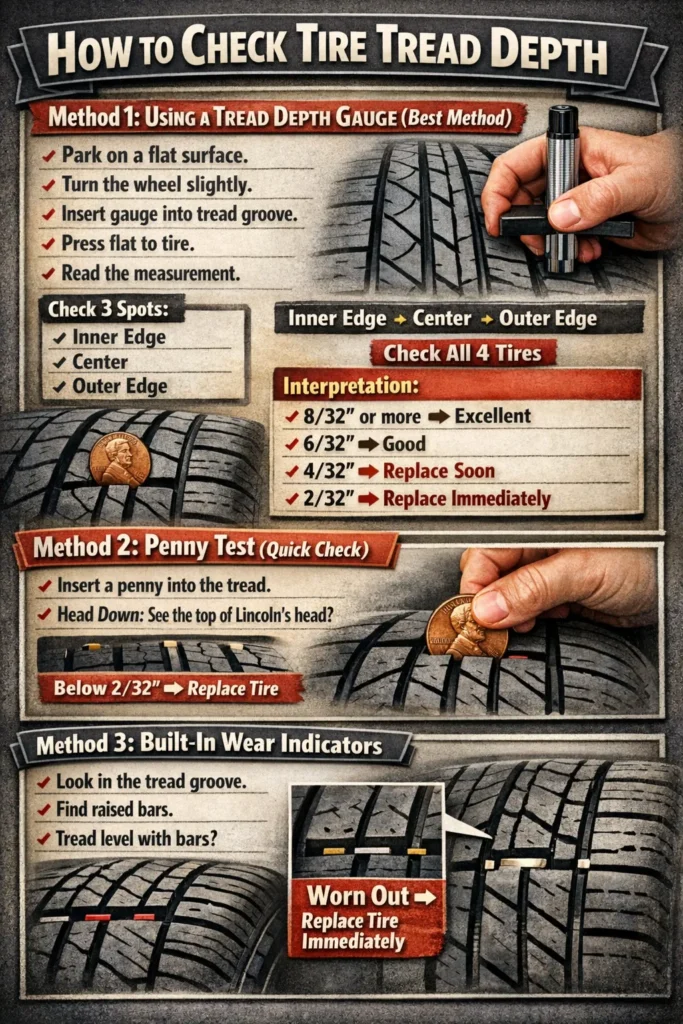
Method 1: Using a Tread Depth Gauge (Best Method)
- Park the car on a flat surface.
- Turn the steering wheel slightly for easier access.
- Insert the probe of the gauge into the tread groove.
- Press the base flat against the tire.
- Read the measurement.
- Repeat in three spots across the tire:
- Inner edge
- Center
- Outer edge
- Check all four tires.
Interpretation:
- 8/32” or more → Excellent
- 6/32” → Good
- 4/32” → Replace soon
- 2/32” → Replace immediately
Method 2: Penny Test (Quick Check)
- Insert a penny into the tread groove.
- Lincoln’s head should face downward.
- If you can see the top of his head:
- Tread is below 2/32”
- Tire needs replacement
Method 3: Built-In Wear Indicators
- Look inside the tread grooves.
- Find small raised bars.
- If tread is level with these bars:
- Tire is worn out
- Replace immediately
Cost Breakdown & Pricing Table
| Item | Price Range | Notes |
|---|---|---|
| Tire tread gauge | $5 – $15 | One-time purchase |
| Professional tire check | Free – $20 | Often free at tire shops |
| New budget tires (set of 4) | $300 – $500 | Economy brands |
| Mid-range tires (set of 4) | $500 – $800 | Best value |
| Premium tires (set of 4) | $800 – $1,200+ | High performance |
Explanation:
Spending $10 on a tread gauge can help you avoid dangerous driving conditions and costly emergency tire replacements.


Before and After
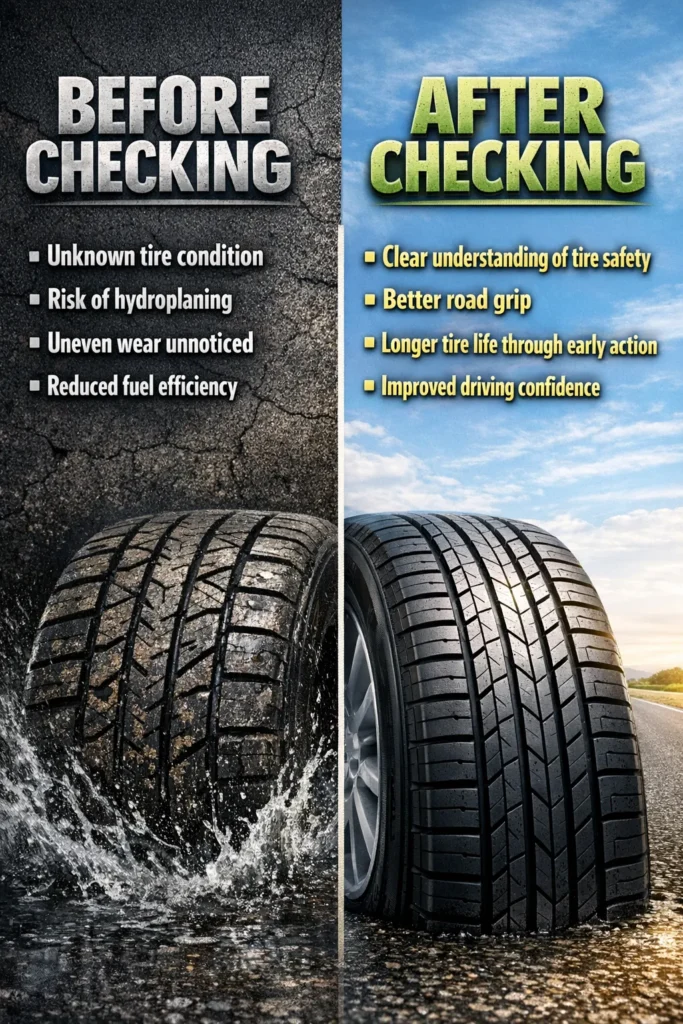
Before Checking
- Unknown tire condition
- Risk of hydroplaning
- Uneven wear unnoticed
- Reduced fuel efficiency
After Checking
- Clear understanding of tire safety
- Better road grip
- Longer tire life through early action
- Improved driving confidence
Product Recommendations
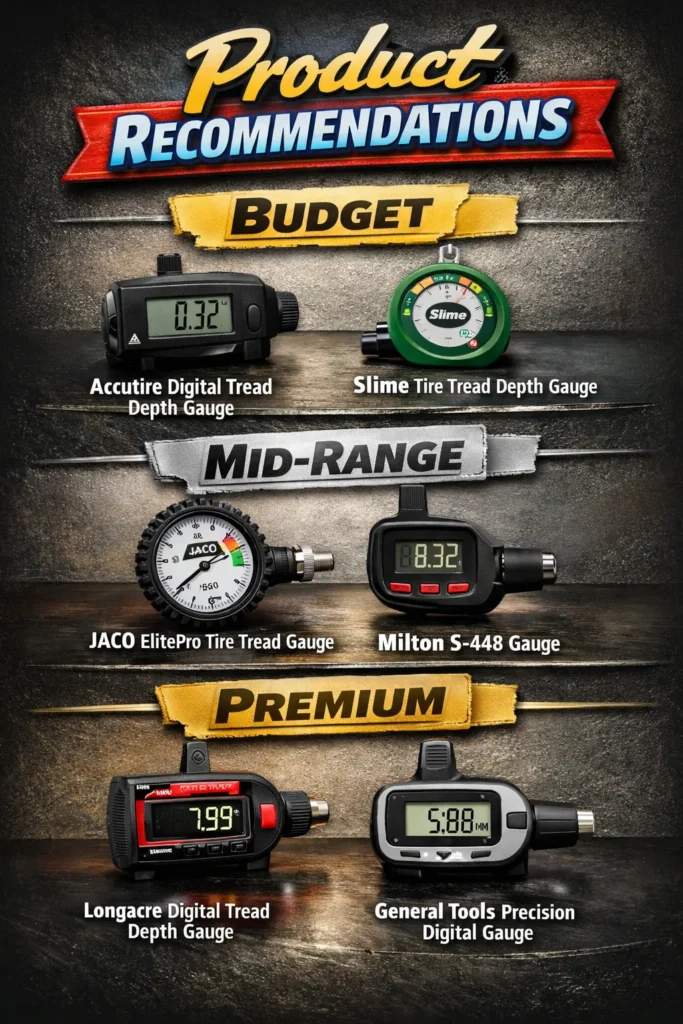
Budget
- Accutire Digital Tread Depth Gauge
- Slime Tire Tread Depth Gauge
Mid-Range
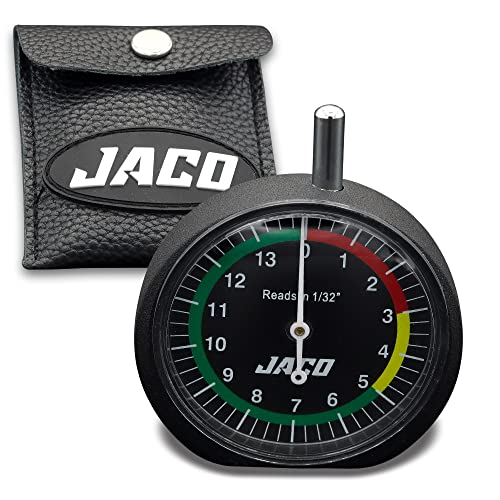
- JACO ElitePro Tire Tread Gauge
- Milton S-448 Gauge
Premium
- Longacre Digital Tread Depth Gauge
- General Tools Precision Digital Gauge
Comparison Section (Option A vs Option B)
| Feature | Tread Gauge | Penny Test |
|---|---|---|
| Accuracy | High | Low |
| Cost | $5–$15 | Free |
| Ease of use | Very easy | Very easy |
| Professional results | Yes | No |
| Recommended method | Yes | Emergency only |
Troubleshooting Table
| Problem | Likely Cause | Fix |
|---|---|---|
| Uneven tread depth | Poor alignment | Get wheel alignment |
| Center worn out | Over-inflation | Adjust tire pressure |
| Edges worn out | Under-inflation | Inflate to proper PSI |
| One tire worn faster | Suspension issue | Inspect suspension |
Time Required & Difficulty Level
- Time: 5–10 minutes
- Difficulty: Very easy (Beginner-friendly)
Pro Tips
Do
- Check tread every month
- Measure multiple spots on each tire
- Replace before reaching 2/32”
Don’t
- Rely only on visual inspection
- Ignore uneven wear
- Wait until tires are bald
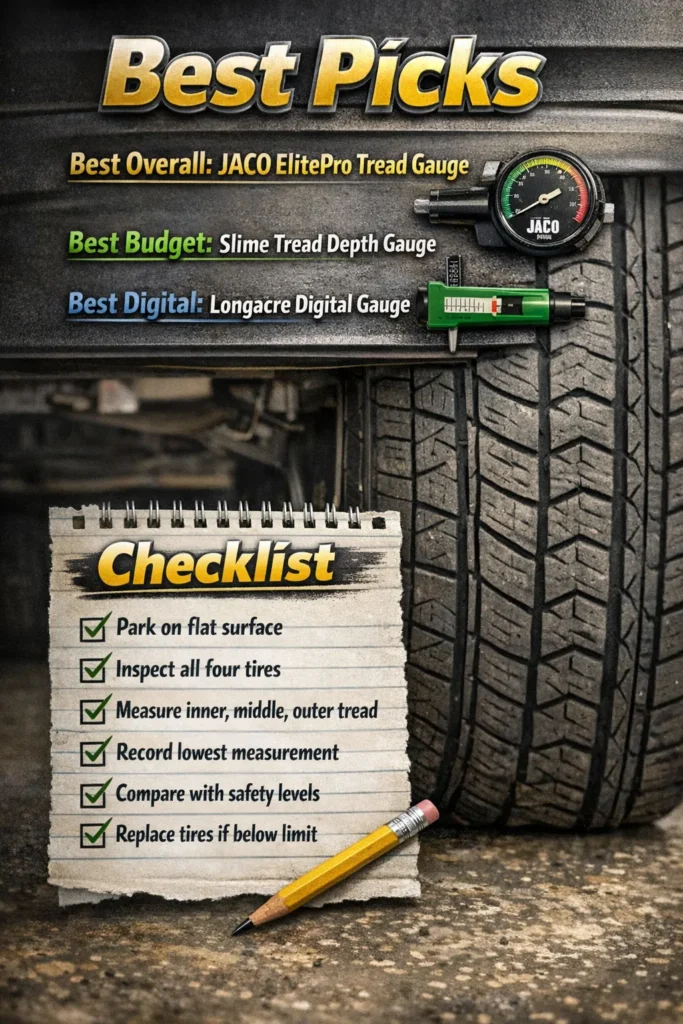
Best Picks
- Best Overall: JACO ElitePro Tread Gauge
- Best Budget: Slime Tread Depth Gauge
- Best Digital: Longacre Digital Gauge
Checklist
- Park on flat surface
- Inspect all four tires
- Measure inner, middle, outer tread
- Record lowest measurement
- Compare with safety levels
- Replace tires if below limit
Use Cases (When to Choose What)
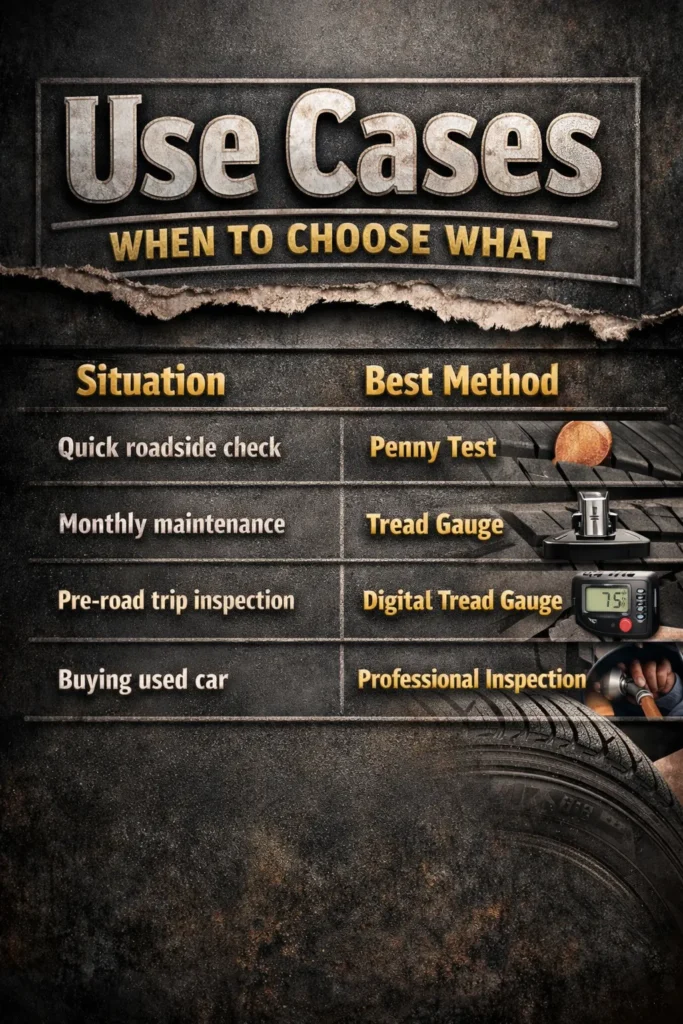
| Situation | Best Method |
|---|---|
| Quick roadside check | Penny test |
| Monthly maintenance | Tread gauge |
| Pre-road trip inspection | Digital tread gauge |
| Buying used car | Professional inspection |
Common Mistakes to Avoid
- Checking only one tire
- Measuring only the center tread
- Ignoring sidewall damage
- Waiting until tread reaches legal limit
- Using worn or inaccurate tools
Safety Notes with Warnings
- Never drive on tires below 2/32” tread depth
- Replace tires earlier in rainy or snowy climates
- Uneven tread may indicate suspension or alignment issues
- Old tires (6+ years) should be inspected regularly
FAQ
1. What is the legal tire tread depth?
2/32 inch (1.6 mm) in most regions.
2. What tread depth is safe for rain?
At least 4/32 inch.
3. What tread depth is best for snow?
6/32 inch or more.
4. How often should I check tire tread?
Once a month or before long trips.
5. Can I use a quarter instead of a penny?
Yes, but it measures a different depth level.
6. Do all tires wear evenly?
No, alignment and driving habits affect wear.
7. How long do tires usually last?
30,000 to 60,000 miles on average.
8. Is the penny test accurate?
It’s a quick check but not very precise.
9. Should I replace all four tires at once?
Ideally yes, especially on AWD vehicles.
10. Can low tread affect fuel economy?
Yes, worn tires reduce efficiency and grip.
Final Thought
Knowing how to check the tread depth on tires is an easy practice that can make a big difference when it comes to driving safely. In just a few short minutes and one inexpensive tool, you can avoid dangerous driving conditions, get more life out of your tires and prevent expensive repairs. Periodic inspections will enable you to pick up on alignment or pressure issues before they get serious.
It’s a quick and easy part of your monthly car care routine. It’s one of the simplest and most efficient ways to ensure your vehicle is secure, functional, and road-worthy #how to check tire tread depth.



Leave a Reply