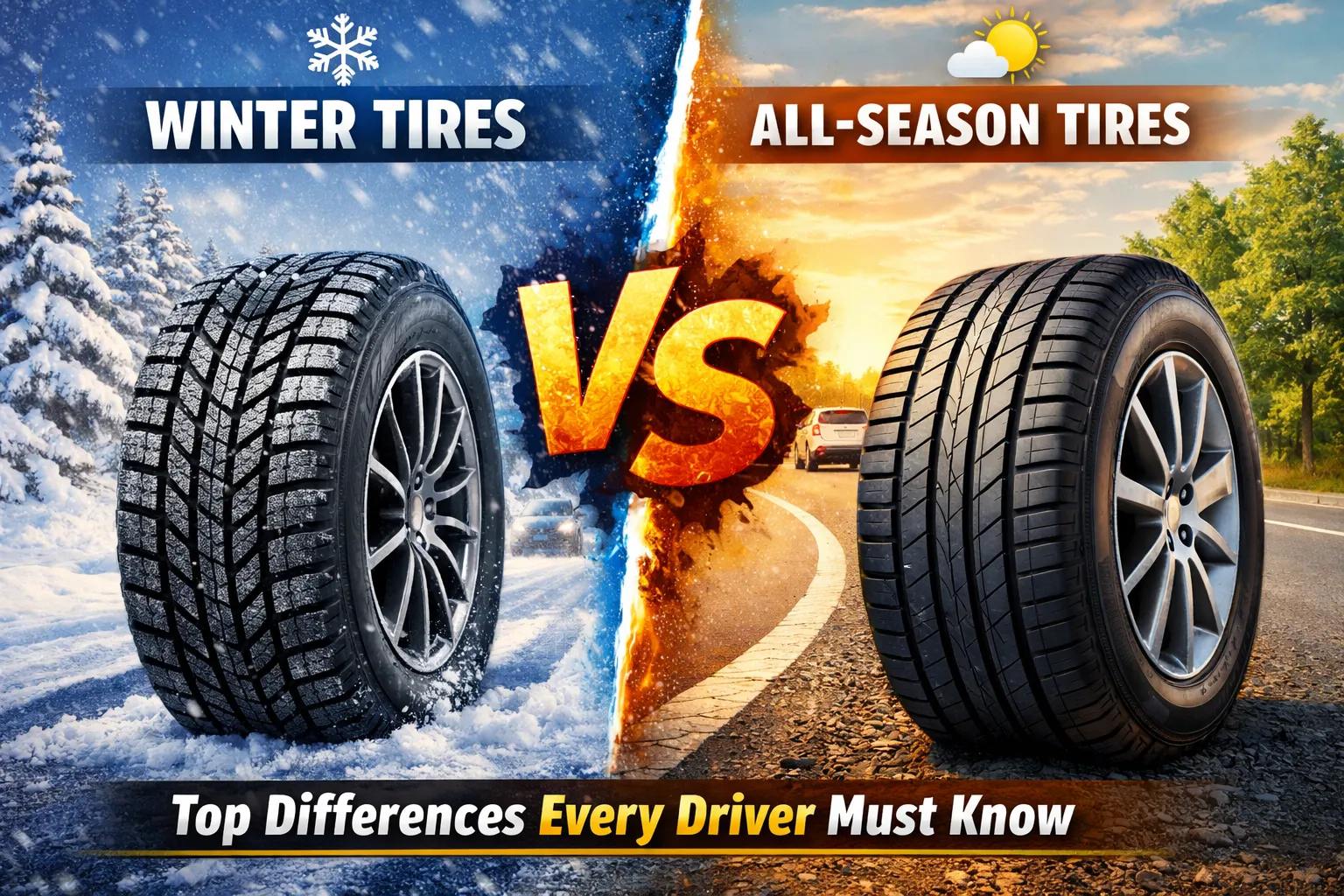
Your tires are the single most important safety feature on your car when winter rolls around. Snow-packed roads, black ice and the thunderous pitter-patter of freezing rain can turn an average commute into a harrowing hellride in no time. A great many drivers believe all-season tires are adequate for winter, but this belief too often leads to longer stopping distances, less grip and potentially life-threatening loss of control.
The winter tires vs all season tires debate is one of the most frequent questions asked by drivers in areas that experience snow. But should you invest in a second set of winter tires, or can you survive with all-season tires year-round? It depends on your location, your style of driving and the severity of winter in your region.
In this comprehensive guide, you’ll discover the various differences between winter tires and all-season tires from performance to safety, cost factors, and when each option makes sense. By the end, you’ll have a clear idea of which tires are right for your vehicle and how to drive more safely through the coldest months of the year.
Quick Answer
- Winter tires are designed for snow, ice, and temperatures below 45°F (7°C).
- All-season tires work best in mild climates with occasional light snow.
- If you live in a region with regular snow or freezing temperatures, winter tires are the safer choice.
- Winter tires significantly reduce braking distance and improve traction.
Why It Matters
Benefits of Winter Tires
- Superior traction on snow and ice
- Shorter braking distances in cold weather
- Better cornering and control
- Softer rubber compound stays flexible in freezing temps
Benefits of All-Season Tires
- Year-round convenience
- No need for seasonal changeovers
- Lower upfront cost
- Good performance in dry and wet conditions
What You’ll Need (Tools + Products)
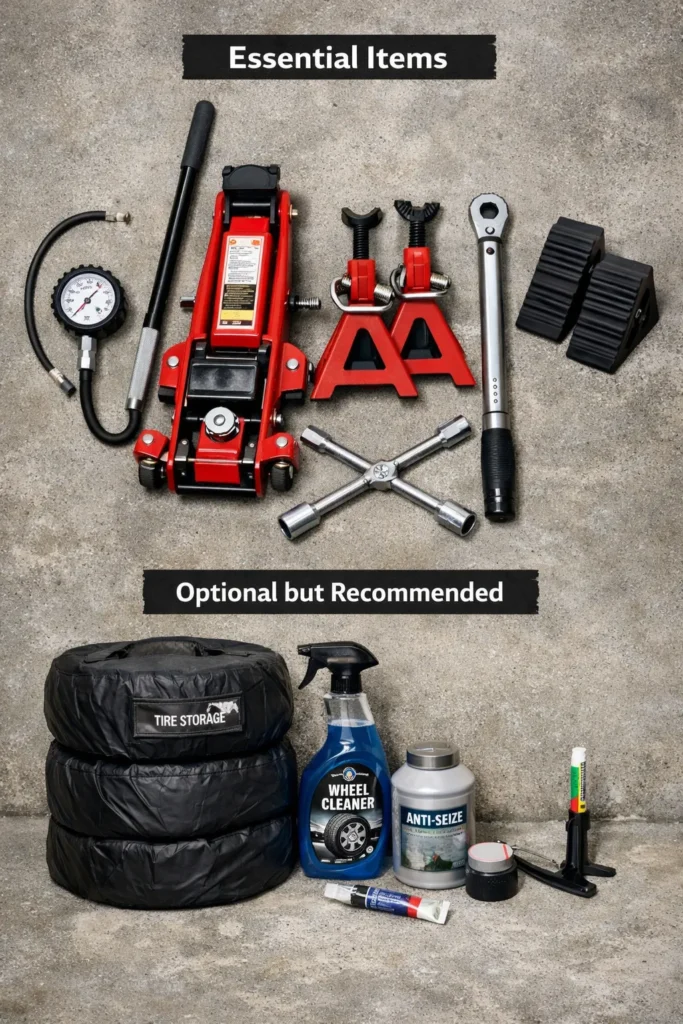
Essential Items
- Tire pressure gauge
- Jack and jack stands
- Lug wrench
- Torque wrench
- Wheel chocks
Optional but Recommended
- Tire storage bags
- Wheel cleaner
- Anti-seize lubricant
- Tire tread depth gauge
Step-by-Step Guide: How to Choose Between Winter and All-Season Tires
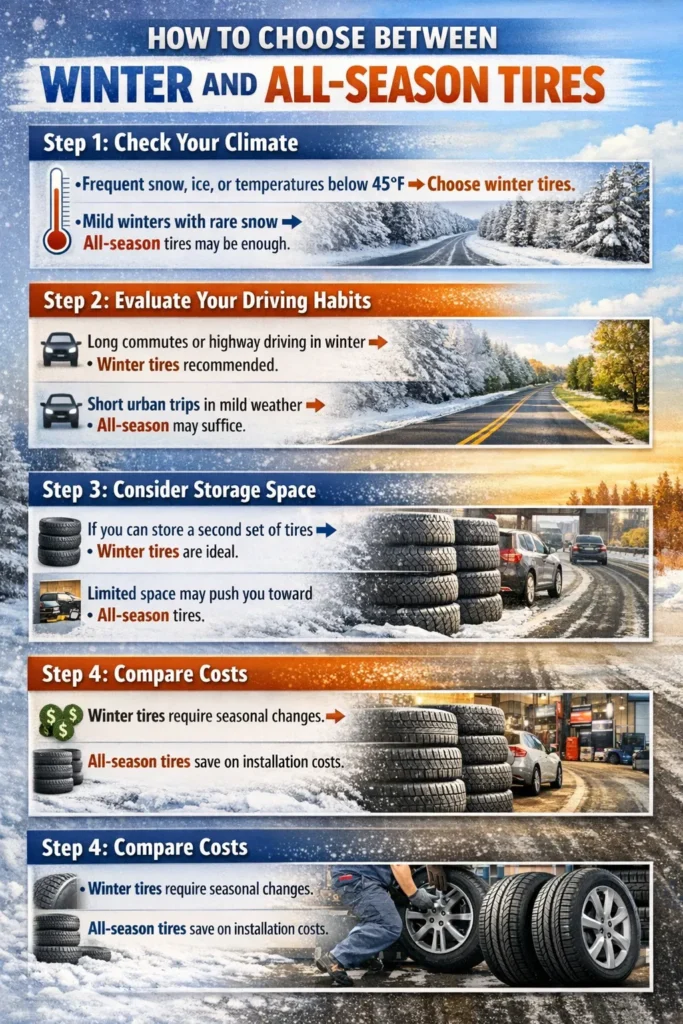
Step 1: Check Your Climate
- Frequent snow, ice, or temperatures below 45°F → Choose winter tires.
- Mild winters with rare snow → All-season tires may be enough.
Step 2: Evaluate Your Driving Habits
- Long commutes or highway driving in winter → Winter tires recommended.
- Short urban trips in mild weather → All-season may suffice.
Step 3: Consider Storage Space
- If you can store a second set of tires, winter tires are ideal.
- Limited space may push you toward all-season tires.
Step 4: Compare Costs
- Winter tires require seasonal changes.
- All-season tires save on installation costs.
Cost Breakdown & Pricing Table
| Tire Type | Average Price per Tire | Set of 4 | Installation (Seasonal) | Total Annual Cost |
|---|---|---|---|---|
| Winter Tires | $120 – $250 | $480 – $1,000 | $80 – $200 | $560 – $1,200 |
| All-Season Tires | $100 – $200 | $400 – $800 | Usually none | $400 – $800 |
Cost Insight
While winter tires require a second set, they also reduce wear on your all-season or summer tires, extending overall tire life.
Before and After: Winter Tires vs All-Season Tires
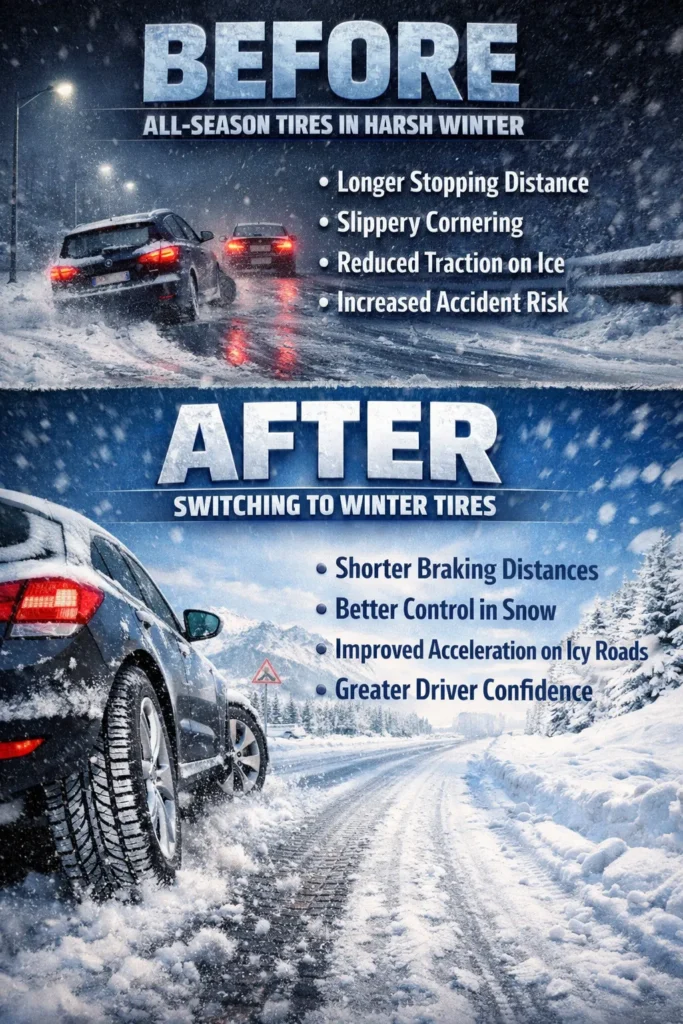
Before (All-Season in Harsh Winter)
- Longer stopping distance
- Slippery cornering
- Reduced traction on ice
- Increased accident risk
After (Switching to Winter Tires)
- Shorter braking distances
- Better control in snow
- Improved acceleration on icy roads
- Greater driver confidence
Product Recommendations

Budget Picks
- General Altimax Arctic 12
- Falken Eurowinter HS01
Mid-Range Picks
- Bridgestone Blizzak WS90
- Michelin X-Ice Snow
Premium Picks
- Nokian Hakkapeliitta R5
- Continental VikingContact 7
Comparison Section: Winter Tires vs All-Season Tires
| Feature | Winter Tires | All-Season Tires |
|---|---|---|
| Cold Weather Grip | Excellent | Moderate |
| Snow Traction | Excellent | Limited |
| Ice Performance | Excellent | Poor |
| Summer Performance | Poor | Good |
| Year-Round Use | No | Yes |
| Cost | Higher upfront | Lower upfront |
| Safety in Winter | High | Moderate to low |
Troubleshooting Table
| Problem | Likely Cause | Fix |
|---|---|---|
| Car sliding on snow | All-season tires in heavy winter | Switch to winter tires |
| Uneven tire wear | Improper rotation | Rotate tires every 5,000–7,500 miles |
| Low traction on ice | Worn tread | Replace tires |
| TPMS warning after swap | Pressure mismatch | Reset TPMS and adjust pressure |
Time Required & Difficulty
- Time: 30–60 minutes for tire swap
- Difficulty: Moderate (DIY possible)
Pro Tips
Do
- Install winter tires on all four wheels.
- Check tire pressure regularly in cold weather.
- Rotate tires every season.
Don’t
- Mix winter and all-season tires.
- Drive winter tires in hot summer months.
- Ignore tread depth.
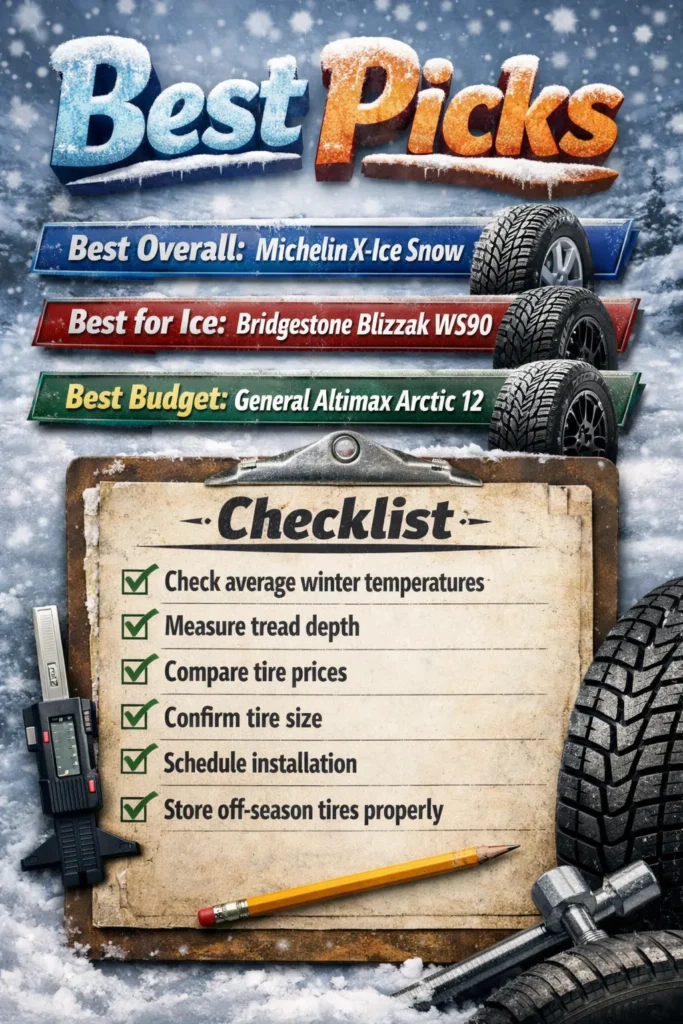
Best Picks
- Best Overall: Michelin X-Ice Snow
- Best for Ice: Bridgestone Blizzak WS90
- Best Budget: General Altimax Arctic 12
Checklist
- Check average winter temperatures
- Measure tread depth
- Compare tire prices
- Confirm tire size
- Schedule installation
- Store off-season tires properly
Use Cases: When to Choose What
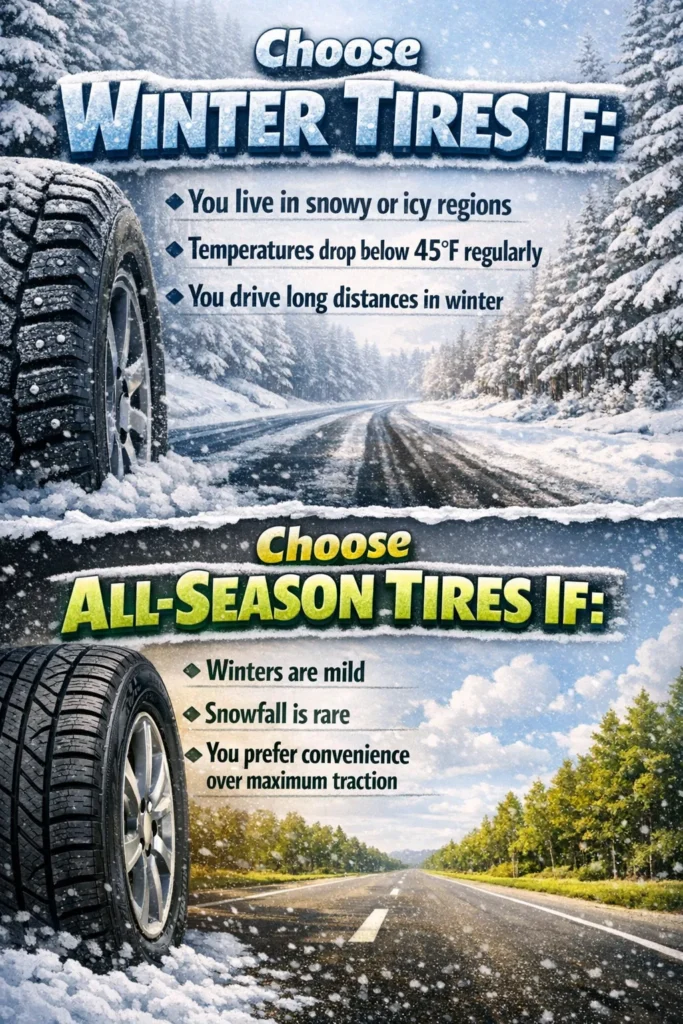
Choose Winter Tires If:
- You live in snowy or icy regions
- Temperatures drop below 45°F regularly
- You drive long distances in winter
Choose All-Season Tires If:
- Winters are mild
- Snowfall is rare
- You prefer convenience over maximum traction
Common Mistakes to Avoid
- Using all-season tires in severe winter climates
- Installing only two winter tires
- Driving worn winter tires
- Ignoring tire pressure in cold weather
Safety Notes & Warnings
- Winter tires are not just for snow—they’re for cold temperatures.
- Always install winter tires in sets of four.
- Check tire pressure weekly during winter.
- Avoid high speeds on icy roads, even with winter tires.
FAQ
1. Are winter tires really necessary?
Yes, if you drive in snow or freezing temperatures regularly.
2. Can I use winter tires all year?
Not recommended—they wear faster in warm weather.
3. Do winter tires improve braking?
Yes, significantly in cold conditions.
4. Are all-season tires safe in snow?
Only in light snow and mild winters.
5. How long do winter tires last?
Typically 3–5 winter seasons.
6. Do I need winter tires for AWD vehicles?
Yes, AWD helps movement, not braking.
7. When should I install winter tires?
When temperatures consistently drop below 45°F (7°C).
8. Are winter tires noisy?
Some are slightly louder, but modern designs are quiet #winter tires vs all-season tires.
9. Can I mix winter and all-season tires?
No, it reduces stability and safety.
10. Are winter tires worth the cost?
Yes, especially in regions with snow and ice.
Final Thought
Deciding whether to buy winter tires or all-season tires is just one of the choices cost-conscious car owners confront at this time of year, but safety experts say it’s a decision not to be made lightly. Although all-season tires provide convenience and passable performance in fair weather, they can’t match the cold-weather grip of true winter rubber. If you drive in snow, ice, or cold on a regular basis, winter tires are also one of the smartest safety upgrades you can make.
For those in more temperate climes, all-season tires are likely good enough, but know your situation and driving style. Selecting the appropriate tires for your vehicle can mean the difference between a safe, confident drive during winter months and one that’s extremely dangerous #winter tires vs all-season tires.


Leave a Reply