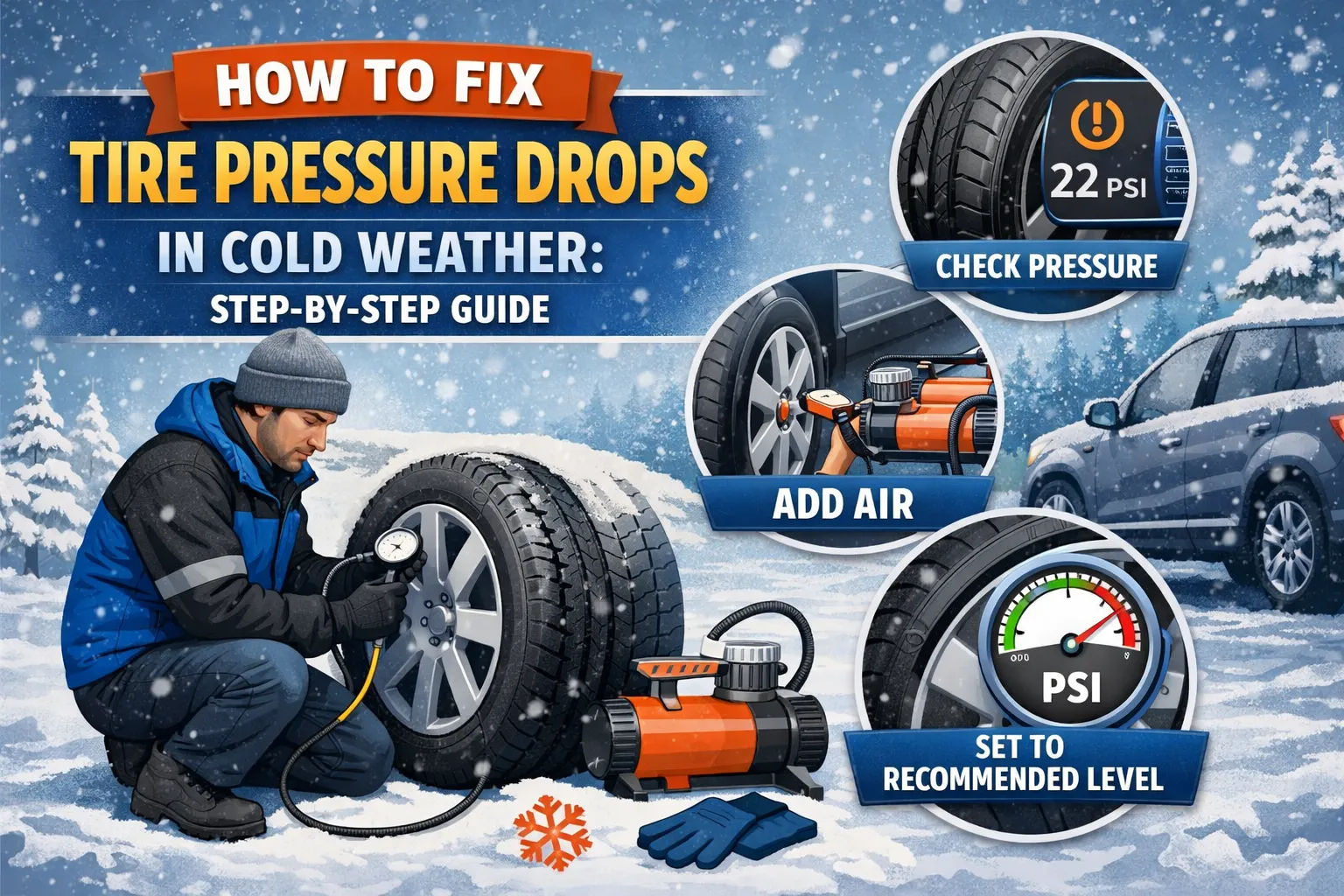
One of the most frequent car troubles that drivers encounter when it gets cold is tire pressure low in winter. You might feel your dashboard warning light switch on, your steering becoming more difficult or see a reduction in fuel economy. This occurs when cold air contracts, which shrinks the air inside your tires and decreases pressure.
Tire pressure can be sensitive to even relatively minor temperature changes. In general, tires lose 1 PSI of pressure per 10 degree drop in temperature. A sudden freeze overnight can leave your tires underinflated by morning.
Driving on dropped tire pressure isn’t just a hassle, it’s also dangerous. It causes loss of traction, wear and tear (literally) on the tires and it can cause blow outs. The good news is that this problem is easy to avoid and correct with the proper information and tools.
In this comprehensive guide, you’ll find out why tire pressure decreases in the cold, how to fix it, what it costs and which tools are best for maintaining properly inflated tires all winter.
Quick Answer
- Tire pressure drops because cold air contracts.
- Tires lose about 1 PSI per 10°F temperature drop.
- Underinflated tires reduce safety, fuel efficiency, and tire life.
- Check pressure weekly in winter and inflate to the recommended PSI.
Why It Matters
Proper tire pressure in cold weather:
- Improves braking and traction on icy roads
- Prevents uneven tire wear
- Increases fuel efficiency
- Reduces risk of blowouts
- Extends tire lifespan
- Keeps TPMS warning lights off
What You’ll Need (Tools + Products)
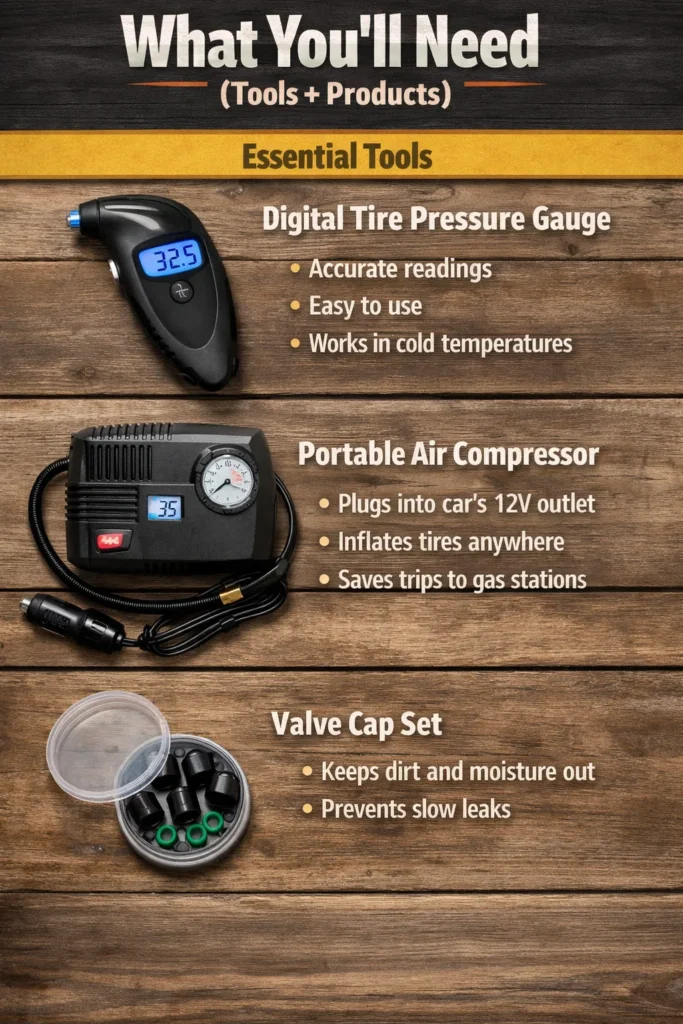
Essential Tools
- Digital Tire Pressure Gauge
- Accurate readings
- Easy to use
- Works in cold temperatures
- Portable Air Compressor
- Plugs into car’s 12V outlet
- Inflates tires anywhere
- Saves trips to gas stations
- Valve Cap Set
- Keeps dirt and moisture out
- Prevents slow leaks
Step-by-Step Guide (How to Fix Low Tire Pressure)
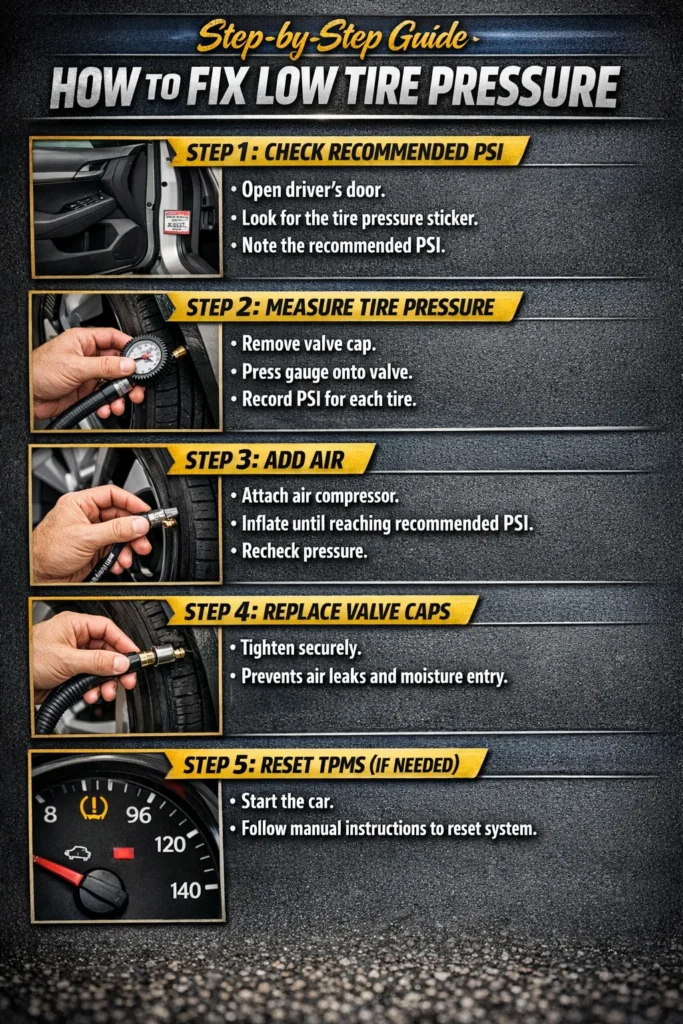
Step 1: Check Recommended PSI
- Open driver’s door.
- Look for the tire pressure sticker.
- Note the recommended PSI.
Step 2: Measure Tire Pressure
- Remove valve cap.
- Press gauge onto valve.
- Record PSI for each tire.
Step 3: Add Air
- Attach air compressor.
- Inflate until reaching recommended PSI.
- Recheck pressure.
Step 4: Replace Valve Caps
- Tighten securely.
- Prevents air leaks and moisture entry.
Step 5: Reset TPMS (if needed)
- Start the car.
- Follow manual instructions to reset system.
Cost Breakdown & Pricing Table
| Item | Budget | Mid-Range | Premium |
|---|---|---|---|
| Tire pressure gauge | $8 | $15 | $30 |
| Portable air compressor | $25 | $50 | $90 |
| Valve caps (set) | $5 | $10 | $15 |


Typical Costs Explained
- Basic setup: $15–$30
- Complete winter tire care kit: $50–$100
- Professional tire inflation: Free–$5 at gas stations
Before and After (Effects of Proper Tire Pressure)
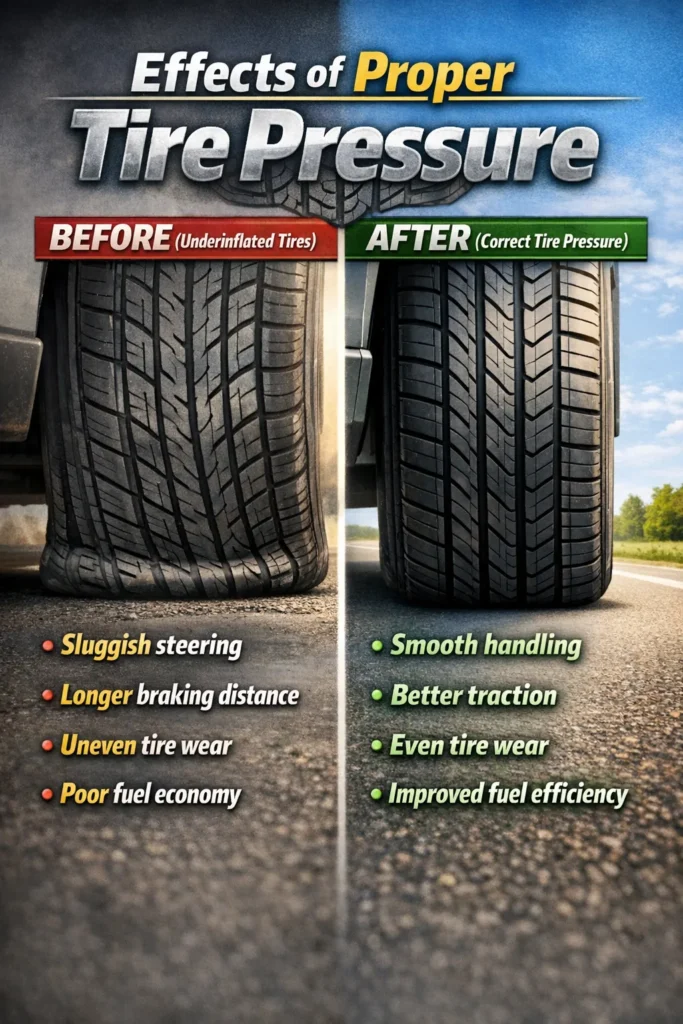
Before (Underinflated Tires)
- Sluggish steering
- Longer braking distance
- Uneven tire wear
- Poor fuel economy
After (Correct Tire Pressure)
- Smooth handling
- Better traction
- Even tire wear
- Improved fuel efficiency
Product Recommendations
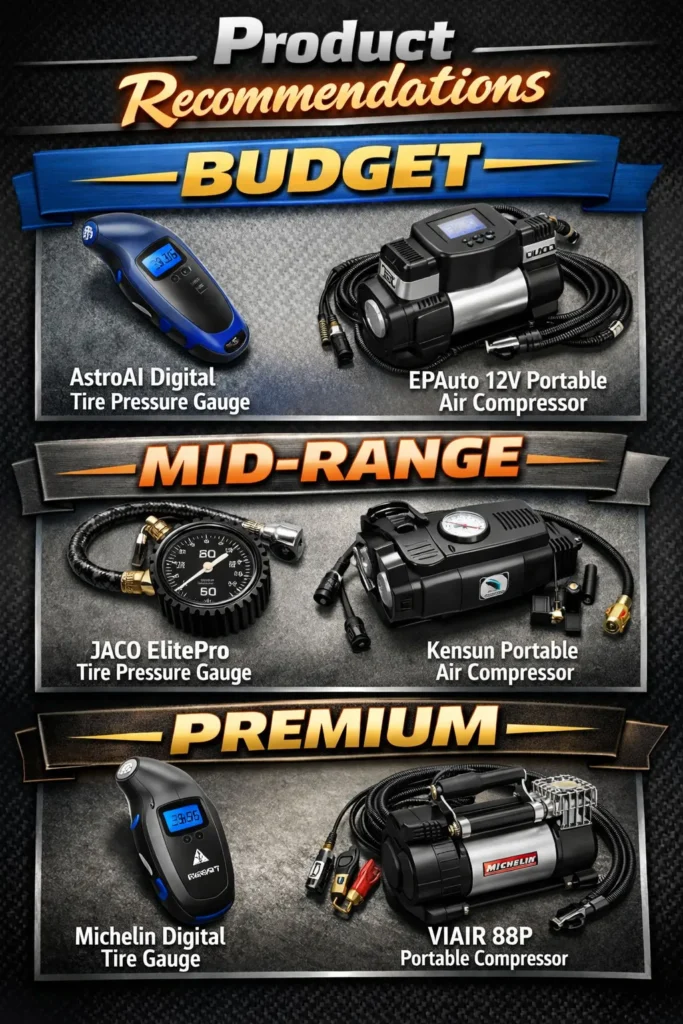
Budget
- AstroAI Digital Tire Pressure Gauge
- EPAuto 12V Portable Air Compressor
Mid-Range
- JACO ElitePro Tire Pressure Gauge
- Kensun Portable Air Compressor
Premium
- Michelin Digital Tire Gauge
- VIAIR 88P Portable Compressor
Comparison: Portable Compressor vs Gas Station Air
| Feature | Portable Compressor | Gas Station Air |
|---|---|---|
| Convenience | Use anywhere | Must drive to station |
| Cost | One-time purchase | Pay per use |
| Time | Immediate | Travel required |
| Accuracy | High (digital) | Varies |
Best choice: Portable compressor for winter.
Troubleshooting Table
| Problem | Likely Cause | Fix |
|---|---|---|
| Pressure drops daily | Small puncture | Inspect and repair tire |
| TPMS light stays on | Sensor needs reset | Reset system |
| One tire always low | Valve leak | Replace valve core |
| Uneven pressure | Temperature changes | Reinflate all tires |
Time Required & Difficulty Level
- Time: 5–10 minutes
- Difficulty: Easy (Beginner-friendly)
Pro Tips
Do
- Check tire pressure every week in winter.
- Measure pressure when tires are cold.
- Keep a portable compressor in the trunk.
Don’t
- Overinflate tires.
- Ignore TPMS warning lights.
- Use the maximum PSI on tire sidewall.
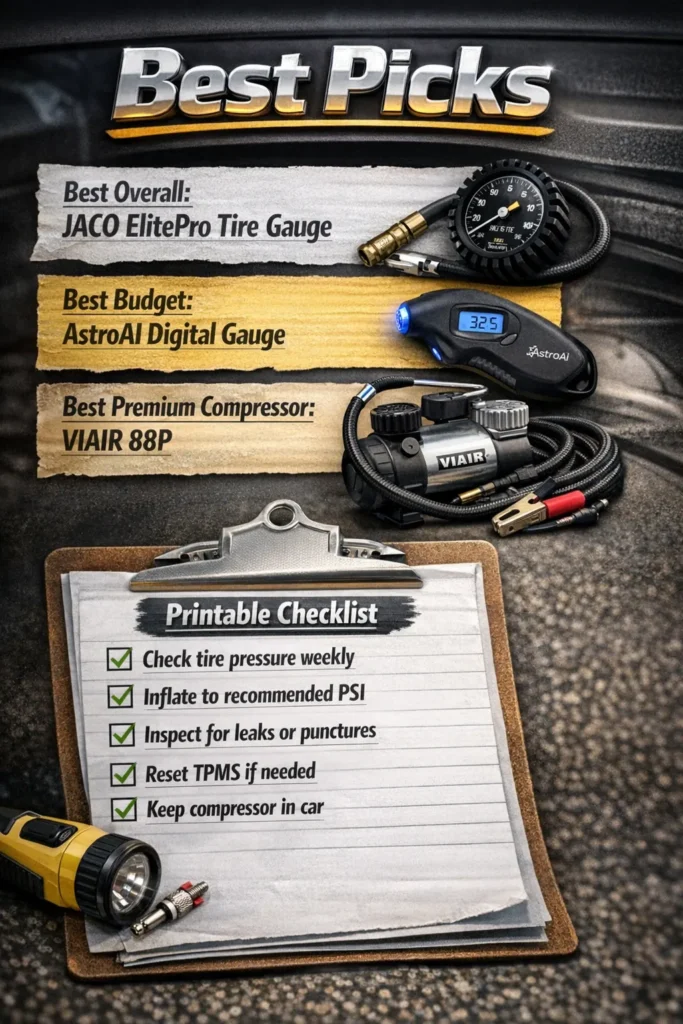
Best Picks
- Best Overall: JACO ElitePro Tire Gauge
- Best Budget: AstroAI Digital Gauge
- Best Premium Compressor: VIAIR 88P
Printable Checklist
- Check tire pressure weekly
- Inflate to recommended PSI
- Inspect for leaks or punctures
- Reset TPMS if needed
- Keep compressor in car
Use Cases (When to Choose What)
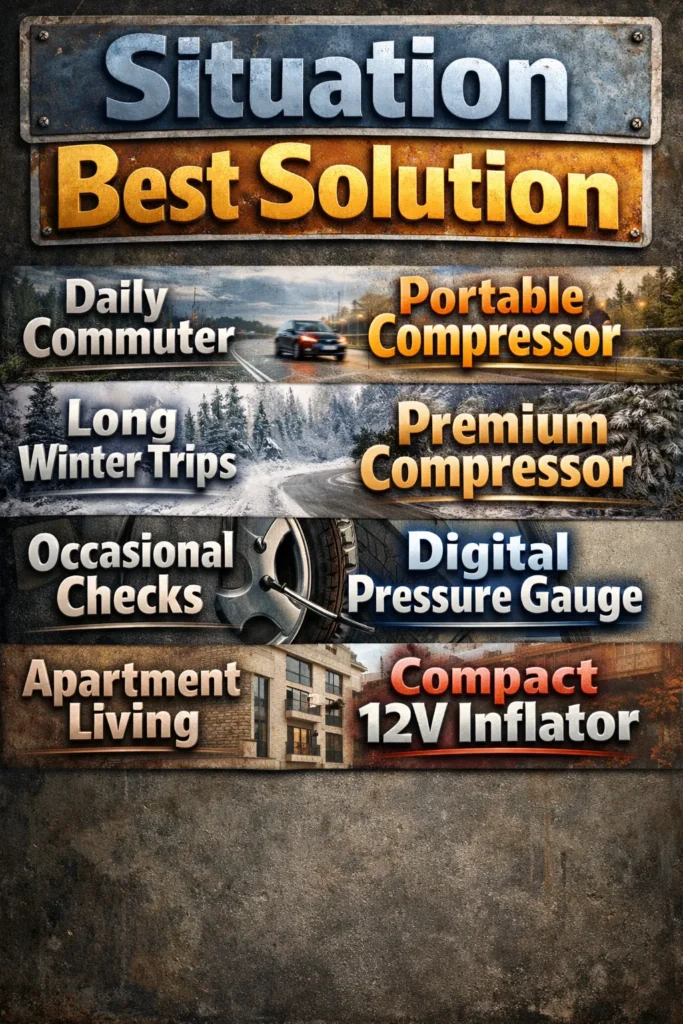
| Situation | Best Solution |
|---|---|
| Daily commuter | Portable compressor |
| Long winter trips | Premium compressor |
| Occasional checks | Digital pressure gauge |
| Apartment living | Compact 12V inflator |
Common Mistakes to Avoid
- Checking pressure after driving (gives false readings)
- Ignoring temperature drops
- Overfilling tires
- Using worn or damaged valve caps
Safety Notes & Warnings
- Never exceed recommended PSI.
- Check tires when cold for accurate readings.
- Replace cracked or worn tires before winter.
- Keep emergency tire repair kit in the car.
- Avoid driving on severely underinflated tires.
FAQ
1. How much pressure do tires lose in cold weather?
About 1 PSI for every 10°F drop in temperature.
2. Is it normal for TPMS light to come on in winter?
Yes, cold weather commonly triggers it.
3. Should I inflate tires above recommended PSI in winter?
No. Always follow manufacturer recommendations.
4. How often should I check tire pressure in winter?
At least once a week.
5. Can cold weather cause tire blowouts?
Yes, if tires are severely underinflated.
6. Do winter tires lose pressure faster?
No, but temperature affects all tires.
7. Should I fill tires when they’re warm?
No, always check when tires are cold.
8. What PSI is too low?
Anything 3–5 PSI below recommended levels.
9. Do nitrogen-filled tires lose less pressure?
Slightly, but not enough to skip checks #tire pressure drops in cold weather.
10. Can I drive with the TPMS light on?
Only for a short distance—check pressure immediately.
Final Thought
When the pressure in a winter-chilled tire falls, it is not necessarily a symptom of a major mechanical issue — it may be only another example of natural behavior caused by temperature fluctuations. But ignore it at the risk of dangerous driving conditions, bad fuel economy and expensive wheel/tire damage. The good news is that it usually takes just a few minutes each week and not any special equipment to fill up your tires.
A digital pressure gauge, portable compressor in your car, and regular checks on your tires can let you drive easy all winter long! Having the right amount of tire pressure isn’t just about comfort, it’s about safety, performance and saving money over time #tire pressure drops in cold weather.

Leave a Reply