Winter is hard on your car. Cold temperatures, fogged windows, weak batteries, low tire pressure, thick oil and slick streets ALL get your vehicle closer and closer to becoming a living hazardous material every day that you drive. For many drivers, they won’t know that the car’s heater doesn’t work until they hit the button to turn it on and, on a cold morning, nothing happens — worse yet in the midst of winter traffic.
Which is why cold weather car care tips are not a suggestion — they’re essential.
Cooler weather affects everything: your engine, battery, tires, brakes, fluids and paint — even the interior. Winter, without your car being properly prepared, can shorten its life and cost you more in repairs while putting your safety and the safety of others on the road at risk.
The good news? With the right tools, products and step by step care routine, you can keep your car on the road this winter so it runs well and stays protected.
In this complete winter car care guide, you’ll learn:
- Why winter maintenance matters
- Exactly what tools and products you need
- A detailed step-by-step winter car care routine
- Cost breakdowns
- Before & after improvements
- Product recommendations (budget to premium)
This guide is beginner-friendly, practical, and designed to save you money while keeping you safe.
Quick Answer
Winter car care means:
- Checking battery health
- Using winter-grade engine oil and antifreeze
- Maintaining correct tire pressure or winter tires
- Protecting paint and underbody from salt
- Keeping windshield, wipers, and lights winter-ready
A few preventive steps can prevent breakdowns, accidents, and expensive repairs.
Why It Matters (Benefits of Winter Car Care)
Proper winter car care provides:
- Improved engine performance in cold starts
- Longer battery life
- Better traction and braking on icy roads
- Reduced fuel consumption
- Protection from rust and corrosion
- Increased safety for you and passengers
- Lower repair and maintenance costs
Ignoring winter maintenance can lead to:
- Dead batteries
- Engine overheating or freezing
- Tire blowouts
- Brake failure
- Rust damage
What You’ll Need (Tools + Products)
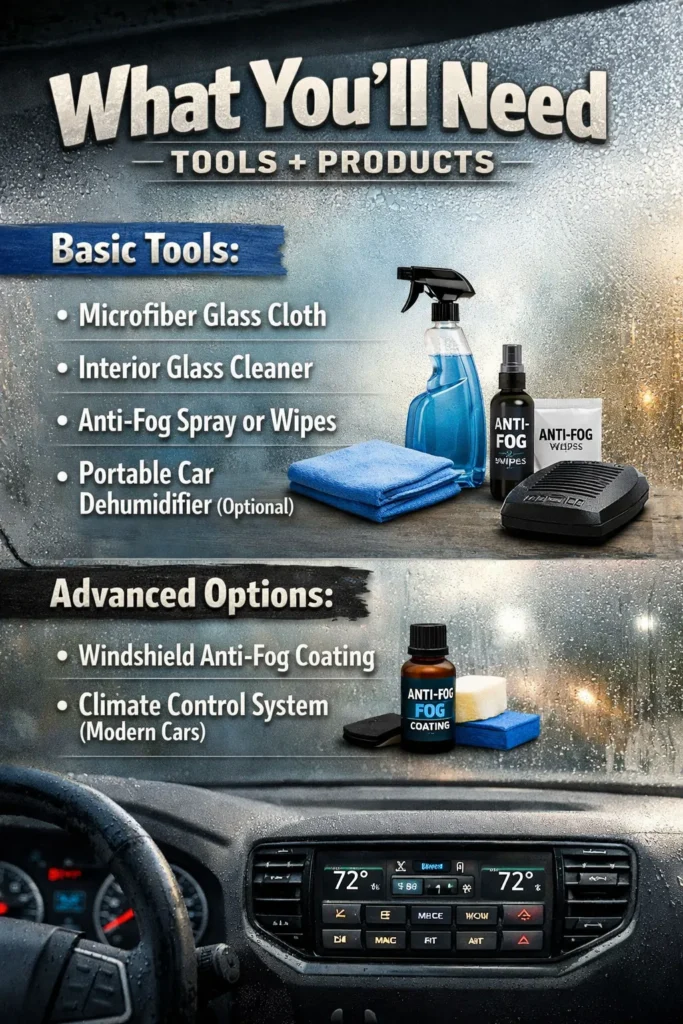
Essential Tools
- Tire pressure gauge
- Portable air compressor
- Jumper cables
- Ice scraper & snow brush
- Microfiber towels
- Flashlight
Essential Products
- Winter windshield washer fluid
- Engine antifreeze / coolant
- Battery terminal cleaner
- Car wax or paint sealant
- Rubber floor mats
- Tire chains (for heavy snow regions)
Step-by-Step Guide – How to Take Care of Your Car in Winter
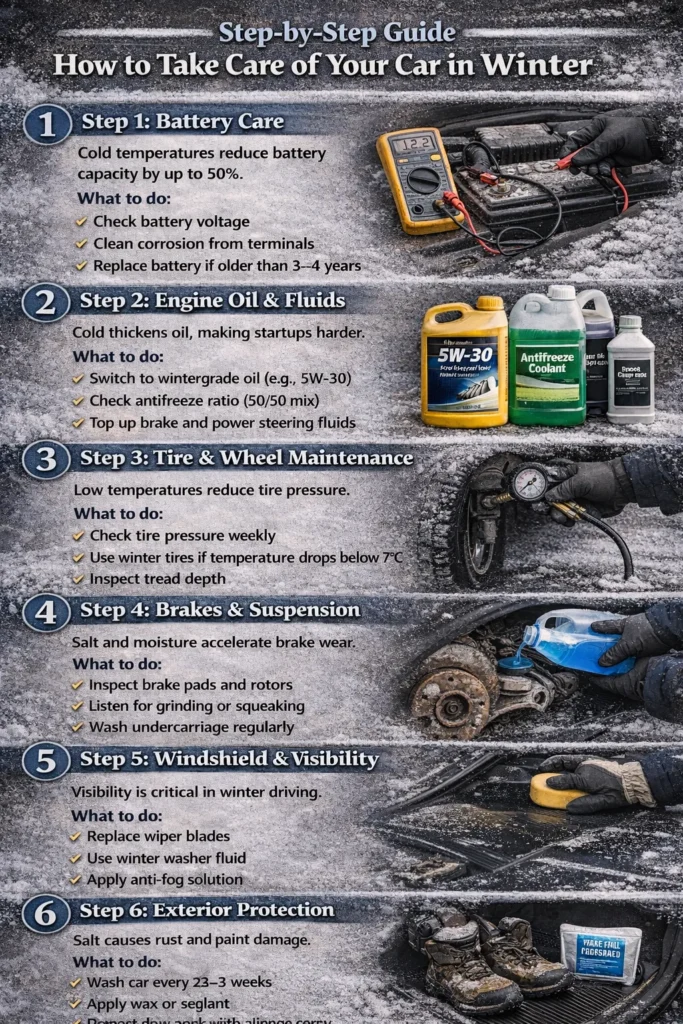
Step 1: Battery Care
Cold temperatures reduce battery capacity by up to 50%.
What to do:
- Check battery voltage
- Clean corrosion from terminals
- Replace battery if older than 3–4 years
Step 2: Engine Oil & Fluids
Cold thickens oil, making startups harder.
What to do:
- Switch to winter-grade oil (e.g., 5W-30)
- Check antifreeze ratio (50/50 mix)
- Top up brake and power steering fluids
Step 3: Tire & Wheel Maintenance
Low temperatures reduce tire pressure.
What to do:
- Check tire pressure weekly
- Use winter tires if temperature drops below 7°C
- Inspect tread depth
Step 4: Brakes & Suspension
Salt and moisture accelerate brake wear.
What to do:
- Inspect brake pads and rotors
- Listen for grinding or squeaking
- Wash undercarriage regularly
Step 5: Windshield & Visibility
Visibility is critical in winter driving.
What to do:
- Replace wiper blades
- Use winter washer fluid
- Apply anti-fog solution
Step 6: Exterior Protection
Salt causes rust and paint damage.
What to do:
- Wash car every 2–3 weeks
- Apply wax or sealant
- Protect door seals with silicone spray
Step 7: Interior Protection
Wet shoes damage carpets.
What to do:
- Use rubber floor mats
- Keep moisture absorbers inside
- Clean interiors weekly
Cost Breakdown / Pricing Table
| Item | Estimated Cost |
|---|---|
| Battery Check | $10 – $30 |
| New Battery | $80 – $200 |
| Winter Tires | $400 – $900 |
| Oil Change | $40 – $80 |
| Antifreeze | $15 – $30 |
| Wax / Sealant | $20 – $60 |
Before & After Explanation
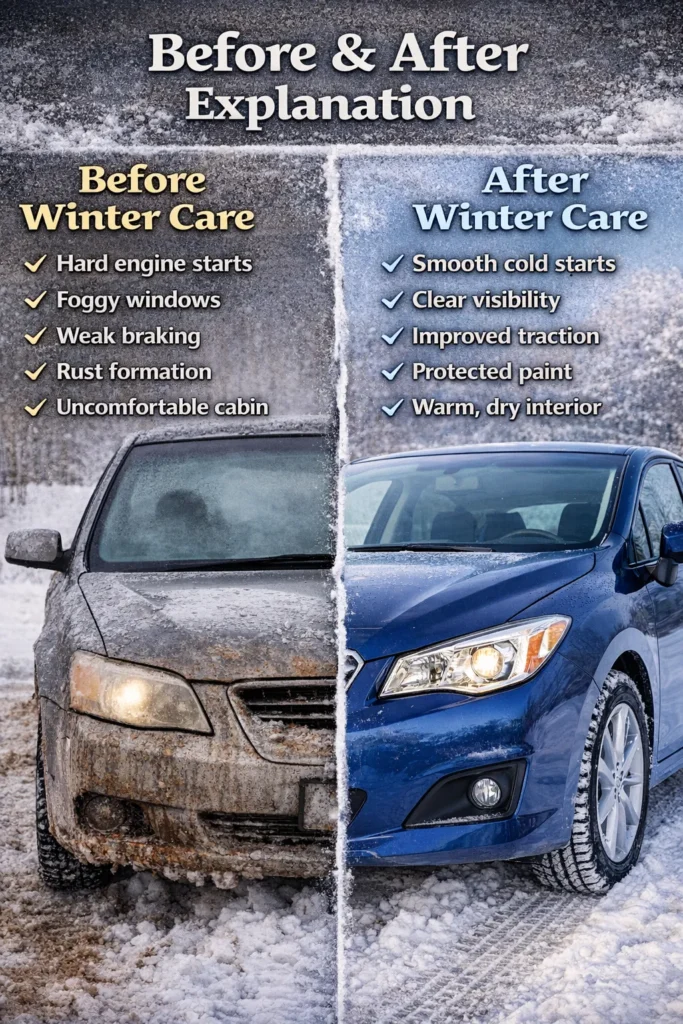
Before Winter Care
- Hard engine starts
- Foggy windows
- Weak braking
- Rust formation
- Uncomfortable cabin
After Winter Care
- Smooth cold starts
- Clear visibility
- Improved traction
- Protected paint
- Warm, dry interior
Product Recommendations (Affiliate Friendly)

Budget
- Armor All Winter Car Care Kit
- Rain-X Windshield Washer Fluid
- EverStart Value Lead-Acid Battery
Mid-Range
- Michelin All-Season Tires
- Bosch ICON Wiper Blades
- Castrol GTX Winter Engine Oil
Premium
- Optima RedTop AGM Battery
- Bridgestone Blizzak Winter Tires
- Meguiar’s Ultimate Liquid Wax
Comparison Section
| Feature | All-Season Tires | Winter Tires |
|---|---|---|
| Cold Grip | Medium | Excellent |
| Snow Handling | Fair | Outstanding |
| Cost | Lower | Higher |
| Safety | Moderate | Maximum |
Troubleshooting (Problem → Fix Table)
| Problem | Fix |
|---|---|
| Car won’t start | Jump-start or replace battery |
| Low tire pressure | Inflate to manufacturer specs |
| Foggy windshield | Use defogger + anti-fog spray |
| Slippery braking | Install winter tires |
Time Required & Difficulty Level
- Time Required: 2–4 hours
- Difficulty Level: Easy to Moderate
Pro Tips (Do / Don’t)
Do
✔ Warm up engine briefly
✔ Keep fuel tank at least half full
✔ Check tire pressure weekly
Don’t
✘ Use summer washer fluid
✘ Ignore warning lights
✘ Over-rev cold engine
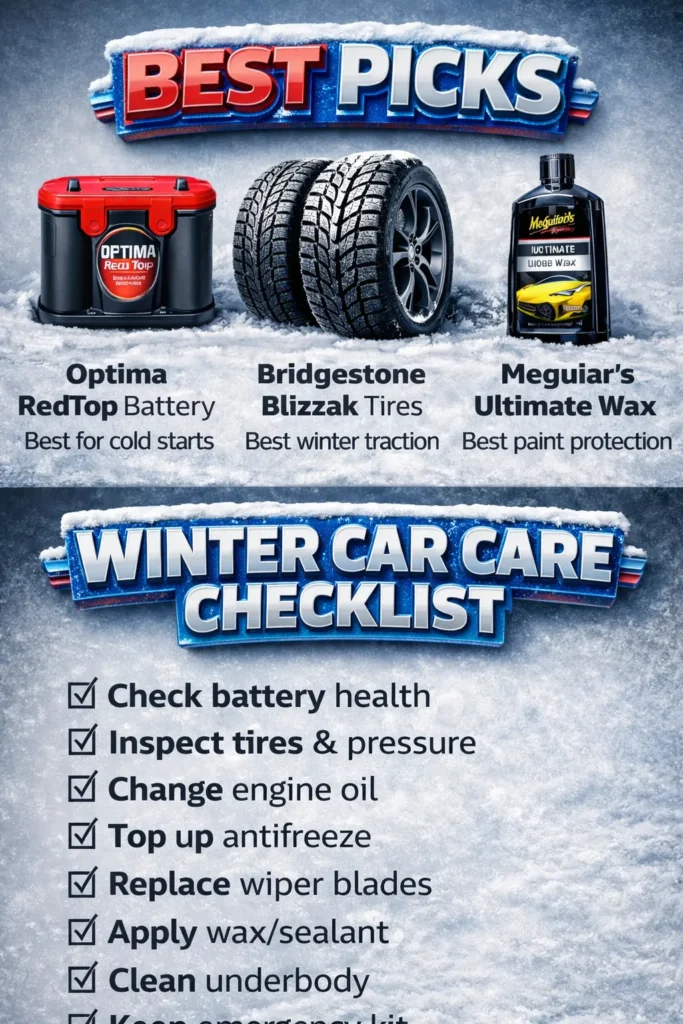
Best Picks
- Optima RedTop Battery – Best for cold starts
- Bridgestone Blizzak Tires – Best winter traction
- Meguiar’s Ultimate Wax – Best paint protection
Winter Car Care Checklist
☐ Check battery health
☐ Inspect tires & pressure
☐ Change engine oil
☐ Top up antifreeze
☐ Replace wiper blades
☐ Apply wax/sealant
☐ Clean underbody
☐ Keep emergency kit
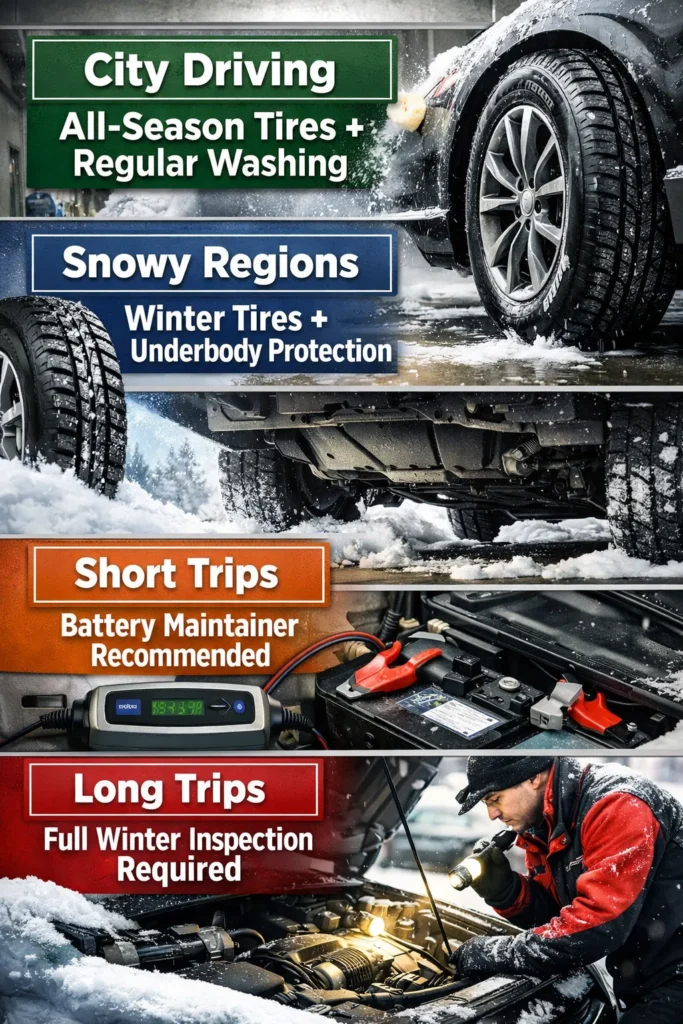
Use Cases
- City Driving: All-season tires + regular washing
- Snowy Regions: Winter tires + underbody protection
- Short Trips: Battery maintainer recommended
- Long Trips: Full winter inspection required
Common Mistakes to Avoid
- Skipping winter tire pressure checks
- Using plain water instead of antifreeze
- Ignoring battery age
- Washing car without drying seals
Safety Notes / Warnings
- Never open radiator cap when engine is hot
- Avoid driving with cracked windshield
- Do not mix incompatible antifreeze types
- Always carry emergency supplies
FAQs
Q1: How often should I wash my car in winter?
Every 2–3 weeks to remove salt.
Q2: Are winter tires really necessary?
Yes, for temperatures below 7°C, they dramatically improve safety.
Q3: Can cold weather damage engine oil?
Yes, thick oil reduces lubrication during cold starts.
Q4: How long should I warm up my car?
30–60 seconds is enough for modern engines.
Final Thoughts
Your car doesn’t have to suffer a harsh winter — not if you prepare for it. Stick to these winter car care tips, using the most critical products and avoiding common mistakes, and you’ll protect your vehicle, save money on potential repairs, and experience a more relaxed and safe winter driving season.


Leave a Reply